
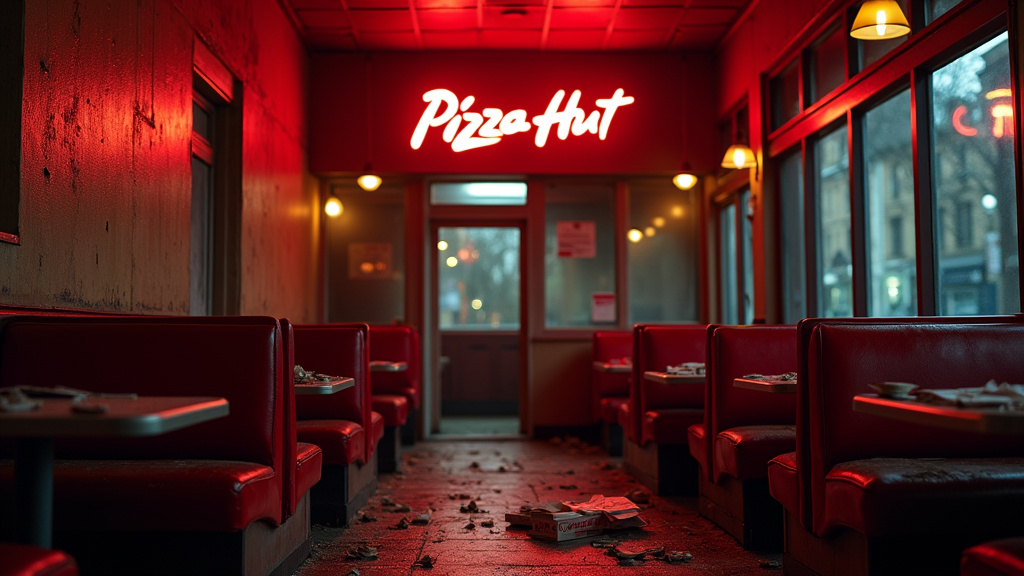
Pizza Hut’s UK dine-in operations have been plunged into administration, triggering the closure of 68 restaurants and the loss of approximately 1,200 jobs. The move marks a significant restructuring for the iconic pizza chain’s presence in the United Kingdom, following a period of intense financial pressure.
Financial Collapse and Rescue Operation
DC London Pie Limited, the company responsible for operating Pizza Hut’s dine-in restaurants across the UK, has appointed administrators from FTI Consulting. This administration comes less than a year after the firm had acquired the chain’s restaurants from a previous insolvency situation. The company had reportedly been struggling with mounting financial pressures, including a winding-up petition filed by HM Revenue and Customs (HMRC) over unpaid tax liabilities.
In a swift response, Yum! Brands, the global parent company of Pizza Hut and owner of other major chains like KFC and Taco Bell, has stepped in. Yum! Brands has acquired the UK restaurant operation through a pre-pack administration deal. This rescue package will see 64 of the existing Pizza Hut sites continue to operate, safeguarding the future of approximately 1,277 employees. Nicolas Burquier, Managing Director of Pizza Hut Europe and Canada, stated that this targeted acquisition aims to “safeguard our guest experience and protect jobs where possible,” with operational continuity and support for colleagues being the immediate priority.
Scale of Closures and Impact on London
The administration will result in the closure of 68 dine-in restaurants and 11 delivery sites nationwide. This significant contraction will lead to redundancies for around 1,210 workers. While the exact list of all affected locations has not been comprehensively disclosed, initial reports indicate that 12 restaurants in London were at risk of closure. These include sites in areas such as Marble Arch, Piccadilly, Leicester Square, and The Strand, among others.
It is crucial to note that Pizza Hut’s takeaway and delivery services are not affected by this administration and will continue to operate as normal, aiming to maintain customer access to its products.
Pressures on the Casual Dining Sector
The challenges faced by Pizza Hut UK are emblematic of broader trends affecting the entire casual dining sector in the UK. Industry analysts point to a confluence of factors, including intense market competition, evolving consumer preferences, and sustained economic headwinds.
Rising operational costs, such as increased energy bills and higher taxes, have placed significant strain on businesses. Coupled with wage growth and the lingering effects of inflation on consumer disposable income, many households are becoming more cautious with their spending, treating restaurant meals as a luxury rather than a regular occurrence. The market has seen a shift towards convenience and affordability, with fast-food and quick-service restaurants (QSR) often thriving while mid-tier establishments struggle.
Brand Positioning and Future Outlook
Some industry commentators suggest that Pizza Hut may have struggled by being positioned “stuck in the middle” – neither a premium offering with high-quality dining experiences like some competitors, nor the most affordable and convenient option like dominant QSR players. A lagging delivery infrastructure compared to rivals has also been cited as a competitive disadvantage in a market where online ordering has become a primary revenue driver.
This restructuring, driven by Yum! Brands’ acquisition, aims to streamline operations and focus on the more viable sites. The move signifies a strategic recalibration for Pizza Hut in the UK, seeking to navigate a complex and rapidly changing consumer landscape. The news is a stark reminder of the ongoing volatility within the hospitality industry, reflecting broader societal shifts in dining culture and economic pressures.