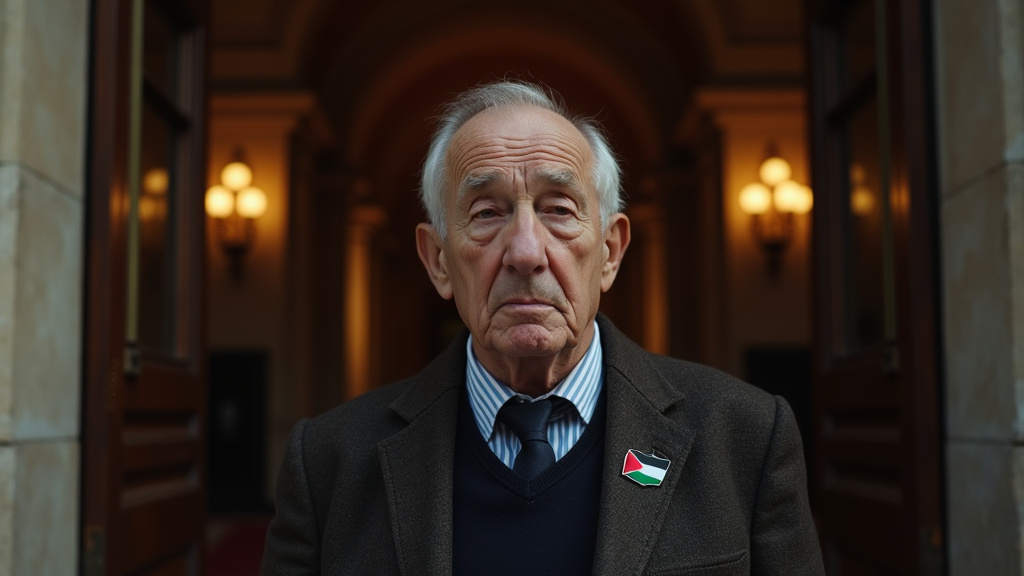
The iconic Royal Albert Hall has issued an apology following an incident where an 81-year-old man, Roger Cauthery, was refused entry to a BBC Proms concert due to a pin he was wearing that depicted the Palestine flag. The venue’s decision has ignited a conversation about freedom of expression within London’s vibrant culture scene and wider society.
Incident Details and Venue Response
Mr. Cauthery and his wife, Angele, were attempting to attend a BBC Proms performance when they were stopped by venue staff. The specific reason cited for their denial of entry was the presence of the Palestine flag pin on Mr. Cauthery’s person. This action has led to significant public scrutiny and, subsequently, a formal apology from the Royal Albert Hall.
A spokesperson for the Royal Albert Hall stated, “We sincerely apologize to Mr. Cauthery and his wife for the distress caused. We are reviewing our policies and procedures to ensure such incidents are not repeated and that our venues remain welcoming spaces for all.”
Freedom of Expression Under Scrutiny
The incident has sharply raised questions concerning the boundaries of freedom of expression at cultural events. Critics argue that barring individuals for displaying symbols of solidarity or political affiliation, even through small emblems like a pin, can stifle open dialogue and dissent. This news is currently trending across various social media platforms and news outlets.
Proponents of free expression contend that while venues have the right to maintain order, such measures can be perceived as censorship, particularly when the display in question is non-disruptive. The specific case of Mr. Cauthery, an elderly gentleman attending a concert, highlights the sensitivity surrounding these issues. The debate touches upon the broader implications for culture and how differing societal views are accommodated within public spaces.
Broader Societal Implications
The Royal Albert Hall, a renowned London landmark and a cornerstone of the United Kingdom’s cultural landscape, is expected to be a space that champions artistic and intellectual freedom. The decision to refuse entry based on a flag pin has led many to question the venue’s commitment to these principles.
This event serves as a potent reminder of the complex relationship between public institutions, political expression, and freedom of speech. As the news continues to unfold, discussions are expected to intensify regarding the appropriate balance between maintaining a safe and inclusive environment and upholding the fundamental right to express oneself, even on contentious issues. The broader societal implications of such policies are a significant point of discussion in current news cycles, impacting how culture and society interact in the modern era.
The apology from the Royal Albert Hall marks an initial step in addressing the concerns raised. However, the fundamental questions about expression at cultural events, particularly in a diverse and politically engaged city like London, remain pertinent and will likely continue to be debated.