The United Kingdom is currently navigating a significant political and security debate following the decision to ban fans of Israeli football club Maccabi Tel Aviv from attending their upcoming Europa League match against Aston Villa in Birmingham on November 6. The ban, recommended by West Midlands Police and endorsed by Birmingham’s Safety Advisory Group (SAG), has triggered widespread condemnation from prominent political figures, Jewish organizations, and UEFA, while sparking division among other groups.
Security Concerns Fuel Fan Ban
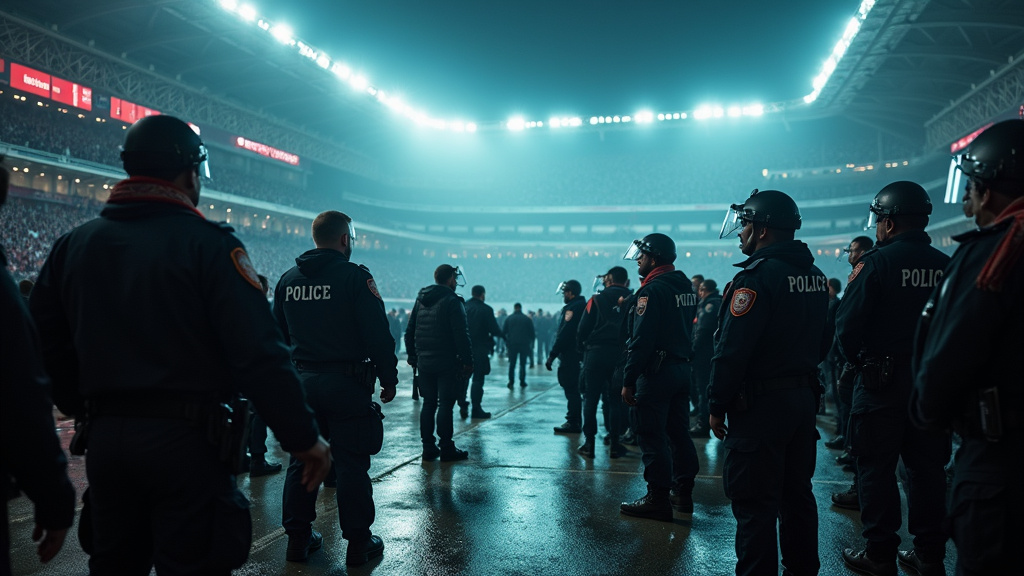
West Midlands Police classified the fixture as a “high-risk” event, citing “current intelligence and previous incidents” as the basis for prohibiting Maccabi Tel Aviv supporters from attending the game at Villa Park. A key incident referenced by police involved violent clashes and hate crime offenses during a Europa League match between Maccabi Tel Aviv and Ajax in Amsterdam in November 2024. Dutch police reported that Maccabi fans were involved in altercations, vandalism, and the burning of a Palestinian flag, leading to over 60 arrests and several hospitalizations. Police in Birmingham stated that this measure was deemed necessary to “help mitigate risks to public safety” by addressing concerns about potential protests outside the stadium. Aston Villa confirmed they were adhering to the SAG’s instructions, emphasizing that the safety of supporters and local residents was paramount.
Political Firestorm Erupts
The decision has ignited a fierce political backlash across the United Kingdom. Prime Minister Keir Starmer declared the ban “the wrong decision,” stating, “We will not tolerate antisemitism on our streets. The role of the police is to ensure all football fans can enjoy the game, without fear of violence or intimidation.” His office has indicated that the government is engaged in urgent talks to overturn the decision. Opposition leader Kemi Badenoch branded the ruling a “national disgrace,” while Israel’s Foreign Minister Gideon Sa’ar denounced it as a “shameful” and “coward decision,” calling for its reversal. The Jewish Leadership Council has described the ban as “perverse,” questioning the logic of excluding away fans due to police inability to guarantee safety. Meanwhile, the UK Football Policing Unit (UKFPU) has issued a statement underscoring the importance of respecting the established structures for making such safety decisions.
The Amsterdam Precedent
The specific incidents in Amsterdam last year have been central to the police justification for the ban. Reports from that event detail significant disorder, including clashes between pro-Palestinian demonstrators and Maccabi Tel Aviv fans, vandalism, and chants considered offensive. The Amsterdam police described some rioters as having “actively sought out” Israeli supporters to attack, labeling the violence as antisemitic. This backdrop has amplified concerns about potential flashpoints and the strain on policing resources, particularly in Birmingham, a city with a significant Muslim population and a site of frequent pro-Palestinian demonstrations.
Divergent Views and Calls for Boycott
While many have condemned the ban, some organizations and individuals have voiced support or called for more drastic measures. The Palestine Solidarity Campaign (PSC) welcomed the ban, viewing it as a consequence of the club’s alleged role in Israel’s “apartheid system” and stating that Israeli football teams “shouldn’t play in international tournaments whilst Israel commits genocide and apartheid.” Birmingham Perry Barr MP Ayoub Khan also supported the ban, citing pre-existing safety risks. Conversely, the Campaign Against Antisemitism has announced its intention to pursue a judicial review to overturn the decision, deeming it “pernicious.”
UEFA’s Stance and Broader Context
UEFA, the governing body for European football, has urged British authorities to ensure Maccabi Tel Aviv fans can attend the match, stating its desire for fans to travel and support their teams in a “safe, secure and welcoming environment.” However, UEFA also acknowledges that local competent authorities are ultimately responsible for match-day safety decisions based on thorough risk assessments. The ban unfolds against a backdrop of heightened global tensions related to the Israel-Gaza conflict, which have fueled protests and discussions about sporting boycotts of Israeli teams.
Review and Resolution Efforts
In response to the mounting pressure, Simon Foster, the West Midlands Police and Crime Commissioner, has called for an “immediate review” of the ban, seeking to determine its appropriateness and necessity. Senior government officials, including the Culture Secretary, are engaged in discussions to find a resolution. Aston Villa has reiterated its commitment to continuous dialogue with Maccabi Tel Aviv and local authorities to ensure safety for all involved.
The situation remains fluid, with ongoing discussions aiming to resolve the controversy. The outcome will likely hinge on further risk assessments and the outcome of government-led interventions, highlighting the complex interplay of security, politics, and sports in the current climate.