King Charles III led the United Kingdom in a profound act of national remembrance on Sunday, November 9, 2025, with a series of powerful Remembrance Sunday Tributes. The solemn occasion saw the monarch at the helm of the annual National Service of Remembrance at the iconic Cenotaph in London. This significant event honours the sacrifice of British and Commonwealth military and civilian servicemen and women who have served and died in all conflicts, from the World Wars to more recent engagements. The ceremony, deeply embedded in the nation’s culture and society, underscores a commitment to never forget those who have fought for freedom, making these Remembrance Sunday Tributes a vital national tradition, a testament to enduring Remembrance Sunday Tributes.
King Charles III at the Cenotaph: A Solemn National Service Remembrance
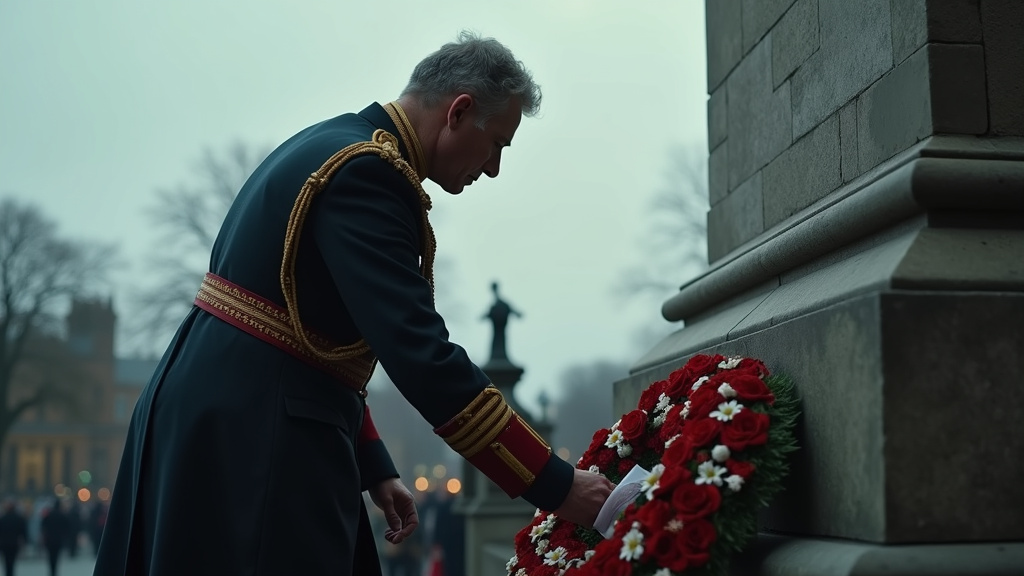
The heart of the commemorations unfolded at the Cenotaph on Whitehall, London, a stark Portland stone memorial symbolizing the nation’s collective grief and gratitude. Precisely at 11:00 GMT, Big Ben’s chimes marked the commencement of a two-minute silence, a poignant interlude observed across the country during these solemn Remembrance Sunday Tributes. During this profound stillness, King Charles III, dressed in the uniform of an army field marshal, was the first to lay a wreath at the foot of the Cenotaph. This solemn act, followed by other members of the Royal Family and dignitaries, signifies the nation’s paramount respect for the fallen and is a key part of the Remembrance Sunday Tributes. Queen Camilla and Catherine, Princess of Wales, observed the service from a balcony at the Foreign, Commonwealth and Development Office, participating in this vital national news event. Prince William also laid a wreath, continuing a tradition of royal military involvement and remembrance as part of the wider Remembrance Sunday Tributes.
A March of Honour: Veterans Parade and Remembrance Sunday Tributes
Following the wreath-laying, the Cenotaph was the scene of a significant march-past, a powerful display of honour and continuity that showcased heartfelt Remembrance Sunday Tributes. Approximately 10,000 veterans and military personnel, representing hundreds of Armed Forces and civilian associations, paraded past the monument. Among them were a dwindling number of World War veterans, some as old as 101, their presence a living testament to the military sacrifice made eighty years prior. The procession, accompanied by military bands, drew rapturous cheers and applause from the thousands of members of the public who lined Whitehall, eager to pay their respects and show solidarity through their own Remembrance Sunday Tributes. This vibrant display of collective memory is a cornerstone of remembrance culture in the UK, highlighting the importance of Remembrance Sunday Tributes.
Historical Roots and Enduring Significance of Remembrance Sunday Tributes
Remembrance Sunday’s roots trace back to Armistice Day origins, established on November 11, 1919, to mark the end of World War I. The Cenotaph, designed by Edwin Lutyens, was unveiled in 1920 as an ‘empty tomb’ to honour those with no known grave. The red poppy symbolism, a potent symbol of remembrance inspired by the poem ‘In Flanders Fields’, has been central to these commemorations since the 1920s, with its sale by the Royal British Legion supporting the Armed Forces community. The tradition evolved after World War II to encompass all subsequent conflicts, making Remembrance Sunday a pivotal moment in the nation’s annual calendar, deeply woven into its society and culture, and a key focus for Remembrance Sunday Tributes.
Broader Context and Contemporary Resonance of Remembrance Sunday Tributes
This year’s commemorations took place against a backdrop of ongoing global conflict, with the war in Ukraine casting a shadow and prompting discussions on defense spending. As Britain increases its defense budget, the solemnity of Remembrance Sunday Tributes serves as a reminder of the enduring cost of conflict and the importance of peace. The event remains a trending topic in national news, reflecting its continuous relevance in shaping public discourse and national identity. It is a moment where society pauses, united in its acknowledgment of service and sacrifice, underscoring the profound importance of Remembrance Sunday Tributes.
Conclusion: The Enduring Impact of Remembrance Sunday Tributes
As the ceremonies concluded and the veterans marched past, the spirit of Remembrance permeated London and resonated across the United Kingdom. King Charles III’s leading role at the Cenotaph on Remembrance Sunday 2025 reinforced the monarchy’s deep-seated commitment to honouring the nation’s war dead through meaningful Remembrance Sunday Tributes. The day served as a powerful reminder of the sacrifices made by generations past, fostering a collective sense of duty to remember their courage and ensure their legacy endures for the future. This annual observance continues to be a crucial thread in the fabric of British culture and society, with Remembrance Sunday Tributes playing a central role.