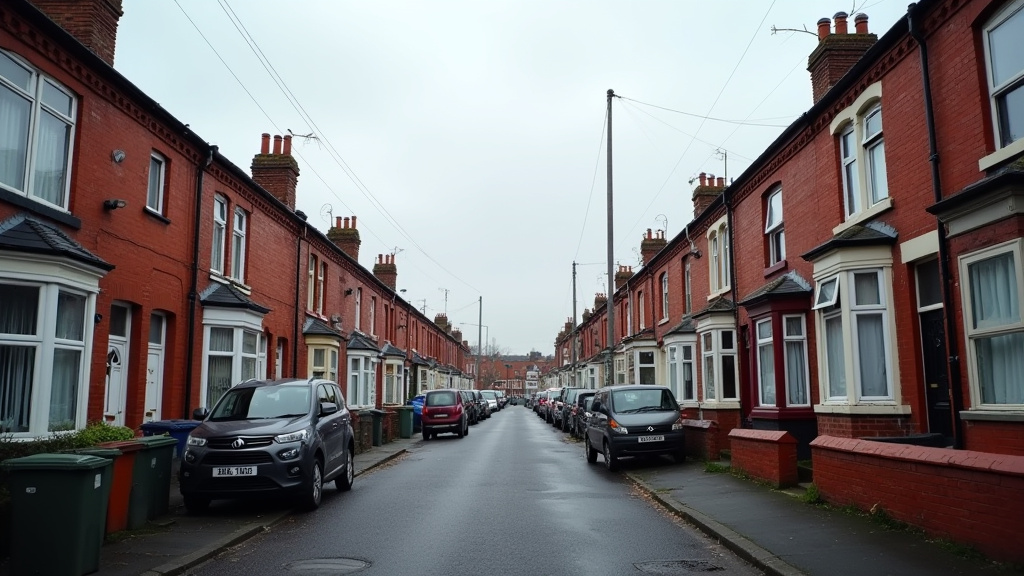

London’s boroughs are sounding the alarm, calling for a significant increase in financial resources – “funding firepower” – to tackle the city’s deepening housing crisis by investing in existing estates. A new report, “A Decade of Renewal: the Contribution of London Estate Regeneration,” from London Councils and the London Housing Director’s Group, argues that effective Estate Regeneration Funding is crucial for boosting the social housing supply and modernizing homes. The report highlights a potential to deliver 10,000 council homes across nine case study estates alone, while also offering benefits like new employment opportunities, improved environmental standards, and enhanced well-being for residents through targeted Estate Regeneration Funding. This demonstrates the critical need for robust Estate Regeneration Funding to achieve these goals.
Challenges in Securing Estate Regeneration Funding
Despite the clear potential of estate regeneration, which can range from refurbishing existing properties to complete demolition and rebuilding, boroughs are facing immense challenges due to financial constraints. London Councils’ analysis reveals a planned real-terms spending reduction of £269 million on council housing repairs and investment over the next four years. This financial squeeze, a key issue for Estate Regeneration Funding, is forcing councils to consider cuts rather than crucial investments in housing regeneration.
Addressing the London Housing Crisis with Estate Regeneration Funding
The scale of the London housing crisis is stark: one in 50 residents are homeless or in temporary accommodation, and over 300,000 households are on social housing waiting lists. The city requires an estimated 66,000 new homes annually, with some housing associations suggesting over 90,000 are needed each year to meet demand and improve affordability. Without adequate Estate Regeneration Funding, addressing the housing crisis London faces remains a significant hurdle.
Boroughs Funding Needs and Shortfalls
Boroughs are grappling with substantial funding gaps. London Councils forecasting a collective shortfall of £700 million for the upcoming year (2025/26), potentially rising to £4.7 billion over the next four years. This situation, impacting the availability of Estate Regeneration Funding, is exacerbated by the rising costs of managing London’s extensive council housing stock, which includes a high proportion of costly-to-maintain tower blocks, while income from social rents has been constrained by government caps. These significant boroughs funding needs highlight the urgency for Estate Regeneration Funding.
To overcome these obstacles and unlock stalled regeneration projects, boroughs are urging the government to adopt a more strategic and flexible approach to funding. Their key recommendations include the implementation of a social rent convergence rate of at least £3 per week to improve rental income, and the provision of flexible, long-term Estate Regeneration Funding for housing regeneration initiatives. Boroughs also call for greater government support to stabilize social housing finances and policy reforms, such as allowing councils more flexibility in pooling funding sources and potentially exempting estate regeneration schemes from certain development requirements, which would bolster the social housing supply.
Joanne Drew, Co-Chair of the London Housing Directors’ Group, emphasized the urgency: “We urgently need more funding firepower if we are to unlock stalled sites and ramp up regeneration.” The upcoming government budget is viewed as a critical opportunity to address these financial pressures and enable boroughs to deliver the housing solutions London desperately needs. This news highlights a featured and critical topic for London, underscoring the vital role of sufficient Estate Regeneration Funding in tackling the housing crisis London faces and improving council housing repairs.