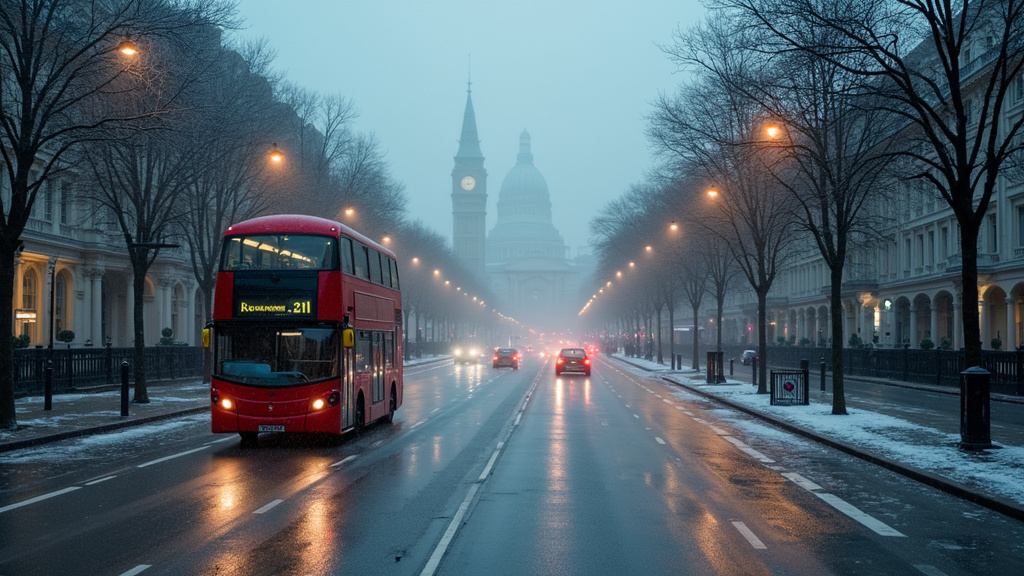
A significant London Snow Warning has been issued as the capital braces for a chilly start to 2026. The Met Office has released a yellow weather warning specifically for snow and ice impacting London. This developing weather situation is a primary concern, with a London Snow Warning now in effect.
London Prepares for Wintry Conditions Amidst a London Snow Warning
The yellow weather warning signifies potential travel disruptions, a direct consequence of the expected London snow. It alerts the public to be aware of the developing conditions. While this is the least severe of the Met Office’s warnings, it indicates that some impact on travel is likely due to the London Snow Warning. Local authorities are actively preparing for these UK winter conditions. For example, Croydon Council had its gritting lorries ready, with some seen operating on New Year’s Eve in anticipation of the London snow.
Weather Outlook for London: A London Snow Warning Issued
The forecast predicts a band of sleet and snow, a key component of this London Snow Warning. This is expected to move southeast across parts of England during the early hours and morning. Many areas could see 1-2 cm of snow, and higher ground might experience up to 5 cm. As the precipitation clears, ice is likely to form, creating hazardous conditions on untreated roads, pavements, and cycle paths following the snow. This London snow forecast is a key part of the current advisory.
London will experience a cold and cloudy start, with sleet or snow showers possible early on, as detailed in the London Snow Warning. Conditions are expected to improve as the morning progresses, with cloud cover breaking up, allowing for sunny spells in the afternoon. Despite the sunshine, temperatures will remain low. The maximum temperature is forecast to be around 4°C. Overnight, temperatures could dip below freezing, reaching approximately -1°C, contributing to London ice formation.
Cold Health Alerts Issued Alongside the London Snow Warning
Alongside the weather warnings, cold health alerts are active, compounding the concerns from the London Snow Warning. The UK Health Security Agency (UKHSA) has issued amber cold health alerts for all of England, which will remain in place until January 6, 2026. These alerts highlight the increased risk to public health from the cold weather. The UKHSA stated these UK winter conditions could significantly impact health and social care services. They also warned of a potential rise in excess deaths, particularly among those aged 65 and over. Younger individuals may also be affected. Public health officials urge everyone to check on vulnerable friends, family, and neighbours during this period of wintry conditions.
Travel and Safety Advice During the London Snow Warning
Travel disruptions are a key concern stemming from the London Snow Warning. Drivers should check road conditions before setting off and are advised to allow extra time for journeys. Ensuring vehicles are winter-ready is also recommended to mitigate risks associated with London ice. Pedestrians should exercise caution on icy pavements and stick to main routes where possible. Cyclists are urged to avoid untreated surfaces. Those using public transport should verify service updates before travelling, as transport operators warn of potential delays and cancellations. Road, bus, and train services might experience longer journey times. The Met Office also cautions about injuries from slips and falls on icy surfaces, a common occurrence during a Met Office warning.
Wider UK Impact Beyond the London Snow Warning
The yellow warning for snow and ice, including the London Snow Warning, extends beyond the capital. It covers large areas of England and Wales, including Kent and stretches towards Chester and Greater Manchester. Separate warnings are in place for Northern Ireland and parts of Scotland. Some forecasts predict heavier snowfall in early January for other UK regions, amplifying the UK snow warning. For instance, WX Charts maps suggested significant snowfall in areas including east London around January 5. The Met Office’s long-range outlook mentions wintry showers and potential for more prolonged precipitation in some inland areas. This cold spell is expected to persist well into the following week, offering a stark contrast to typical New Year’s Day weather. This ongoing weather news affects the entire nation, with a pervasive threat of London ice.