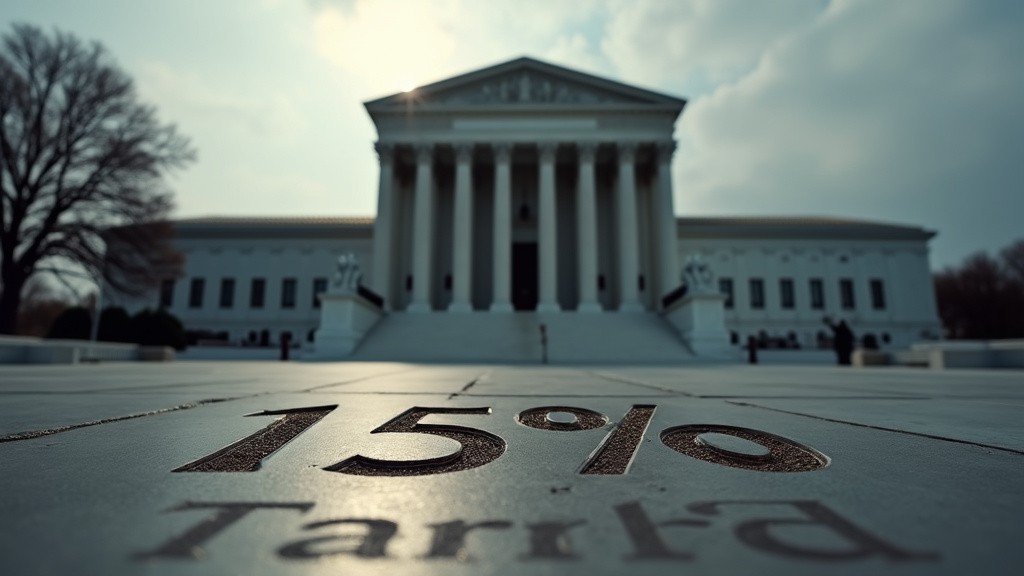
British businesses face a new wave of financial pressure. The United States has implemented a 15 percent global tariff. This move follows a significant US Supreme Court decision. It aims to bolster domestic industry. However, it risks severely impacting United Kingdom exporters.
Supreme Court Ruling Sparks Tariff Shift
President Donald Trump announced the tariff increase. This happened just days after a major court ruling. The Supreme Court invalidated previous tariffs. These were imposed under the International Emergency Economic Powers Act (IEEPA). The court found the President exceeded his authority. In response, Trump invoked Section 122 of the Trade Act of 1974. This new legislation allows for temporary tariffs. The rate was set at a maximum of 15 percent. This action targets a wide range of imports. It introduces new uncertainty into global trade. This news is trending across business news outlets.
UK Exporters Brace for Higher Costs
Business groups in the United Kingdom have voiced strong concerns. The British Chambers of Commerce (BCC) issued a stark warning. William Bain, head of trade policy at the BCC, highlighted the impact. He stated the tariffs could increase costs by £2 billion to £3 billion. Approximately 40,000 UK companies could be affected. This represents a significant blow to many businesses. The Confederation of British Industry (CBI) echoed these worries. Sean McGuire of the CBI noted the erosion of profit margins. He also pointed to reduced competitiveness for UK goods. Businesses on both sides of the Atlantic need stability. Instead, they face further disruption.
Transatlantic Trade Under Strain
The United States is the UK’s largest trading partner. Goods and services worth £183 billion flowed to the US annually. Physical goods accounted for about £59 billion of this trade. A 5 percent increase in tariffs can be substantial. This new levy applies to many UK exports. However, some sectors may see limited impact. The UK-US Economic Prosperity Deal offers some protection. This agreement, secured earlier in 2025, covers certain goods. These include steel, aluminium, and pharmaceutical products. For companies outside these agreements, the new tariffs are a direct threat. This news impacts the overall business climate.
Global Economic Growth Concerns
Beyond direct costs, broader economic implications loom. Experts warn the new tariffs could weaken global growth. Higher import costs often translate to higher consumer prices. This can reduce demand. It may also discourage investment. Businesses struggle to plan with such policy shifts. Uncertainty makes long-term strategies difficult. The temporary nature of Section 122 tariffs adds to this. They are set to last for 150 days. This period could be extended by Congress. However, future actions remain unclear.
UK Government Engages with Washington
The United Kingdom government is actively engaged. High-level talks with Washington are ongoing. Bridget Phillipson, Education Secretary, acknowledged the uncertainty. She stressed the UK’s expectation for preferential trade arrangements to continue. Downing Street stated that “nothing is off the table.” This suggests potential responses are being considered. However, the focus remains on “constructive engagement.” The goal is to secure the best deal for UK firms. This evolving trade news requires close monitoring.
A Future of Uncertainty
The recent tariff hike creates significant challenges. UK businesses are now recalculating costs. They are reassessing their market strategies. The immediate impact is a strain on profitability. In the longer term, it could affect trade volumes. Companies need predictable trade policies. The current situation offers little of that. The world of business awaits further developments. This news underscores the dynamic nature of international trade.