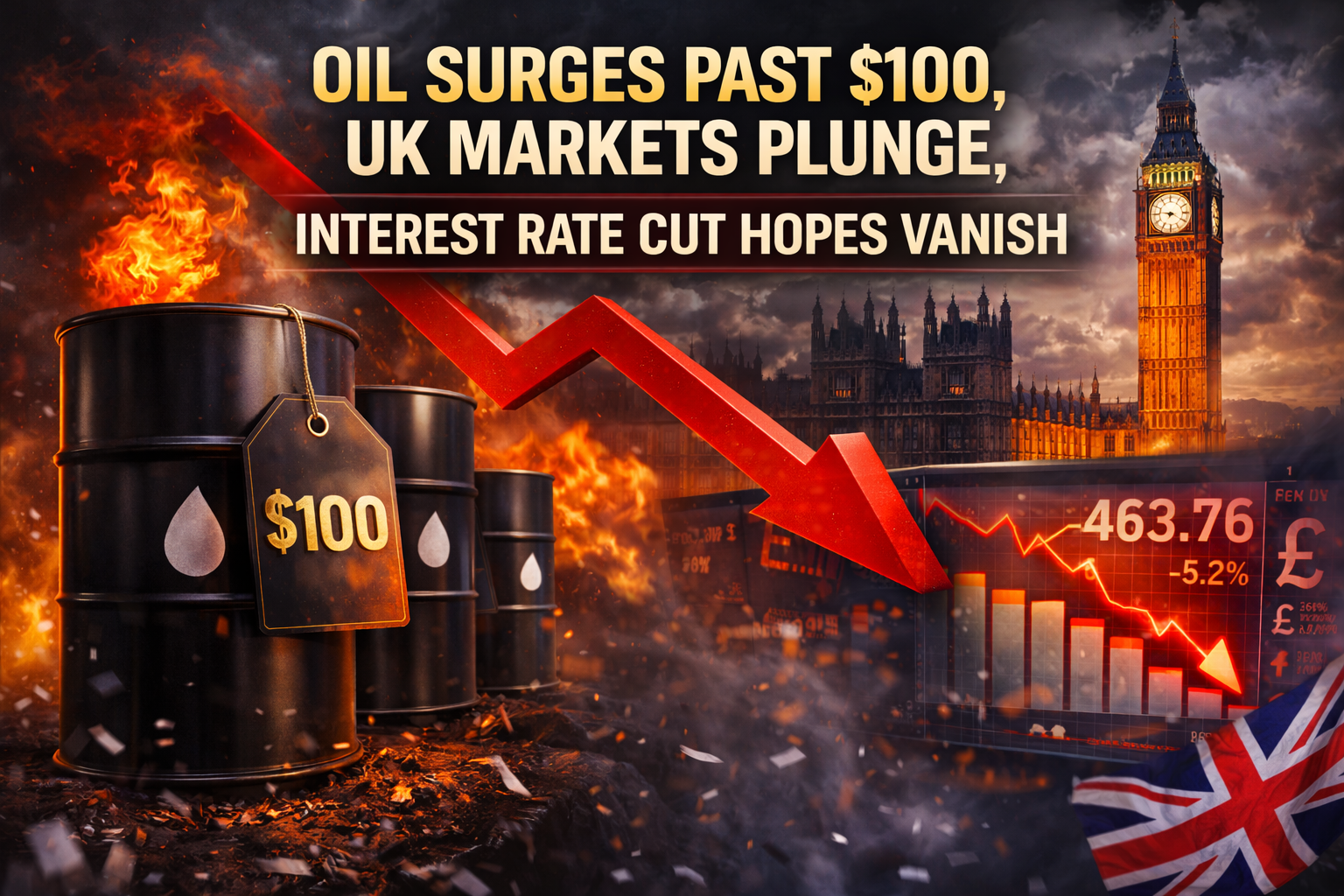
Global stock markets reeled Monday. Oil prices rocketed past $100 a barrel. This surge wiped out hopes for UK interest rate cuts. The Bank of England now faces a new inflation fight. Markets even signal potential rate hikes this year. This dramatic shift comes amid escalating geopolitical tensions. The United States and Israel are engaged in conflict with Iran.
Oil Prices Hit Four-Year High
Crude oil prices breached the $100 per barrel mark. Brent crude, the international benchmark, briefly touched $119.50. This marks its highest level since 2022. West Texas Intermediate (WTI) also saw sharp gains. Prices have nearly doubled in just over three months of 2026. This rally follows attacks on Iranian oil facilities. It also stems from disruptions in vital shipping lanes. The Strait of Hormuz is now largely impassable. This critical chokepoint normally handles about 20% of global oil supply. Major oil producers like Iraq, Kuwait, and the UAE have cut production. This response strains global energy supplies further. Analysts warn of potential $150 per barrel prices. Some fear a 1970s-style stagflation scenario.
Markets Tremble Worldwide
Investor panic gripped global financial markets. Stock markets experienced sharp declines. The UK’s FTSE 100 index plunged nearly 2%. It fell by around 200 points. European markets saw similar drops. Germany’s DAX lost 2.3%. France’s CAC index slipped 2.5%. Asian markets also suffered heavy losses. Japan’s Nikkei 225 fell over 5%. South Korea’s KOSPI dropped by 6%.
Airline stocks were hit particularly hard. These companies face direct exposure to rising fuel costs. IAG, parent of British Airways, dropped 4.3%. Lufthansa lost 4.6%. Air France declined 5.1%. Budget carriers also saw significant drops.
Bond markets also reacted strongly. Government bond yields surged. This reflects growing inflation fears. The benchmark 10-year UK bond yield rose significantly. This indicates increased borrowing costs for the government and businesses.
UK Interest Rates: No Cuts in Sight
The surge in oil prices has reshaped the UK’s economic outlook. Hopes for interest rate cuts in 2026 have vanished. Just weeks ago, markets anticipated multiple rate reductions. Now, investors are betting on rate hikes. The Bank of England’s base rate is expected to remain steady. It stands at 3.75%. However, financial markets predict a potential increase to 4% by next June. Analysts suggest there is a 70% chance of a rate hike this year. This reflects concerns about resurgent inflation.
Inflation is expected to rise. Estimates suggest it could add up to 0.52 percentage points to UK inflation. This impacts the cost of living for households. The Bank of England’s next meeting is scheduled for March 19th. Policymakers are now expected to hold rates. They are closely monitoring global developments. The war’s duration and oil supply remain key uncertainties.
Economic Fallout for the United Kingdom
The United Kingdom faces significant economic challenges. As a major energy importer, it is vulnerable to oil price shocks. Higher fuel costs will likely increase inflation. This puts pressure on household budgets. Petrol and diesel prices are already climbing. Home heating costs are also expected to rise.
Businesses face increased operating costs. Transport and supply chain expenses will surge. This could lead to higher prices for goods. The potential for stagflation looms large. This scenario combines high inflation with economic stagnation. Government borrowing costs have jumped. This puts strain on public finances. Ministers are reportedly discussing measures to mitigate the impact.
Global Response and Uncertain Future
In response to the crisis, G7 finance ministers are set to discuss coordinated action. This may include a release of emergency oil reserves. Central banks worldwide are reassessing their monetary policies. The European Central Bank also faces pressure to consider rate hikes.
The ongoing conflict in the Middle East creates immense uncertainty. The duration of hostilities remains unknown. This directly impacts energy supply stability. Financial markets are volatile. They are trading on headline-to-headline basis. The economic outlook for the United Kingdom and the global business community is precarious. Investors are closely watching for signs of de-escalation. However, for now, higher energy prices and market instability are trending news.