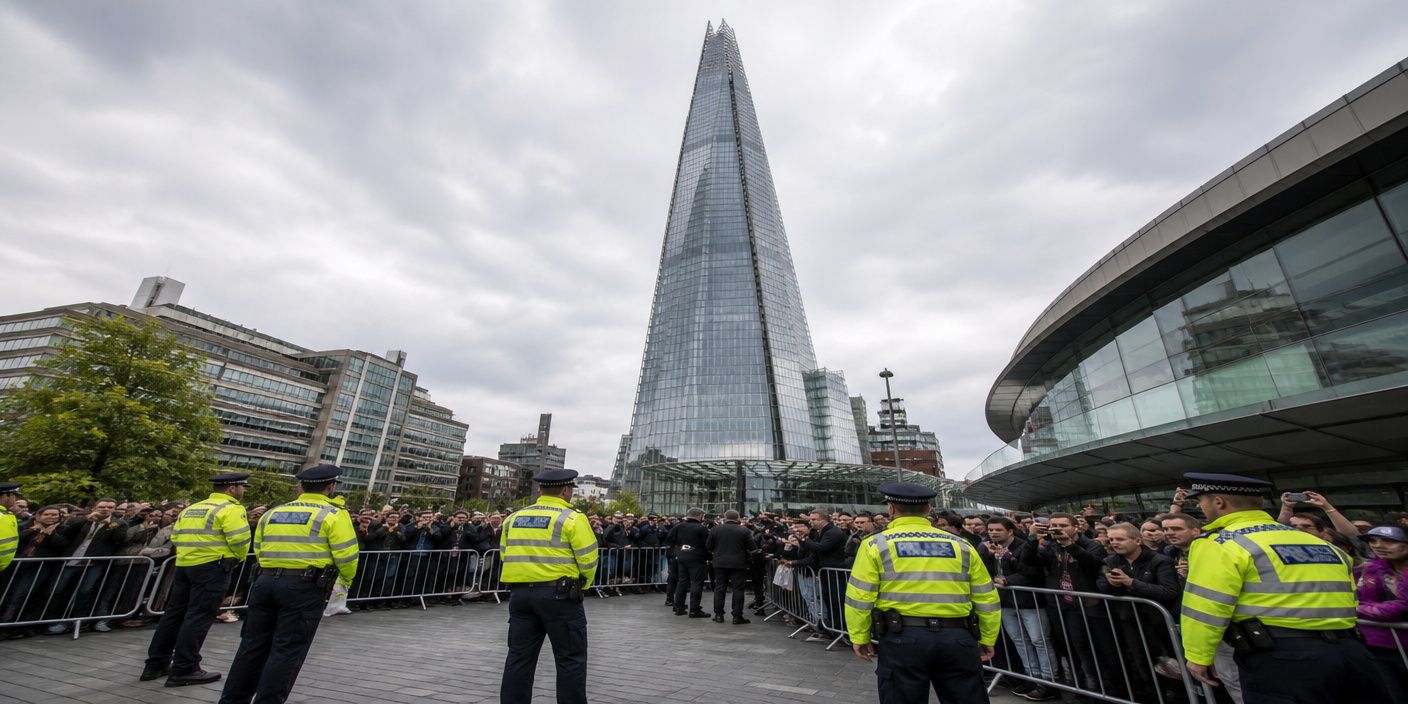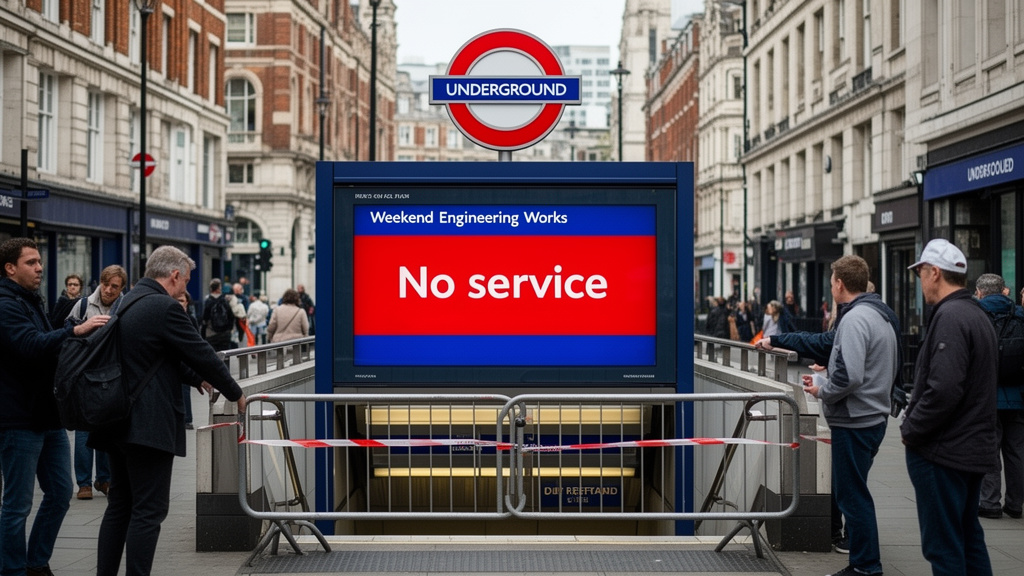

London commuters are facing fresh travel misery today, Thursday, April 23, as the RMT union launches the second wave of its 24-hour industrial action this week. Starting at midday, the stoppage has brought significant portions of the London Underground network to a standstill, with thousands of passengers forced to seek alternative travel routes across the capital. As the network winds down and severe delays ripple outward, the dispute between the Rail, Maritime and Transport union (RMT) and Transport for London (TfL) reaches a critical, and highly visible, impasse.
Key Highlights
- Strike Window: The 24-hour industrial action began at 12:00 PM Thursday and will run through 11:59 AM Friday, April 24.
- Network Impact: Severe disruption across the network, with zero service on the Piccadilly and Circle lines, and significant closures on the Central and Metropolitan lines.
- The Core Dispute: The RMT is opposing TfL’s proposed “voluntary” four-day working week, citing concerns over fatigue, safety, and shift management.
- Operational Advice: TfL urges passengers to complete journeys by 8:00 PM, with the Elizabeth line, DLR, and London Overground remaining the primary alternatives.
- Future Disruption: Further strike dates are already confirmed for May and June 2026, signaling a protracted summer of transit uncertainty for Londoners.
The Anatomy of the 2026 Tube Dispute
The current wave of strikes is not merely a dispute over pay, which has often been the historical catalyst for London Underground industrial action. Instead, this spring’s conflict centers on the modernization of working conditions—specifically, the implementation of a compressed four-day working week. Transport for London (TfL) has framed this proposal as a progressive, employee-centric initiative designed to align the London Underground with modern flexible working patterns seen in other rail and transport operating companies. According to TfL management, the scheme is entirely voluntary, offering drivers a chance to condense their hours into four days, effectively granting them an additional 35 days off per year.
However, the RMT’s resistance paints a drastically different picture. The union contends that while the scheme is labeled “voluntary,” the practical application threatens to impose shift patterns that are not only rigorous but potentially hazardous to operator health. The RMT leadership has raised alarms regarding “shift fatigue,” arguing that compressing hours into four days could lead to longer, more intense shifts that compromise safety standards—a paramount concern for an organization responsible for moving millions of passengers daily. Furthermore, the union has alleged that TfL engaged in a “U-turn” regarding negotiations, initially suggesting they would amend the proposals before later proceeding without significant adjustments. This perceived breach of trust has hardened the RMT’s resolve, leading to the series of walkouts planned throughout the spring and early summer.
The Divided Labor Front
Perhaps the most intriguing aspect of this dispute is the schism between the two major unions involved. ASLEF, the other primary union representing London Underground drivers, has publicly supported the four-day week proposal. Their endorsement suggests a deeper ideological divide within the labor force, as ASLEF views the initiative as a step forward for work-life balance and modernization. This split complicates the RMT’s bargaining position. By appearing to stand against a reform that a fellow union supports, the RMT faces increased scrutiny from both the public and TfL. The complexity of this labor tension underscores the difficulty of managing a legacy network in the post-pandemic era, where work-life expectations are fundamentally shifting.
Impact on the Capital’s Infrastructure
As of this afternoon, the visible impact on London is acute. The cessation of service on the Piccadilly and Circle lines is particularly punishing, given their role in connecting major tourist hubs, business districts, and essential transit links like Heathrow Airport. The Central line’s partial closure—specifically between White City and Liverpool Street—creates a massive hole in east-west connectivity.
For the average commuter, the reliance on the “alternatives” has become the new daily routine. The Elizabeth line, DLR, and London Overground have become the lifeboats of the capital, though they are currently operating at near-maximum capacity. Transit experts note that this reliance on non-Tube infrastructure is becoming a precarious dependency. When the Tube goes down, these secondary networks do not have the inherent capacity to absorb the displaced volume, leading to the “crowding effect” reported by passengers at key interchange stations. The economic impact is equally tangible. Retailers and hospitality businesses in central London, already navigating a delicate fiscal environment, are reporting lower footfall on strike days as workers opt to stay home rather than face the “commuter lottery” of overcrowded buses and limited rail connections.
The Future of Industrial Action
Looking ahead, there is little sign of a thaw in relations. The confirmed strike dates for May and June suggest that this is not a one-off grievance but a sustained tactical campaign. For Londoners, this marks a shift in expectations. The resilience of the London transport system is being tested, and the repeated nature of these strikes could force a permanent change in behavior. Many businesses have begun to formalize “strike day” policies, encouraging work-from-home (WFH) models to mitigate the impact. While this keeps the workforce productive, it risks hollowing out the central business districts that rely on daily commuters to drive the local economy. The standoff between the RMT and TfL is, therefore, about more than just shift lengths; it is about the future viability of the city’s transit model and the evolving contract between the workforce and the network operator.
FAQ: People Also Ask
Q: Are all Tube lines affected by the strikes?
A: No, not all lines are closed. However, most lines are experiencing severe disruption or reduced services. The Piccadilly, Circle, and parts of the Central and Metropolitan lines are the most severely impacted with no service, while others have significantly reduced frequencies. Always check the TfL Go app for the latest updates.
Q: When will the disruption end?
A: The current 24-hour strike is scheduled to end at 11:59 AM on Friday, April 24. While services will technically resume after this point, TfL has warned that severe disruption will likely continue throughout Friday afternoon as the system recovers and drivers return to their shifts.
Q: Why are the unions fighting a four-day week?
A: The RMT argues that the proposed four-day week, while marketed as voluntary, could lead to fatigue and safety issues. They also claim that TfL failed to negotiate in good faith regarding shift lengths and roster flexibility. The ASLEF union, conversely, supports the proposal.
Q: What is the best way to travel during these strikes?
A: TfL recommends using the Elizabeth line, DLR, and London Overground services where possible. Bus routes are mostly running as planned, though they will be significantly busier. For many commuters, cycling or walking remains the most reliable option during peak hours.