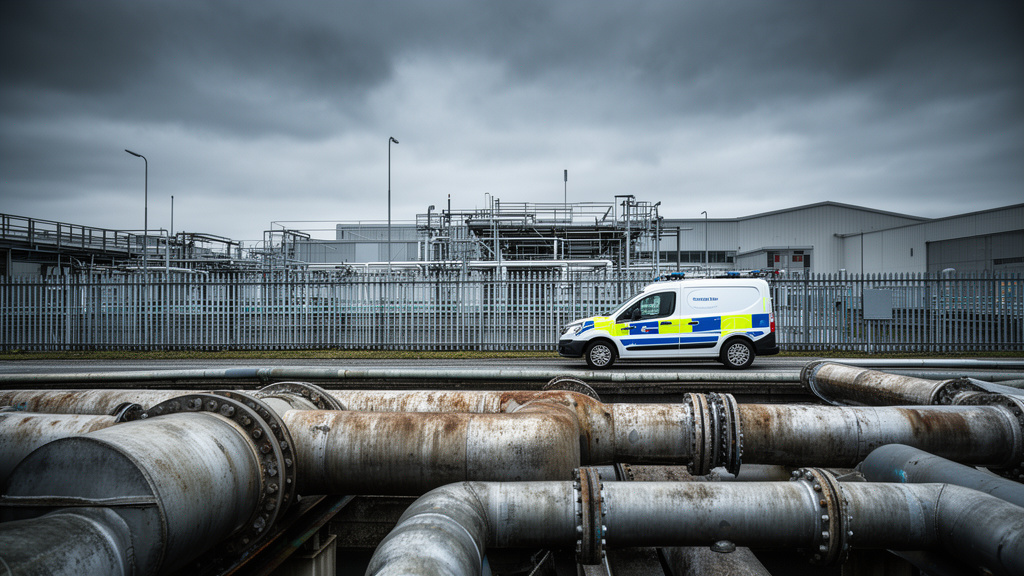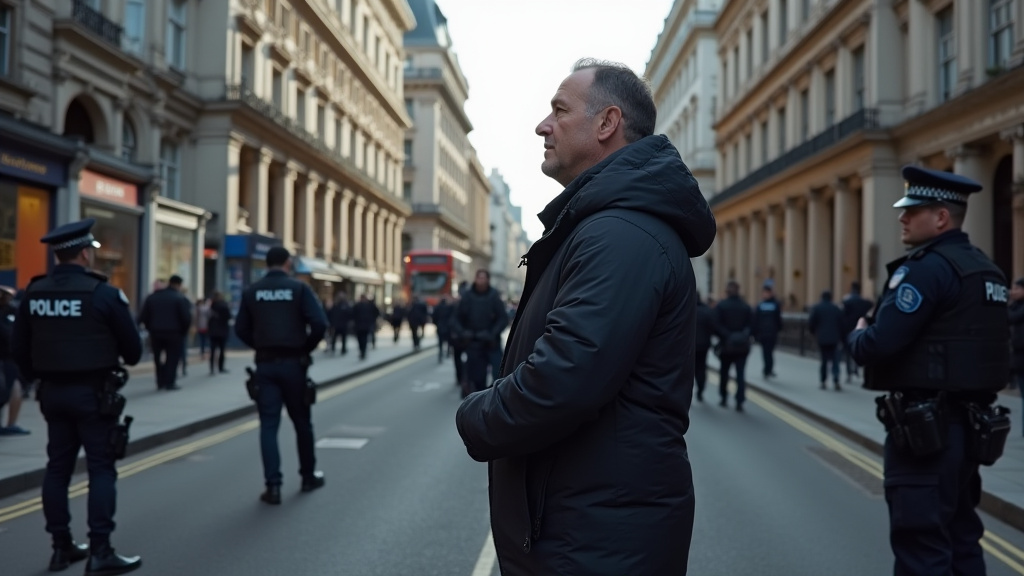
Counter-terrorism units are currently leading a high-stakes investigation into a series of coordinated arson incidents across London, with authorities raising alarm over potential foreign state-sponsored proxy warfare operating on British soil. The Metropolitan Police have confirmed that while the attacks—targeting the London offices of the Persian-language news channel Iran International, a Finchley synagogue, and ambulances operated by the Jewish charity Hatzola—have not yet been formally designated as terrorist incidents, the investigation is being handled by counter-terrorism command due to the suspicious nature and alarming similarities of the events.
Key Highlights
- Targeted Wave: Three separate incidents in north London have triggered a massive Counter Terrorism Policing investigation: an attack on Iran International, an attempted firebombing of a Finchley synagogue, and the torching of four Hatzola Jewish charity ambulances.
- Multiple Arrests: Police have apprehended several suspects across the city, including a 16-year-old and two men aged 19 and 21, in connection with the Iran International incident, with further arrests linked to the wider string of attacks.
- Foreign Proxy Fears: Law enforcement officials, including Deputy Commissioner Matt Jukes, have issued a stark warning regarding the growing trend of criminal proxies being used by foreign states to conduct intimidation and violence in the UK.
- Operational Stance: Police are maintaining an ‘open mind’ regarding the motivation but are explicitly analyzing the pattern of these incidents against a backdrop of global instability and hostile foreign activity.
The Anatomy of an Escalating Security Crisis
The events of the past few weeks have placed London’s security services under unprecedented scrutiny as they navigate what appears to be a sophisticated campaign of intimidation. The incidents began with the arson attack on the Hatzola ambulances in Golders Green on March 23, followed by a harrowing attempted arson at the Finchley Reform Synagogue in the early hours of April 15. The sequence of violence culminated later that same Wednesday evening when a burning container was thrown towards the Wembley premises of Iran International, a Persian-language media outlet known for its vociferous opposition to the regime in Tehran.
The Shift Toward ‘Criminal Proxies’
One of the most concerning aspects of this investigation, as highlighted by Deputy Commissioner Matt Jukes and Senior National Coordinator for Counter Terrorism Policing Vicki Evans, is the suspected use of ‘criminal proxies.’ Traditionally, state-sponsored violence—whether espionage or sabotage—was conducted by intelligence officers or highly trained operatives. However, security experts have observed a worrying evolution: the outsourcing of this dirty work to low-level criminals, teenagers, and hired hands who may not even be aware of the geopolitical significance of their targets, or who are simply driven by financial incentives offered by hostile foreign entities.
This ‘gig economy’ of violence presents a significant challenge to traditional policing. When the perpetrator is a local youth or a petty criminal rather than a trained intelligence asset, the standard counter-surveillance and intelligence-gathering methods used by agencies like MI5 or the Met’s counter-terror units become harder to apply effectively. The police are essentially fighting a diffuse, non-traditional threat that exploits the relative openness and anonymity of a major metropolitan area.
Investigating the Geopolitical Undercurrents
While the Metropolitan Police have been careful not to attribute blame to any specific foreign government in an official capacity, the nature of the targets—a major dissident media organization and prominent Jewish institutions—speaks volumes. Iran International, in particular, has long been a lightning rod for the Iranian regime, which has repeatedly labeled it a ‘terrorist’ organization. The attempt to firebomb their offices is not merely a crime; it is an act of transnational repression, an attempt to silence dissenting voices in exile.
Simultaneously, the targeting of Jewish community assets like the Hatzola ambulances and the Finchley Reform Synagogue indicates a broader strategy of spreading fear within the UK’s minority communities. By creating an atmosphere of vulnerability, these actors hope to sow discord, weaken social cohesion, and intimidate diaspora groups who have found sanctuary in London.
The Police Response and Community Resilience
Metropolitan Police leadership has been vocal in its commitment to protecting these communities. Matt Jukes’ direct message—’For the people who think you can make quick and easy money by committing crimes for others, we will show that they are fools’—marks a shift from passive observation to proactive deterrence. The deployment of armed response vehicles and the rapid pursuit of the suspects in Wembley demonstrate that London’s police force is treating these incidents with the gravity usually reserved for active terror threats.
However, the burden on the community remains immense. Jewish groups and the Iranian diaspora in London are now forced to navigate a heightened security landscape. Community leaders are calling for increased surveillance, better protection for religious and media institutions, and a more robust diplomatic response from the British government to address the hostile foreign actors who may be pulling the strings from abroad.
The Broader Security Context
London has long been a hub for international diplomacy and, by extension, international friction. Yet, the current wave of investigations suggests a new chapter in how hostile states operate within the UK. The use of criminal ‘proxies’ is a low-cost, high-impact strategy that provides the perpetrator with ‘plausible deniability’ while achieving the desired goal of intimidation. If these incidents are indeed coordinated, they represent a significant escalation in the scope and boldness of foreign influence operations on British soil.
As the investigation continues, the focus will likely remain on unraveling the chain of command. If police can successfully link the criminal street-level actors to the funding and orchestration mechanisms of foreign states, it could trigger a major diplomatic reckoning. The British government will face immense pressure to take stronger action against any state found to be facilitating such brazen attacks on UK territory. This situation serves as a stark reminder that in the modern era, the frontlines of geopolitical conflict are not limited to distant battlefields but are increasingly found on the streets of cities like London.
FAQ: People Also Ask
1. Are these arson attacks linked to terrorism?
While the attacks are being led by Counter Terrorism Policing, the police have not officially declared them as ‘terrorism’ incidents. However, they are keeping an ‘open mind’ regarding the motivation, noting the suspicious similarities and the nature of the targets, which suggests an underlying agenda beyond simple criminal arson.
2. Who is being targeted in these London attacks?
The targets have been specific: the offices of the Persian-language news channel Iran International in Wembley, the Finchley Reform Synagogue, and four ambulances belonging to the Jewish community charity Hatzola in Golders Green.
3. Is there evidence of foreign state involvement?
Police officials have strongly suggested that they are investigating the possibility that individuals are being ‘persuaded or paid’ to act on behalf of foreign organizations or hostile states. This strategy of using criminal proxies is a significant line of inquiry for the Metropolitan Police.
4. Have there been any arrests made in these cases?
Yes. Multiple arrests have been made. Specifically, in relation to the Iran International attack, a 16-year-old and two men (19 and 21) were arrested. Other arrests have been made regarding the Hatzola and synagogue attacks, bringing the total number of individuals in custody to several, with some already facing charges.