In a significant reversal for British foreign policy, the UK government has officially placed its high-stakes deal to transfer sovereignty of the Chagos Islands to Mauritius on indefinite hold. The decision comes following intense criticism from U.S. President Donald Trump, who withdrew American support for the arrangement, effectively stripping the legal and political foundation required to proceed. British ministers acknowledged on Saturday that the necessary legislation to ratify the agreement would not be introduced in the current parliamentary session, signaling a potential collapse of one of the most controversial diplomatic initiatives of the decade.
The Strategic Pivot
The abrupt shift in the UK’s approach to the Chagos Archipelago—a group of islands in the Indian Ocean that includes the crucial Diego Garcia military base—reflects the cooling of relations between Prime Minister Keir Starmer’s administration and the White House. While the British government had previously signaled its intention to finalize the handover, the U.S. administration’s refusal to provide the necessary assurances has rendered the plan untenable. For the Starmer government, which had aimed to settle a decades-long colonial dispute, this pause represents a profound embarrassment and a reminder of the UK’s reliance on U.S. security approval when it comes to the joint administration of the Indian Ocean territory.
The Role of Diego Garcia
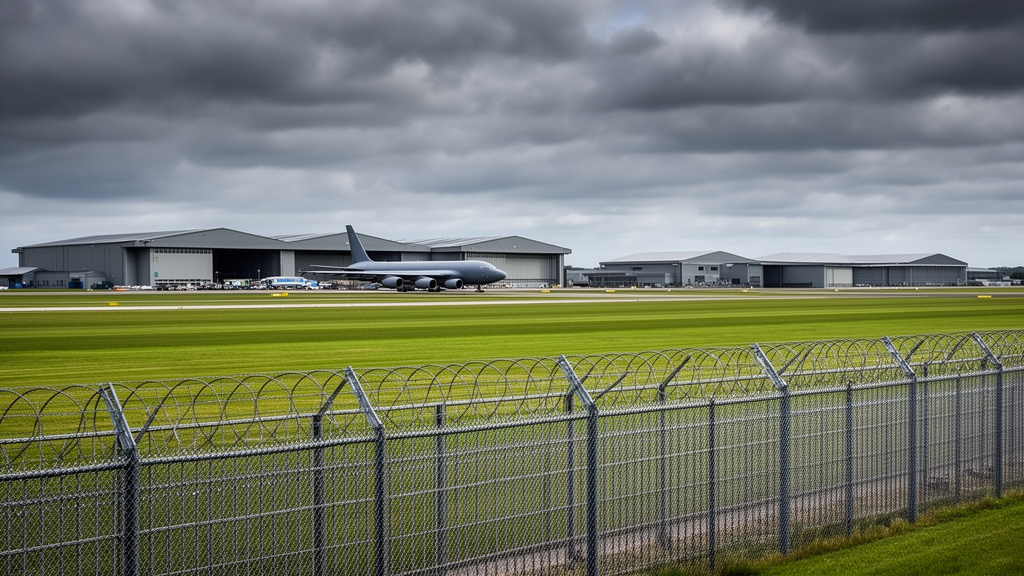
At the center of this geopolitical standoff is the Diego Garcia military base, arguably the most vital strategic asset in the Indian Ocean for both the United Kingdom and the United States. Used extensively for long-range bomber missions, intelligence gathering, and naval logistics, the base has long been a focal point of international concern. The proposed deal involved the UK ceding sovereignty to Mauritius while maintaining a 99-year lease on the archipelago to secure the base’s operational status. However, President Trump’s recent characterization of the deal as an “act of great stupidity” has fundamentally altered the calculus in London. The American administration appears to have moved toward a more hawkish view, fearing that any change in sovereignty—even with a lease back—could expose the facility to undue risk or potential interference from competing global powers, namely China and Russia.
Parliamentary Roadblocks
Domestically, the government’s retreat is being framed as a strategic pause, but the timeline suggests a deeper impasse. The legislative window for the current session of Parliament is closing rapidly. With the King’s Speech regarding the new parliamentary agenda set for mid-May, the Chagos Sovereignty Bill is now unlikely to appear. This delay pushes the entire project into a period of extreme uncertainty. Critics within the Conservative Party and Reform UK have been vocal, arguing that the transfer would compromise national security and weaken the Western posture in the Indo-Pacific region. The pressure from these factions, combined with the lack of U.S. support, has left the government with few alternatives other than a full retreat.
Geopolitical Ramifications
Beyond the bilateral dispute between London and Washington, the incident underscores the challenges inherent in post-colonial diplomacy when it intersects with modern security architecture. Mauritius has argued for years that its sovereignty over the Chagos Islands was illegally severed by the British in the 1960s. The UK’s attempt to rectify this, while preserving the base, was a complex balancing act that now appears to have failed. This situation creates a diplomatic vacuum. If the deal cannot be salvaged, the legal challenges regarding the archipelago’s status will likely intensify, potentially leading to increased international isolation for the UK in global forums like the United Nations, where many nations support Mauritius’s claim.
The Human Dimension: Displaced Chagossians
The geopolitical maneuvering often overshadows the human reality: the thousands of Chagossians who were forcibly expelled from their homes in the 1960s and 1970s to make way for the base. For these individuals and their descendants, the latest development is yet another frustrating chapter in a lifelong struggle for justice. Many had hoped that the sovereignty deal would facilitate their return or at least provide a pathway to recognition and compensation. Instead, they remain stuck in legal limbo, with the islands they call home largely closed off as a secure military zone, their future held hostage by the changing political winds in Washington and London.
Prospects for Reconciliation
Despite the current freeze, government officials in London have stated that they are continuing to engage with both the U.S. and Mauritius. The hope within the Foreign Office is that the deal might be revived if the political environment in Washington changes or if a compromise can be reached that satisfies U.S. security concerns. However, given the current climate and the hardening of positions, a swift resolution seems unlikely. The Chagos Islands remain, as they have been for decades, a flashpoint where the echoes of colonial history collide with the realities of modern 21st-century power projection.