
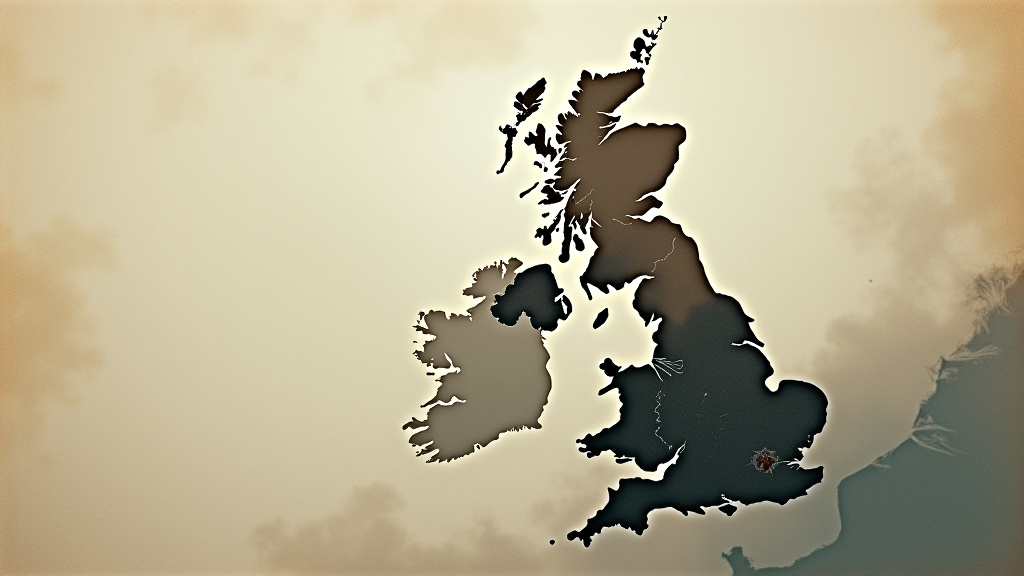
The political landscape of the United Kingdom is poised for a significant shift, with recent election outcomes suggesting a strengthened mandate for pro-independence movements across three of its constituent nations. This evolving scenario signals a potential recalibration of the Union’s future, driven by a growing desire for greater self-governance.
Key Highlights:
- Increased representation for pro-independence parties in recent elections.
- Renewed calls for referendums on national sovereignty.
- Potential for significant policy divergence between devolved administrations and the central government.
- Heightened political and economic uncertainty surrounding the Union’s integrity.
Shifting Political Sands: Election Aftermath and Autonomy Demands
The recent electoral cycles across the UK have delivered a clear message from a significant portion of the electorate: a desire for greater national autonomy. In Scotland, the Scottish National Party (SNP) has once again demonstrated its dominance, securing a majority or leading a coalition that prioritizes a fresh independence referendum. This outcome reinforces the long-standing push for Scotland to chart its own course, separate from Westminster’s direct control. The party’s consistent message, emphasizing self-determination and distinct national interests, has resonated deeply with voters who feel their concerns are better addressed from within an independent Scotland.
Scotland’s Renewed Push for Independence
The SNP’s electoral success is not merely a continuation of past trends; it represents a potent endorsement of their core policy. For years, the party has argued that Scotland’s interests, particularly concerning economic policy, social welfare, and international relations, are best served by independence. The recent election results provide them with a renewed mandate to pursue this objective vigorously. The challenge, however, remains the UK government’s consistent refusal to grant the necessary legal authority for a second independence referendum. This deadlock is likely to intensify, leading to further political friction and potential legal challenges.
Wales’s Growing Nationalist Sentiment
Meanwhile, Wales has also witnessed a surge in nationalist sentiment, though its expression differs from Scotland’s. Plaid Cymru, the Welsh nationalist party, has seen its support grow, advocating for greater devolution of powers and, for some within the party, full independence. The narrative in Wales often centers on distinct cultural identity, economic disparities, and a desire for more localized decision-making that reflects Welsh priorities. While not yet at the same level of electoral dominance as the SNP in Scotland, the increasing support for Plaid Cymru indicates a significant and growing portion of the Welsh population questioning the current constitutional arrangement and seeking a stronger voice on the international stage.
Northern Ireland’s Complex Dynamics
In Northern Ireland, the political landscape is intrinsically linked to the legacy of the Troubles and the unique constitutional position of the region. The recent elections have seen a notable increase in support for Sinn Féin, the nationalist party that advocates for a united Ireland. This trend, coupled with the evolving demographics and the ongoing complexities of post-Brexit arrangements, has brought the question of a border poll and a potential unification into sharper focus. The implications of such a shift would be profound, not only for Northern Ireland but for the entire United Kingdom and the Republic of Ireland.
The Economic Calculus of Sovereignty
Central to the independence debate in all three nations is the economic argument. Proponents of independence typically highlight the potential for tailored economic policies that can better address local needs, foster specific industries, and manage resources more effectively. They often point to perceived economic disadvantages within the Union, such as the impact of austerity measures or policies that do not align with national priorities. Conversely, opponents emphasize the economic benefits of remaining within the larger UK market, the potential disruption of separation, and the complexities of establishing new fiscal and trade arrangements. The uncertainty surrounding the economic implications remains a significant factor for undecided voters.
International Perspectives and Precedents
The push for independence within the UK is being watched closely by international observers. The experiences of other nations that have undergone similar transitions, such as Catalonia in Spain or Scotland’s own 2014 referendum, offer valuable insights into the challenges and potential outcomes. International bodies and foreign governments often tread carefully, respecting national sovereignty while also acknowledging the potential for significant geopolitical shifts. The UK’s standing on the global stage, its role in international alliances like NATO, and its economic relationships are all factors that influence these external perspectives.
The Future of the Union: A Period of Uncertainty
The confluence of these factors – strengthened nationalist mandates, evolving political alignments, and persistent economic debates – places the United Kingdom at a critical juncture. The coming years are likely to be characterized by intense political negotiation, potential legal battles over referendum rights, and ongoing public discourse about national identity and the future structure of governance. Whether these movements lead to a significant reconfiguration of the UK or reinforce existing bonds will depend on a complex interplay of political will, public opinion, and pragmatic compromise.
FAQ: People Also Ask
What are the primary arguments for independence in Scotland?
The primary arguments for Scottish independence revolve around the belief that Scotland can be more prosperous and socially just as an independent nation. Key points include the desire to diverge from UK government policies on issues like welfare, economic strategy, and foreign affairs, the perceived democratic deficit where Scottish
Parliamentary decisions can be overridden by Westminster, and the potential to reclaim control over Scotland’s natural resources and economic development.
How does the push for Welsh independence differ from Scotland’s?
While both movements seek greater self-determination, the push for Welsh independence is often characterized by a stronger emphasis on cultural identity and a response to perceived economic neglect. Plaid Cymru, the main proponent, advocates for a gradual increase in devolved powers, with independence as a long-term goal. The debate in Wales also grapples with distinct historical narratives and the practicalities of creating an independent Welsh state, which may involve different economic models and international relations compared to Scotland.
What are the potential economic consequences of the UK breaking up?
The potential economic consequences are complex and debated. For an independent nation, there’s the possibility of tailoring fiscal and monetary policy, attracting foreign investment with specific incentives, and controlling its own trade deals. However, there’s also the risk of increased transaction costs with the rest of the UK, potential currency fluctuations, the cost of establishing new state institutions, and the loss of fiscal transfers from the central UK government. For the remaining UK, there would be a loss of economic output, reduced market size, and the administrative and political challenges of managing a different constitutional structure.
Can any of the UK nations hold a legally binding independence referendum without UK government consent?
Currently, under UK constitutional law, a legally binding referendum on independence requires the consent of the UK Parliament. The UK Supreme Court has ruled that the Scottish Parliament does not have the legislative competence to unilaterally legislate for an independence referendum. Therefore, any attempt to hold a legally binding vote would necessitate agreement from Westminster. Political pressure and continued electoral success by independence parties may lead to further negotiations or legal challenges.
What is the role of Brexit in the current independence movements?
Brexit has significantly fueled independence movements, particularly in Scotland and Northern Ireland. Scotland voted overwhelmingly to remain in the European Union, and many feel that being taken out against their will undermines the legitimacy of the Union and strengthens the case for Scotland to rejoin the EU as an independent nation. In Northern Ireland, Brexit has complicated the border issue and raised questions about the region’s relationship with both the Republic of Ireland and the EU, leading to increased discussion about a united Ireland.