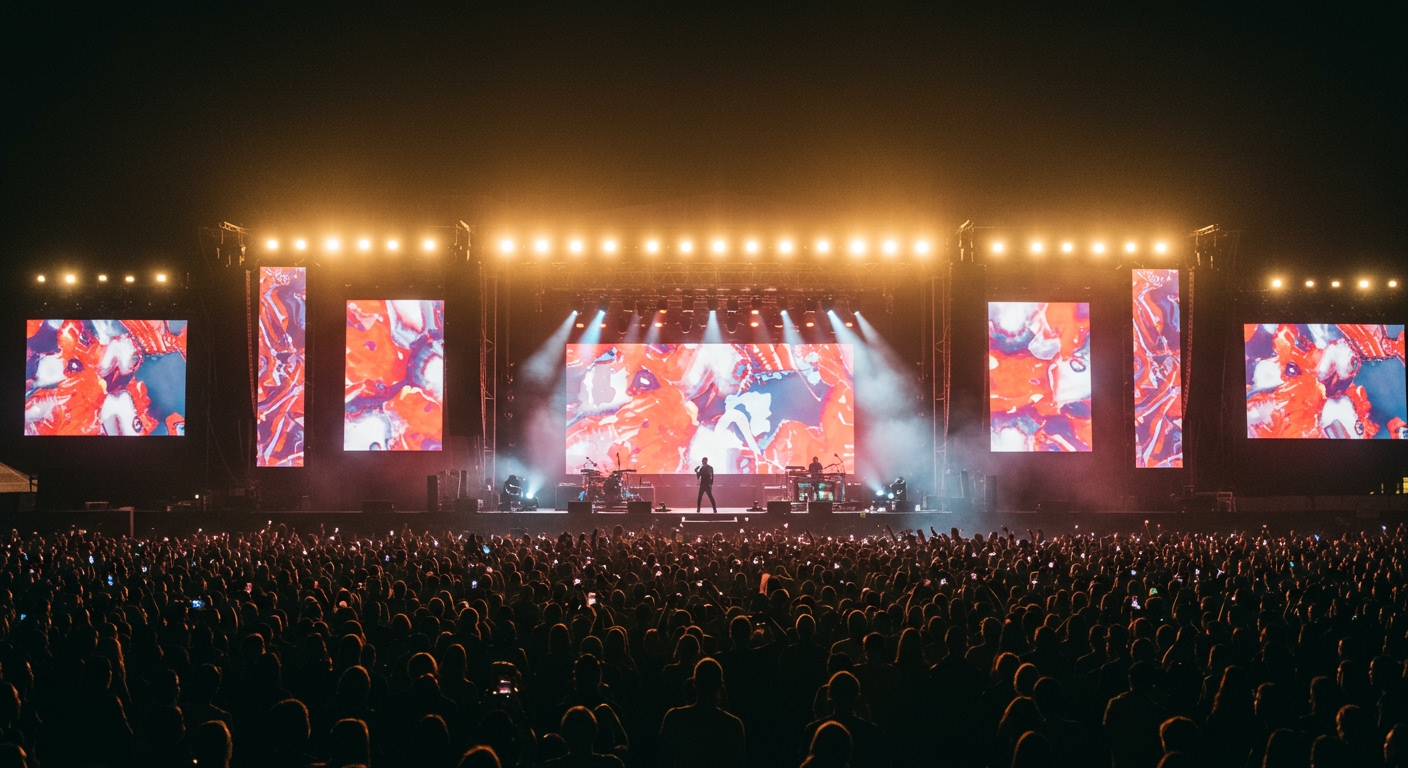
London, UK – The British Broadcasting Corporation (BBC) has issued a statement expressing regret over its decision not to promptly remove the live stream of the musical duo Bob Vylan’s performance at the Glastonbury Festival. The broadcaster described certain comments made on stage during the set as “antisemitic” and “utterly unacceptable,” sparking debate about the boundaries of political expression on public platforms and the responsibilities of major media organizations.
The incident occurred during Bob Vylan’s performance on the West Holts stage at the renowned festival on Saturday, June 28. The set included politically charged segments, consistent with the group’s reputation for addressing social and political themes through their music, which blends elements of grime, punk, and rap.
The Performance and Controversial Comments
During the performance, the rapper Bobby Vylan, one half of the duo, engaged directly with the audience, leading them in chants that quickly drew attention and later condemnation. Among the specific phrases reportedly chanted were “free, free Palestine” and, more controversially, “death, death to the IDF.” The inclusion of these specific slogans on a widely broadcast platform immediately raised concerns and prompted a significant reaction from some viewers and commentators.
Live broadcasting of festival performances allows for spontaneous moments to reach vast audiences, but it also presents challenges for broadcasters in monitoring and reacting to unscripted content in real-time. The performance by Bob Vylan was part of the BBC’s extensive coverage of the Glastonbury Festival, which is a major event in the broadcaster’s annual schedule, drawing millions of viewers across television, radio, and online platforms.
BBC’s Admission and Explanation
Following the performance and subsequent public reaction, the BBC addressed the matter directly. A spokesperson for the corporation acknowledged the problematic nature of the comments made on stage. They specifically labelled the remarks as “antisemitic” and deemed them “utterly unacceptable,” a strong condemnation from the public service broadcaster.
The core of the BBC’s statement of regret centered on the duration for which the live stream of the performance remained accessible on its platform. The broadcaster admitted that “in “hindsight” the stream should have been pulled sooner.” This suggests an internal review or acknowledgment that the content, once aired, was identified as breaching editorial guidelines or being inappropriate for continued public access.
The duration of the stream’s availability became a specific point of criticism. The BBC confirmed that the stream remained on its platform for over five hours before being removed. This delay raises questions about the speed of content review and moderation processes for live events, particularly those involving potentially controversial political statements.
Implications and Broader Debate
The incident involving Bob Vylan’s performance and the BBC’s subsequent regret highlights the complex intersection of artistic expression, political activism, and broadcasting responsibility. Festivals like Glastonbury are often platforms for artists to voice their views on contemporary issues, and audiences frequently engage with such political messaging.
However, the specific chants led by Bobby Vylan, particularly “death, death to the IDF,” are highly sensitive and widely interpreted by many as crossing a line into hateful or unacceptable rhetoric, particularly within the context of the Israeli-Palestinian conflict. The term “antisemitic” as applied by the BBC to the comments is itself a subject of ongoing debate, especially regarding criticisms of Israeli government policy or actions versus targeting Jewish people.
Major broadcasters like the BBC operate under strict editorial guidelines and are expected to adhere to standards of impartiality and accuracy. While providing a platform for diverse voices, they also have a responsibility to ensure content does not promote hate speech or incite violence. The delay in removing the stream indicates a potential lapse in the system designed to monitor live broadcasts for such content.
The incident is likely to fuel further discussion about how broadcasters cover live events featuring artists known for their political views. It prompts questions about the extent to which spontaneous political commentary should be aired without delay and the criteria used to determine when such content becomes problematic enough to warrant immediate removal.
Reactions and Moving Forward
The BBC’s admission of regret has been met with various reactions. While some have praised the broadcaster for acknowledging its error and taking steps to address the issue by removing the stream, others have criticized the initial decision to air the comments and the delay in their removal. The incident underscores the challenges faced by broadcasters in navigating the complexities of live events in an era where content can be instantly distributed and scrutinized globally.
The episode serves as a significant example of the potential pitfalls in live event broadcasting and the need for robust systems to manage controversial content in real-time. The BBC’s statement clarifies its official position on the comments made by Bob Vylan during the Glastonbury set, framing them as beyond acceptable limits for its platform and acknowledging the failure to act promptly.
As festivals continue to be venues for both artistic performance and political expression, broadcasters will likely face increasing pressure to define and enforce clear guidelines for what content is acceptable for live transmission and how quickly they can react when those boundaries are tested.
In conclusion, the BBC’s public expression of regret regarding the streaming of Bob Vylan’s Glastonbury set, specifically citing the “antisemitic” and “utterly unacceptable” nature of the on-stage comments and the delay in removing the stream, marks a notable moment in the ongoing discussion about media responsibility, political speech, and the challenges of live broadcasting.