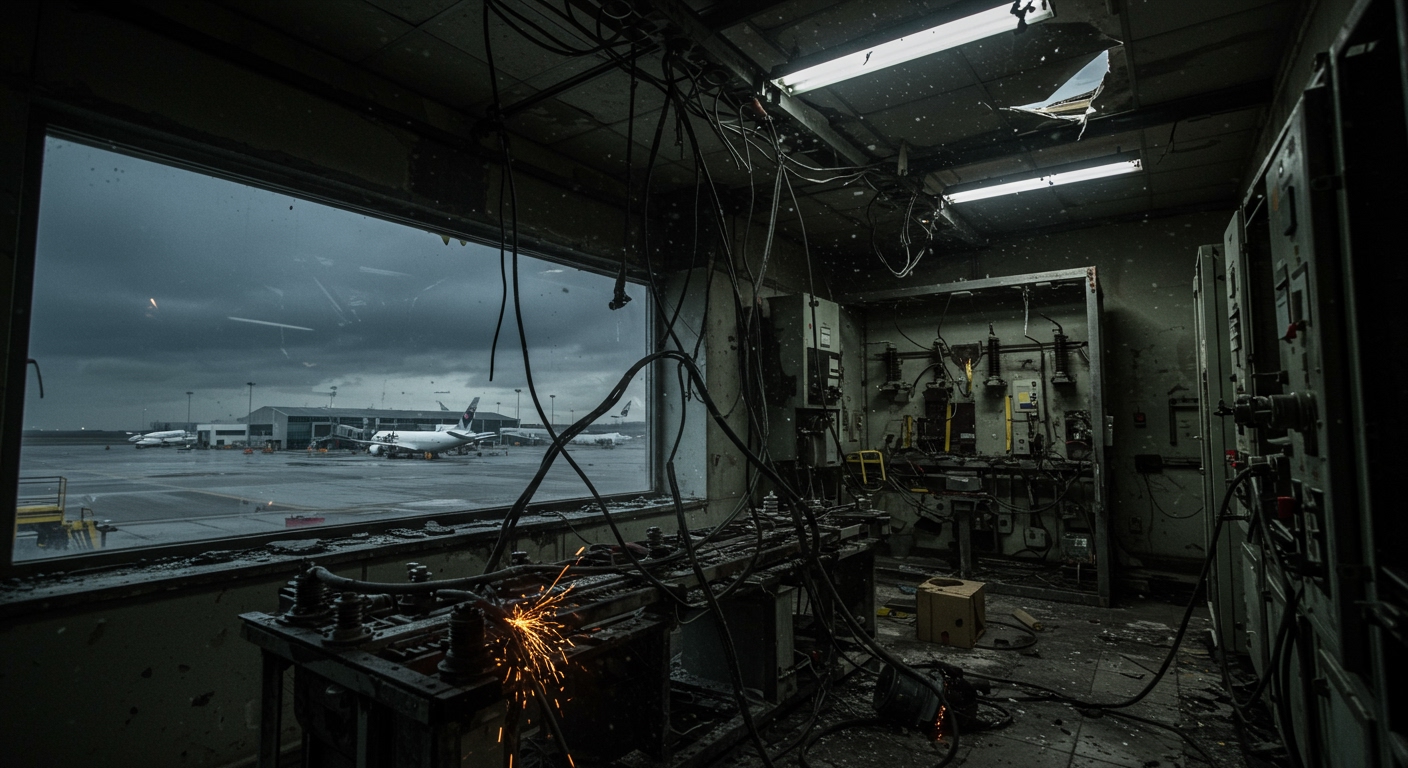
LONDON – A recent critical report has brought into sharp focus the underlying causes of the significant disruption that crippled operations at Heathrow Airport in March. The investigation has revealed that a fire leading to the shutdown was not the result of an unforeseen event, but rather a preventable fault, the existence of which was first identified a remarkable seven years prior.
The findings, which underscore potential lapses in maintenance or infrastructure management, have prompted immediate action from the energy watchdog, Ofgem. The regulator has announced the launch of a formal investigation into the incident, which the report starkly described as a “catastrophic failure.”
The March Disruption
The incident in question occurred in March, leading to a considerable shutdown at one of the world’s busiest international hubs, Heathrow Airport. While the immediate cause of the shutdown was a fire, the deeper implications lie in the revelation that this fire stemmed from a technical fault that was, according to the report, entirely preventable. The disruption caused significant inconvenience for travelers and airlines alike, raising questions about the resilience of critical airport infrastructure.
Airports rely on complex networks of power, communication, and operational systems working in flawless coordination. A failure in one area, particularly involving essential utilities like power supply – which is implicated by Ofgem’s involvement – can cascade rapidly, affecting everything from air traffic control and baggage handling to terminal operations.
A Long-Standing Problem
Perhaps the most striking and concerning detail emerging from the report is that the specific fault identified as the root cause of the March fire was initially discovered seven years ago. This timeline raises serious questions about why a known issue, deemed preventable, was allowed to persist for such an extended period, ultimately leading to a significant operational failure.
Sources familiar with infrastructure management indicate that identifying a fault is typically the first step in a process that should involve assessment, prioritization, repair, and verification. A seven-year gap between discovery and catastrophic failure suggests that either the severity of the fault was initially underestimated, or necessary remedial actions were delayed, inadequately performed, or entirely overlooked. The report’s implication of preventability suggests that the technical knowledge and means to fix the issue were available.
The specifics of what led to the delay in rectifying the fault over seven years are expected to be a key area of focus for the ongoing investigation. This includes examining maintenance logs, risk assessments conducted over that period, budgetary decisions, and the communication channels between maintenance teams and management responsible for infrastructure integrity.
Regulator Steps In
The energy watchdog Ofgem has officially launched an investigation into the incident. Ofgem is the independent regulator for the electricity and gas markets in Great Britain. While airports themselves are complex entities with various regulatory bodies overseeing different aspects of their operations (like the Civil Aviation Authority for safety and security), Ofgem’s involvement points specifically to the failure’s connection to the energy infrastructure supplying the airport. This could relate to transformers, substations, cabling, or other critical power components.
Ofgem’s mandate includes ensuring that energy networks are reliable and resilient. A failure causing a shutdown at a critical national infrastructure site like Heathrow falls squarely within their purview, particularly if it involves the performance and maintenance standards of the network operators supplying the airport. The investigation will likely seek to determine if relevant regulations or license conditions related to asset maintenance and reliability were breached.
The regulator has significant powers, including the ability to fine companies that fail to meet their obligations. The outcome of the Ofgem investigation could therefore have financial implications for the entity responsible for maintaining the specific energy infrastructure that failed, as well as potentially leading to demands for urgent system upgrades and improved maintenance protocols across critical sites.
Described as ‘Catastrophic Failure’
The report’s characterization of the incident as a “catastrophic failure” underscores the severity and magnitude of the breakdown. In technical and operational contexts, this term is not used lightly; it typically signifies a failure so complete and fundamental that it leads to a total system collapse or shutdown, with significant consequences.
Using such strong language suggests that the fault was not a minor glitch but a critical vulnerability that, once triggered, had widespread and severe impacts. This description is likely to feature prominently in Ofgem’s investigation as they assess the level of risk posed by the unaddressed fault and the adequacy of the response both before and during the incident.
Looking Ahead
The Ofgem investigation is expected to be thorough, delving into the specifics of the fault, why it was left unaddressed for seven years, the actions taken (or not taken) following its initial discovery, and the protocols in place for managing critical infrastructure risks. The findings will be crucial not only for determining accountability for the March shutdown at Heathrow but also for informing future standards and practices for maintaining essential infrastructure at major transport hubs and other critical national sites.
Airport authorities and relevant infrastructure operators are likely facing intense scrutiny. The incident serves as a stark reminder of the importance of proactive maintenance, timely repairs, and rigorous oversight of vital systems, particularly when known faults exist. The outcome of the investigation will be closely watched by the public, the aviation industry, and other infrastructure operators, as it could set precedents for how long-standing maintenance issues are addressed and regulated in the future. The report and the subsequent investigation highlight the need for robust systems that prevent known risks from escalating into significant, preventable failures causing widespread disruption.