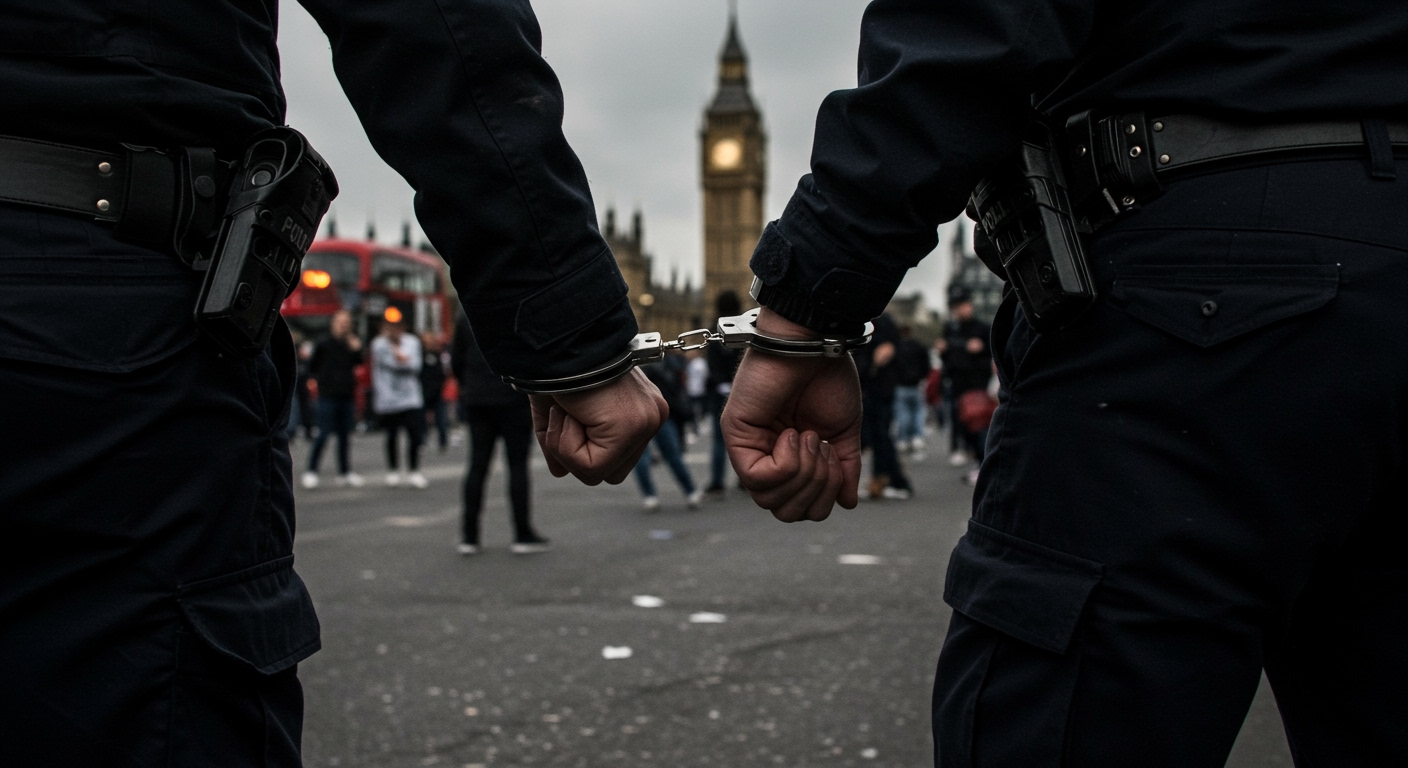
London, UK – More than 20 individuals were arrested in Parliament Square, central London, on Saturday, July 5, 2025, during a protest organized in support of the group Palestine Action. The arrests occurred just hours after the United Kingdom government officially banned the organization, a proscription that came into effect at midnight on the same day.
Government Proscription Under Terrorism Act 2000
The proscription of Palestine Action was enacted under the provisions of the Terrorism Act 2000. This significant legal measure makes it a criminal offence to be a member of, or provide support for, the now-banned group. Individuals found guilty under this proscription face severe penalties, including a potential prison sentence of up to 14 years.
The decision to ban Palestine Action followed a period of intense scrutiny regarding the group’s activities. A key incident cited by the government occurred on June 20, when activists allegedly caused substantial damage to two Voyager aircraft located at RAF Brize Norton. The estimated cost of the damage from this incident is reported to be approximately £7 million.
Home Secretary Yvette Cooper had publicly announced the government’s intention to proscribe Palestine Action following the damage incident at the military base, signaling the government’s firm stance against the group’s methods.
Failed Legal Challenge Against the Ban
Palestine Action had mounted a late-night legal challenge in an attempt to prevent the ban from taking effect. On Friday evening, prior to the midnight deadline, the group lost its Court of Appeal challenge. Justice Martin Chamberlain presided over the hearing and ultimately ruled against a temporary block on the measure, allowing the proscription to proceed as planned.
This judicial decision cleared the path for the ban to become legally binding from the first moments of July 5, setting the stage for subsequent enforcement actions against the group’s activities and its supporters.
Protests and Police Response in Parliament Square
Despite the ban taking effect, a protest demonstrating solidarity with Palestine Action proceeded in Parliament Square on the afternoon of July 5. The gathering began around 1:10 pm. Protesters convened near the statue of Mahatma Gandhi, with some participants displaying placards.
The presence of the protest in such a prominent location, coupled with the newly enforced ban, prompted a swift response from law enforcement. Police units were deployed to the scene, and arrests commenced shortly after the protest began, around 1:30 pm. The Metropolitan Police confirmed the operation and the subsequent arrests.
On the social media platform X, the Metropolitan Police stated that officers were responding to the protest and were detaining individuals on suspicion of committing offences under the Terrorism Act 2000. This confirmation underscored that the arrests were directly linked to the group’s newly prohibited status.
Implications of the Proscription
The proscription of Palestine Action marks a significant escalation in the UK government’s approach to protest and activism related to the Israel-Palestine conflict. While the government asserts the ban is necessary to counter activities deemed harmful or disruptive, critics argue it represents a potential curtailment of the right to protest and dissent.
The arrests in Parliament Square, just hours after the ban came into force, highlight the immediate legal consequences for individuals perceived as supporting or being members of the group. The incident at RAF Brize Norton appears to have been a pivotal factor in the government’s decision, illustrating the impact that specific actions can have on the legal status of protest movements.
The situation is expected to remain fluid as legal challenges to the ban may continue, and the police and authorities navigate the enforcement of the proscription against any ongoing activities or expressions of support for Palestine Action.