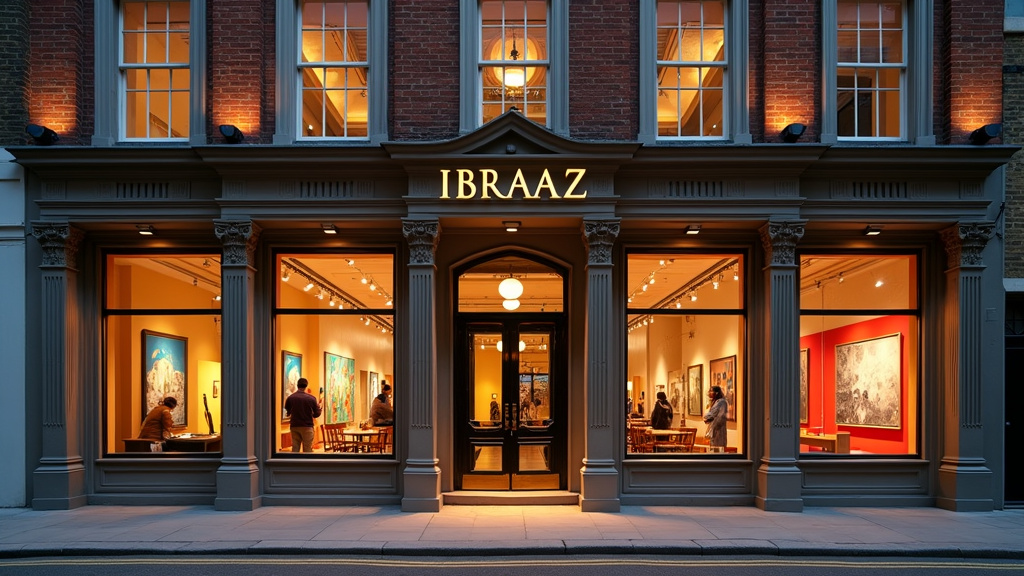
London is set to welcome a significant new cultural destination this October with the opening of Ibraaz, a groundbreaking arts and cultural center located in a historic Grade II-listed building in the heart of Fitzrovia. Spearheaded by the Kamel Lazaar Foundation and architect-in-residence Sumayya Vally, Ibraaz is poised to become a vital platform for art, culture, and ideas emanating from the Global Majority, encompassing African, Asian, Indigenous, and Latin American heritage. The center officially launches on October 3, 2025.
A ‘Brave Space’ for Dialogue and Ideas
Ibraaz, a name meaning “to shine a light on” in Arabic, is founded on the principle of fostering open expression, critical discourse, and collective imagination. Founder Lina Lazaar, Vice President of the Kamel Lazaar Foundation, articulated a pressing need for such a space, especially at a time when freedom of expression is perceived to be shrinking across various platforms. “There has never been a greater need to create the conditions for genuine dialogue and a space for inquiry,” Lazaar stated, aiming for Ibraaz to be a “brave space” that encourages thoughtful engagement with contemporary issues rather than simply a safe haven.
The foundation, established by Lina’s father, Tunisian businessman and arts patron Kamel Lazaar, has a legacy of supporting research, publishing, and exhibitions that champion narratives from North Africa and the Middle East. Ibraaz, which began as a digital platform in 2011, now expands its mission globally by establishing this physical presence in London, dedicated to amplifying underrepresented voices and perspectives. The initiative seeks to bridge local and global conversations, reflecting the understanding that the Global Majority constitutes the vast majority of the world’s population.
Architectural Transformation of a Heritage Building
Sumayya Vally, the acclaimed architect known for her youngest-ever commission of the Serpentine Pavilion in 2021, has led the architectural reimagining of the six-floor, 10,000-square-foot venue at 93 Mortimer Street. This historic building has a rich past, having served variously as a synagogue, a private residence, a hospital, and most recently, the German Athenaeum cultural club. Vally’s design approach transforms the space into an evolving structure, drawing inspiration from the often-overlooked diasporic gathering spaces integral to London’s social fabric. Her work aims to create a dynamic environment where the building itself can transform over time, shaped by the communities and ideas it hosts. The studio Counterspace, founded by Vally, focuses on architecture that re-evaluates traditional structures to consider social and cultural impacts, emphasizing identity, community, and gathering.
A Multifaceted Cultural Program
Ibraaz promises a dynamic, multidisciplinary program designed to engage diverse audiences. Visitors can expect exhibitions, talks, screenings, and music events. The center will also feature residencies for its library and bookshop, fostering a continuous flow of knowledge and creativity. The inaugural exhibition, opening on October 3, 2025, will be “Parliament of Ghosts” by renowned Ghanaian artist Ibrahim Mahama. This site-specific installation utilizes salvaged colonial-era furniture and jute sacks, offering a powerful space for reflection on Ghana’s post-independence history.
The Otolith Collective will serve as the first library-in-residence, while Burley Fisher Books, initially curated by the Palestine Festival of Literature, will manage the bookshop. These elements, alongside a planned café-in-residence, underscore Ibraaz’s commitment to “cultural hospitality” and creating a welcoming atmosphere rooted in care and generosity. The center will offer free admission and be open Wednesday through Sunday, further enhancing its accessibility.
Shaping London’s Cultural Landscape
The arrival of Ibraaz marks a significant development in London’s vibrant cultural scene, introducing a dedicated space that prioritizes voices and perspectives historically marginalized within mainstream art institutions. By transforming a heritage site into a contemporary hub for global art and ideas, Ibraaz intends to contribute to urgent conversations about society, identity, and the future, cementing its role as a trending new landmark in London’s culture and arts news.