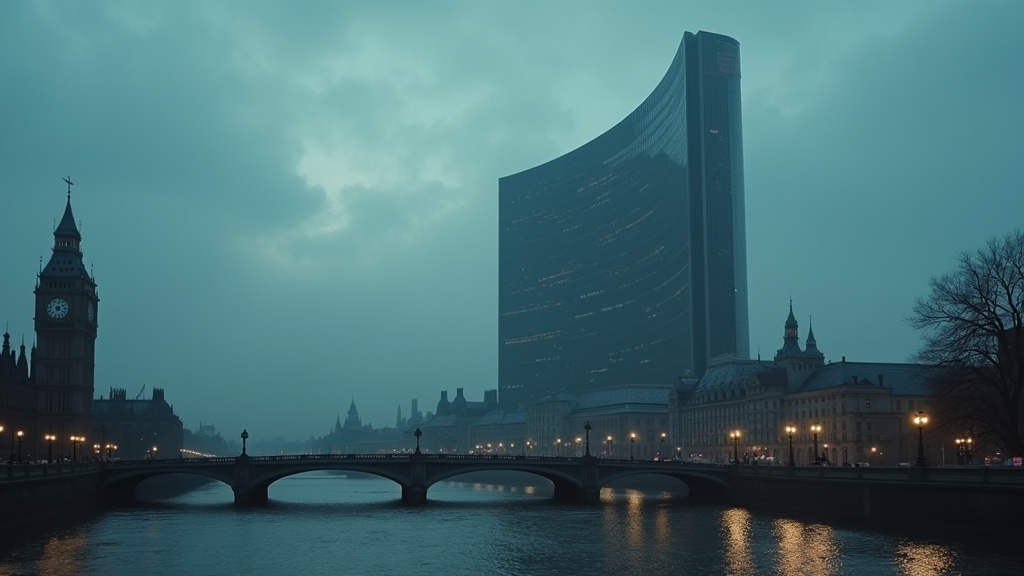
London, UK – A sprawling proposal by China to construct a “super-embassy” near the historic Tower of London has ignited a firestorm of security concerns, espionage fears, and geopolitical scrutiny, placing the British government in a delicate balancing act. The ambitious development, envisioned for the former Royal Mint Court site, is set to become the largest diplomatic mission in Europe, but its proximity to critical infrastructure and a storied historical landmark has amplified anxieties within the UK and among international allies.
A Colossal Diplomatic Footprint
Plans submitted by China outline a massive complex exceeding 610,000 square feet, dwarfing its current embassy in London and even surpassing the size of the U.S. Embassy. The proposed “Embassy House and Cultural Exchange Building” includes not only offices and residences for hundreds of staff but also a visa processing center and a cultural hub. This scale alone has raised eyebrows, but it is the site’s strategic location that has truly fueled the controversy.
Proximity to Power: Espionage and Security Alarms
The chosen location places the proposed embassy perilously close to the City of London’s financial district and, crucially, near underground fiber optic cables that carry vast amounts of sensitive data. Cybersecurity experts and political figures have warned that such a proximity could facilitate Chinese intelligence operations, potentially allowing for the interception of communications. The presence of critical data centers nearby further heightens these concerns, leading to fears that the “super-embassy” could become a sophisticated base for espionage activities, impacting national security and London’s standing as a global financial hub. This unfolding news story has become a trending topic for those monitoring international relations and security threats.
Past incidents, such as the 2022 assault on a pro-democracy protester within the grounds of the Chinese consulate in Manchester, have intensified these fears. Critics also point to redacted sections within the embassy’s planning documents, which they suspect could conceal facilities for detention or interrogation, further fueling concerns for dissidents and the broader society.
A Contentious Planning Saga
The path to potential approval has been fraught with hurdles. China’s initial planning application was unanimously rejected by the local Tower Hamlets council in 2022 due to safety and security concerns, as well as potential impacts on tourism. However, after Chinese President Xi Jinping personally raised the issue with UK Prime Minister Keir Starmer, the decision-making process was elevated to the national government. Identical plans were resubmitted, and the UK government has since called in the application, meaning it is now up to central ministers to make the final decision, rather than local authorities.
This move has drawn criticism, with some accusing the government of prioritizing potential economic ties over national security. The British government has extended decision deadlines multiple times, requesting further clarification from Beijing, particularly regarding the redacted portions of the plans. China, in turn, has expressed frustration, asserting that host nations have an “international obligation” to facilitate diplomatic premises and urging the UK to approve the application without delay.
International Scrutiny and China’s Defense
The controversy has not escaped international attention. The United States has voiced “deep concern” over the proposal, warning that granting permission could complicate intelligence-sharing agreements between the UK and its allies. China, however, has consistently denied espionage allegations, labeling them as “slander” and asserting that the new embassy would foster “understanding” and “friendship.”
A High-Stakes Decision for London and Beyond
The proposed “super-embassy” is more than just a planning dispute; it is a potent symbol of the increasingly complex and often fraught relationship between the UK and China. As the British government weighs the security implications against diplomatic and economic considerations, the decision will undoubtedly have far-reaching consequences for international relations, national security, and the evolving landscape of global society. The outcome of this trending news story remains keenly watched by diplomats, security experts, and the public alike, highlighting the delicate balance between diplomatic necessity and safeguarding national interests in an era of heightened geopolitical tensions.
The planned cultural exchange building, while presented as a bridge for understanding, is now viewed through a lens of suspicion, underscoring the deep distrust that has characterized recent years’ news and events between the two nations.