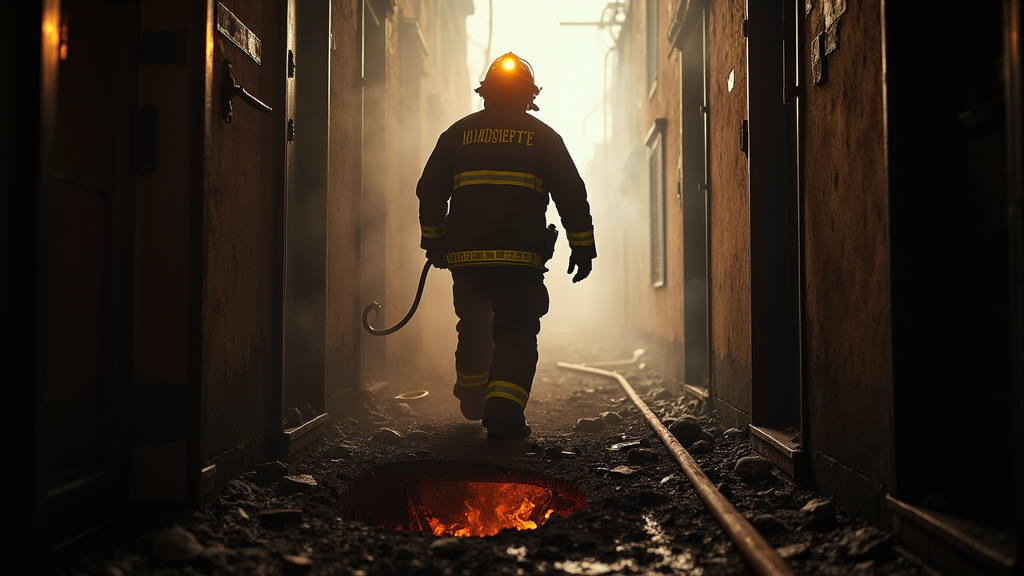
A routine response to a house fire in London on Wednesday morning took a critical turn when firefighters discovered a significant hole in the floor of the burning building, prompting an immediate “mayday” call to ensure crew safety. The incident occurred at approximately 8 a.m. on October 8, 2025, at a two-storey structure located at 260 Burwell Street, north of Horton.
The Initial Response and Evolving Danger
Upon arrival, fire crews were met with heavy smoke billowing from the two-storey building. Platoon Chief Colin Shewell reported that while the smoke was heavy, it did not indicate an immediate overwhelming fire, allowing crews to begin their assessment and attack the blaze. However, as firefighters advanced through the structure to reach the fire’s origin, they encountered an unexpected and perilous obstacle: a hole in the floor. This discovery necessitated an immediate “mayday” declaration – a distress signal used by emergency personnel to alert command and other units to a life-threatening situation or serious hazard.
‘Mayday’ Issued for Crew Safety
The “mayday” call, a critical safety protocol within fire services, was issued to provide advisement of the floor collapse hazard, thereby safeguarding the crews operating within the building. This signal ensures that all personnel are aware of extreme danger, allowing for tactical adjustments and potentially the deployment of rescue teams if needed. Despite the alarming discovery, firefighters made a determined push through the hazardous conditions to extinguish the fire quickly. The swift action prevented the blaze from spreading further within the property.
Fire Extinguished, No Injuries Reported
Crews were able to bring the fire under control and extinguish it in a timely manner. Fortunately, no injuries were reported among the firefighters or any civilians. The absence of injuries is a testament to the training and rapid response of the London Fire Brigade and the effective communication protocols that were activated during the incident.
Damage and Investigation
Following the successful suppression of the fire, an assessment revealed that the damages are estimated to be around $125,000. The fire is believed to have originated in a utility room within the building. Investigators have determined that the incident is not considered suspicious, pointing towards an accidental cause. This news marks another incident where structural integrity became a key concern during firefighting operations in the city.
Broader Implications for London Fire Safety
While this specific incident was quickly resolved without casualties, the discovery of a floor collapse hazard during a fire underscores the inherent risks faced by firefighters. Such events highlight the critical importance of real-time situational awareness and the bravery of crews who navigate dangerous environments. Recent trends in London have shown an increase in wildfires and complex building fires, emphasizing the need for continuous adaptation of safety procedures and equipment. Structural integrity assessments and clear communication channels, like the “mayday” system, remain paramount in ensuring the safety of those who protect the public. This event serves as a reminder of the unpredictable nature of structural fires and the robust safety measures in place within London’s fire services to manage such critical situations effectively. The incident will likely prompt a review of structural conditions at the site and reinforce ongoing safety training protocols across the brigade, ensuring that such hazardous discoveries are managed with the utmost care and professionalism for future news reports.