
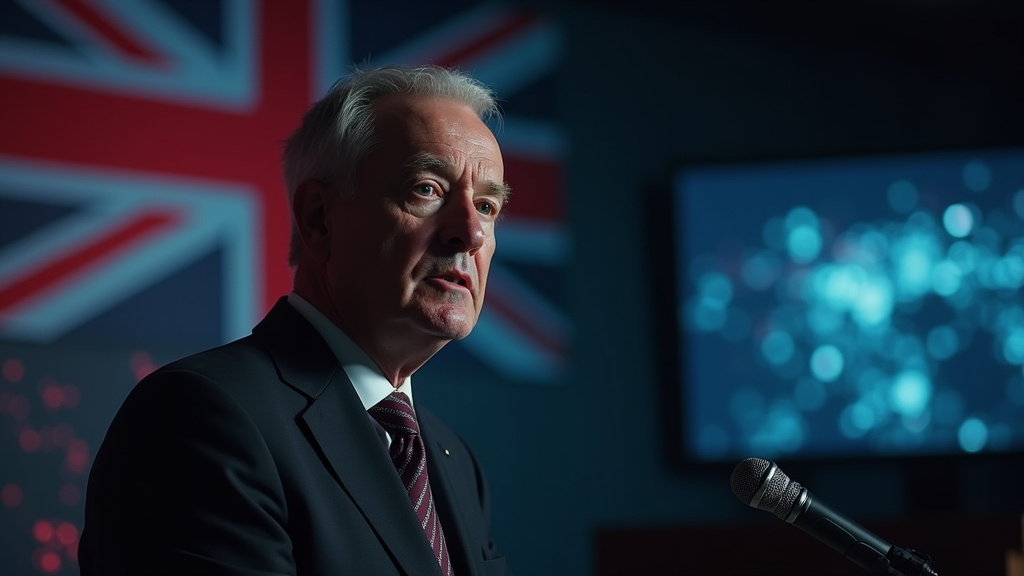
MI5 Director General Ken McCallum has issued a stark warning, stating that China poses a “daily threat” to the United Kingdom’s national security. His comments come amidst a significant political controversy surrounding the collapse of a high-profile spying case, which has ignited a fierce blame game between the government, prosecutors, and opposition parties. This unfolding news highlights the complex and increasingly fraught relationship between the UK and Beijing.
MI5’s Escalating Concerns Over Chinese Espionage
In a rare public appearance at MI5’s London headquarters, Sir Ken McCallum declared that “Chinese state actors” represent a persistent and daily national security threat. He detailed the multifaceted nature of these threats, which include “cyber espionage, stealing technology secrets, and efforts to interfere covertly in UK public life.” McCallum also revealed that MI5 had intervened in a threat originating from China as recently as the past week, underscoring the ongoing and active nature of Beijing’s intelligence operations.
McCallum expressed his “frustration” when opportunities to prosecute activities threatening national security are not pursued, though he emphasized that prosecution decisions lie outside MI5’s remit. His agency is investigating a growing number of individuals involved in state-backed threats, with a 35% increase in the past year alone. These investigations span espionage targeting Parliament, universities, and critical infrastructure. Britain’s Intelligence and Security Committee had previously labelled Beijing a “strategic threat” in 2023, reflecting a growing consensus within UK security circles.
Collapse of the Spying Case Fuels Political Row
The controversy centers on the unexpected collapse of the trial against Christopher Cash, a former parliamentary researcher, and Christopher Berry, a teacher. Both men were charged under the Official Secrets Act for allegedly passing information useful to an “enemy” between late 2021 and February 2023. However, the Crown Prosecution Service (CPS) abruptly dropped the case last month, weeks before it was due to go to trial.
Director of Public Prosecutions Stephen Parkinson revealed in a letter to parliamentary committees that the case could not proceed because the government had refused to provide testimony or evidence officially designating China as a threat to national security at the time of the alleged offenses. Parkinson stated that “When this became apparent, the case could not proceed.” This revelation has triggered intense scrutiny, with opposition parties accusing the current government of a “cover-up” or prioritizing relations with China over national security. The government, however, denies any interference, pointing to the need for evidence to align with the legal designation of an “enemy” country at the time of the alleged acts.
The Political Fallout and ‘Blame Game’
Prime Minister Keir Starmer has denied allegations of political interference, emphasizing that his administration was not in power during the period of the alleged offenses and that the CPS’s decision was based on the available evidence and legal requirements. The government has since published witness statements from Deputy National Security Adviser Matthew Collins, which describe China as “the biggest state-based threat to the UK’s economic security” and acknowledge that Beijing’s espionage activities “harm the interests and security of the UK.” These statements, however, were reportedly insufficient to meet the threshold for prosecution, leading to further debate.
Conservative politicians, including Kemi Badenoch, have been critical, suggesting the Labour government chose closer economic ties with China over national security. The situation is further complicated by the fact that the case involved former parliamentary staff, raising questions about the security of sensitive information within Westminster. The Chinese Embassy has consistently dismissed all allegations as “pure fabrication and malicious slander.”
A Complex Relationship: Challenge and Engagement
The MI5 chief described Britain’s relationship with China as a “complex” mix of risk and opportunity. While MI5 is mandated to “detect and deal, robustly, with activity threatening UK national security,” the broader policy of engagement with China is a governmental decision. This balancing act is becoming increasingly challenging as Western nations, including the UK, grapple with China’s growing geopolitical influence and assertive foreign policy.
The recent events underscore the escalating tension in international relations and the persistent challenges faced by Western democracies in countering foreign state-sponsored espionage. As the political fallout continues, the UK faces the ongoing task of defending its national interests while navigating a delicate diplomatic landscape. This trending news story in London and across the UK serves as a reminder of the pervasive and daily threats to national security.