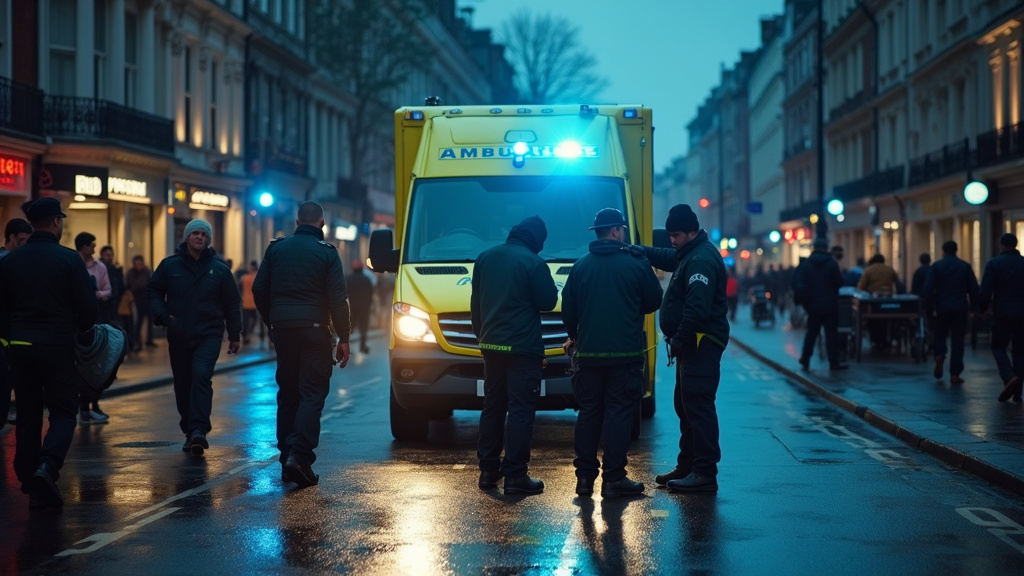
The London Ambulance Service achieved its best December response times in five years, a remarkable feat accomplished despite an significant emergency call surge. This achievement is particularly noteworthy for the London Ambulance Service, which faced unprecedented demand but managed to improve its performance. This news is vital for the city, underscoring the capabilities of the London Ambulance Service and contributing to positive ambulance response times.
London Ambulance Service: Record December Response Times Achieved
The London Ambulance Service reached sick patients faster last December, marking its best performance since 2020. Response times for life-threatening calls improved by 45 seconds, with crews reaching serious emergencies like heart attacks significantly faster – over 17 minutes quicker. This achievement by the London Ambulance Service is significant, highlighting dedicated efforts and a strong commitment to patient care improvements.
Factors Behind the London Ambulance Service’s Success
Thorough winter planning played a key role in the London Ambulance Service‘s success. The service worked closely and extensively with NHS partners. Innovative technology also boosted performance, alongside increased staffing levels that helped manage demand. Nearly a quarter of patients received phone treatment, allowing ambulances to focus on critical cases. Additional staff were placed in control rooms to manage the high call volumes, a strategic approach that made a difference for the London Ambulance Service.
Rising 999 Calls Post-Holiday and Critical Incident Response
However, the service now faces a new challenge, with 999 call management under pressure as calls are rising sharply after the holiday season. Demand reached about 7,000 calls daily, significantly higher than the typical 5,500. The increase is partly due to respiratory illnesses as Londoners returned to work and school, with cold weather exacerbating health conditions. Several hospitals declared critical incident response situations, putting extra pressure on the London Ambulance Service.
Public Guidance and Urgent Care Alternatives
The London Ambulance Service urges the public to use 999 wisely, calling only for life-threatening emergencies. For respiratory illnesses and other urgent issues, alternative options are available. Consider GPs or NHS 111 for urgent advice; NHS 111 online is a quick resource, or call 111 if you cannot go online. Urgent care alternatives like treatment centres can help with minor injuries and illnesses but are not for life-threatening situations. Using these alternatives frees up ambulances for the London Ambulance Service to reach critical patients faster.
Addressing Demand with the NHS Winter Plan
The London Ambulance Service developed a comprehensive NHS winter plan for 2024. This included more ambulances on the streets and over 10 percent increased staffing in control rooms. Up to 60 extra ambulances were deployed at peak times to meet the high demand. Clinicians also increased phone-based care to help reduce unnecessary hospital visits. Pan-London coordination was strengthened to ensure a unified response to pressure faced by the London Ambulance Service.
Continued Commitment to Patient Care Improvements for the London Ambulance Service
The London Ambulance Service acknowledges that performance can improve further, as the entire urgent and emergency care system faces pressure. Staff worked incredibly hard over the holidays, focusing on patient care and improvements. The service is committed to adapting, with innovation being key to meeting future challenges. Londoners can help the London Ambulance Service by using services wisely, ensuring care for those most in need. This commitment to patient care improvements is important news for London.