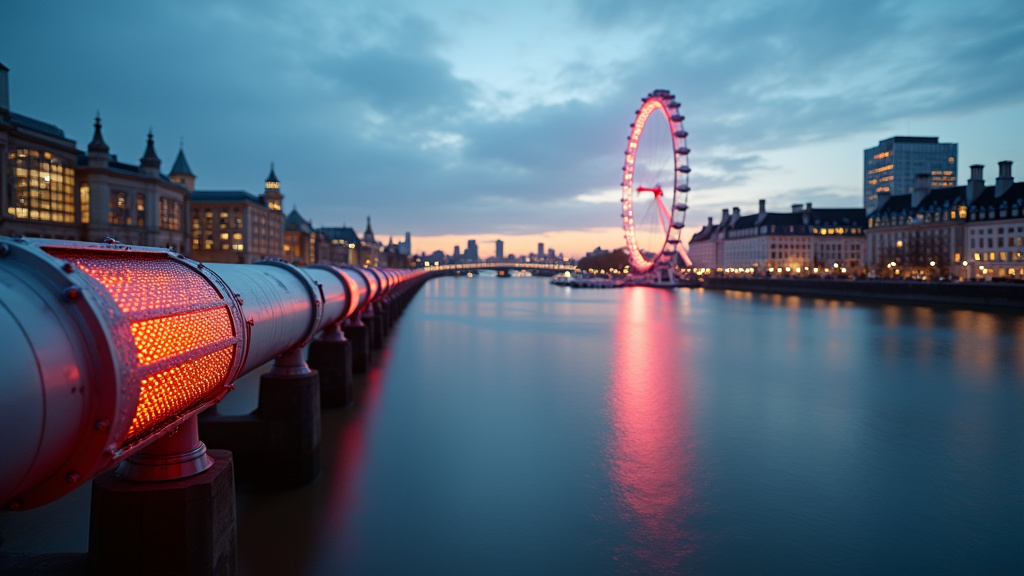
A groundbreaking new initiative is transforming how London heats its iconic buildings. The River Thames will soon provide sustainable warmth. This development represents a significant step for the city. It aligns with London’s ambitious decarbonization goals.
A £72.7 million heat network is taking shape. This network will serve the Waterloo and South Bank area. It utilizes a sophisticated water source heat pump. This pump extracts heat directly from the River Thames. The captured warmth travels through underground pipes. It then supplies nearby buildings. This is a trending solution for urban energy needs.
Harnessing River Power
The core technology is a water source heat pump. It captures low-grade heat from the river. This heat is then upgraded for building use. The River Thames offers a stable temperature. Therefore, it is more efficient than air or ground sources. This innovative approach reduces reliance on fossil fuels. In fact, it offers a cleaner alternative. Hemiko, a leading developer, spearheads this project. They are building this network to be locally operated. This ensures British-built infrastructure. Furthermore, it helps cut energy bills for users.
Key Landmarks Explore New Heat
Several prominent London institutions are exploring connections. These include the National Theatre and King’s College London. Additionally, the BFI Southbank and Southbank Centre are candidates. Discussions are ongoing with these organizations. This project aims to provide low-carbon heating to these cultural landmarks. It supports their commitment to net-zero emissions. The area-wide approach is more cost-effective. It avoids individual heat pumps for each building. This is excellent news for energy efficiency. The developers also mention potential for cooling services.
Funding and Future Vision
The project received £15.6 million from the government’s Green Heat Network Fund. Hemiko is investing a total of £72.7 million. This initiative is set to create approximately 200 local jobs. It also offers apprenticeship opportunities. The first phase alone could save 22,000 tonnes of carbon annually. This is equivalent to removing 10,000 cars from the road. The government plans to double heat network coverage nationally. Over £1 billion is committed to heat network development. More than one million homes could connect by 2035. This news from London is certainly encouraging.
Broader Implications and News
This development is part of a wider plan for central London. Other initiatives involve using heat from the London Underground and sewer networks. These efforts aim to create a vast, interconnected heat network. The goal is to achieve significant carbon emission reductions. It also helps improve air quality. Gas boilers, a major source of NOx pollution, will be phased out. This project offers a glimpse into the future of urban energy. Residents and visitors can enjoy London’s landmarks. They will soon enjoy them with a lower carbon footprint. Exploring these sustainable energy solutions is vital for the planet. We will continue to explore this trending news.