London police apprehended 212 individuals on Saturday during a significant demonstration in Trafalgar Square, marking a volatile escalation in the ongoing conflict regarding the legal status of the activist group Palestine Action. The protest, which saw attendees ranging from 27 to 82 years old, was organized by the advocacy group Defend Our Juries. The arrests underscore a deepening crisis in British civil liberties, occurring as the government mounts an appeal against a recent High Court ruling that deemed the ban on Palestine Action unlawful. Among those present at the rally was Robert Del Naja, the artist known as 3D from the band Massive Attack, who risked his own professional mobility to show support for the group. The Metropolitan Police utilized the demonstration to enforce the proscription order, despite the complex legal ambiguity currently surrounding the organization.
Key Highlights
- Mass Arrests: Metropolitan Police arrested 212 protesters at Trafalgar Square for demonstrating support for a proscribed organization.
- High-Profile Support: Massive Attack musician Robert Del Naja was among the demonstrators, risking travel and visa complications to show solidarity.
- Legal Limbo: The arrests follow a High Court ruling that labeled the government’s ban on Palestine Action unlawful, a decision the government is currently appealing.
- Demographics of Dissent: The arrested individuals spanned a wide age range, with reports indicating many were elderly, sparking public debate over police tactics and the definition of civil disobedience.
The Trafalgar Square Standoff: A Case Study in Civil Disobedience
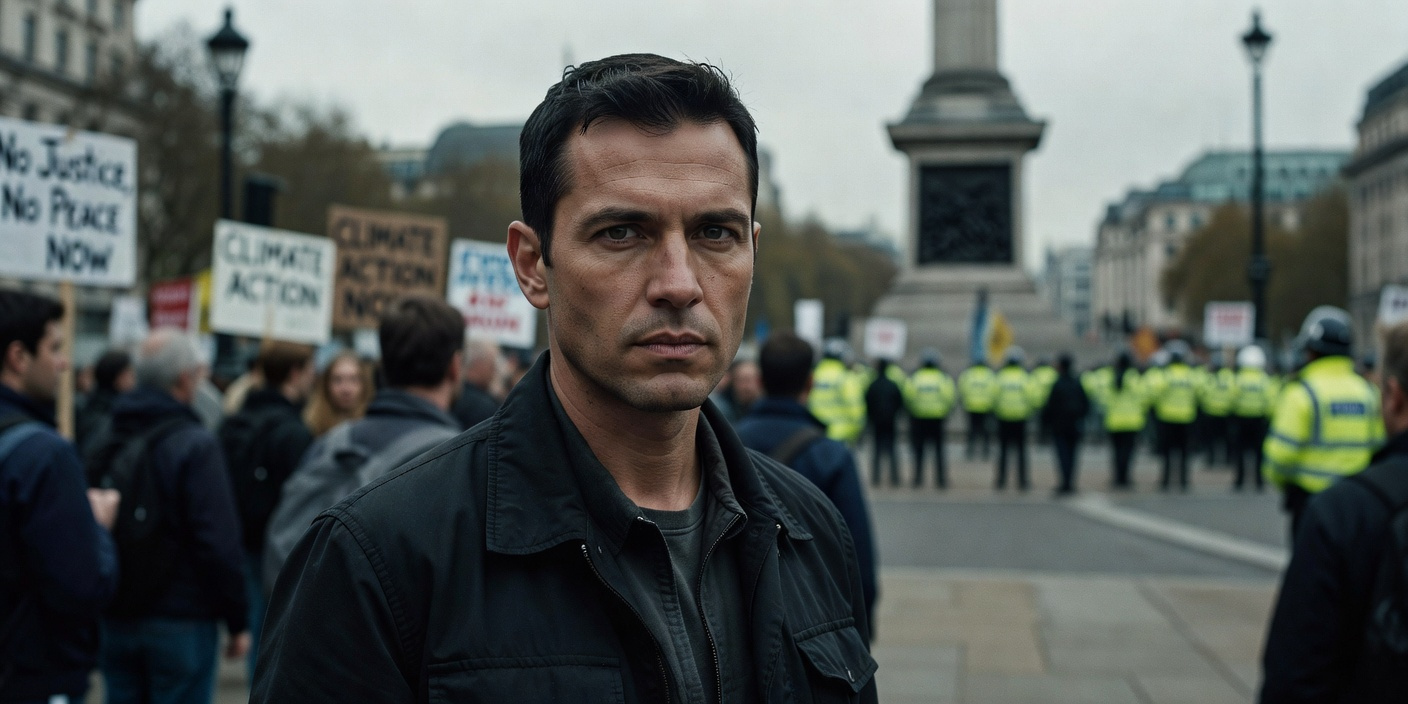
The scene at Trafalgar Square on Saturday was one of deliberate, non-violent confrontation. Hundreds of supporters gathered in the heart of London, many equipped with camping chairs, signaling an intent to stage a prolonged, peaceful sit-down protest. The visual language of the demonstration was striking; protesters held placards reading “I oppose genocide. I support Palestine Action,” while banners near the National Gallery explicitly challenged the British judicial and political system with slogans like “Jurors deserve to hear the whole truth.”
Police Enforcement and Public Reaction
The Metropolitan Police, having warned in advance that they would enforce the law, began systematic arrests shortly after 1 p.m. Officers were seen physically removing protesters who refused to move, a process that drew intense criticism from onlookers. Chants of “shame on you” echoed through the square as elderly participants, some using walking sticks, were led into police vans. The optics of the operation—arresting individuals ranging from 27 to 82 years old for the act of carrying a sign—have ignited a fierce debate regarding the proportionality of police enforcement in the context of political protest.
The Involvement of Cultural Figures
Robert Del Naja’s presence added a significant layer of cultural weight to the event. As a high-profile figure in the UK music scene, his willingness to risk arrest is notable. Musicians often face unique professional risks when engaging in political activism; specifically, a criminal record can inhibit international travel, potentially impacting future tours and visa applications in countries like the United States. Del Naja described the situation as “ridiculous,” criticizing the police for what he viewed as a volatile policy shift. His participation brings attention to the intersection of celebrity, advocacy, and the increasingly narrowing space for dissent in the UK.
The Legal Minefield: Proscription vs. High Court
The central tension driving this event is a profound disagreement between the judiciary and the executive branch of the UK government. In February 2026, the High Court delivered a landmark ruling that suggested the government’s decision to classify Palestine Action as a terrorist organization was, in essence, unlawful.
The Interim Position
Following the High Court decision, there was a momentary window of uncertainty regarding how police would handle public support for the group. Initially, the Metropolitan Police signaled that they would cease making arrests for supporting the organization under the Terrorism Act, shifting their focus toward evidence collection for potential future, legitimate prosecutions. However, this policy was short-lived. Following the Home Secretary’s decision to seek an appeal against the High Court’s ruling, the police force revised its enforcement strategy, labeling the initial cessation of arrests as a mere “interim position.”
Implications for Democracy
Legal experts argue that this scenario creates a “chilling effect” on free speech. If the lawfulness of an organization is in such flux, citizens are left in a state of confusion regarding what constitutes criminal activity. The government maintains that the ban is necessary to protect public order and prevent what they describe as violent extremism. Conversely, civil liberties groups argue that the use of counter-terrorism legislation to dismantle protest groups sets a dangerous precedent. The core of the legal argument for the protesters rests on the idea that “jury nullification” or conscientious objection to government policy should not be equated with terrorism.
Future Implications and Secondary Angles
1. The Erosion of Protest Protections
There is a growing fear among civil rights advocates that the UK is witnessing the gradual erosion of the right to protest. By utilizing the Terrorism Act to suppress the activities of Palestine Action, the government is essentially creating a blueprint for how to neutralize other activist organizations that disrupt critical national infrastructure or government policy. We may see more legal challenges in the coming months that will test the limits of the Human Rights Act.
2. Economic and Diplomatic Impacts
Beyond the domestic legal battle, there are international ramifications. The UK’s stance on Palestine Action is being watched closely by global human rights organizations. Furthermore, the economic impact of the group’s direct action tactics—which have targeted defense firms and infrastructure—has placed immense pressure on the UK government to demonstrate that they can control and secure critical facilities. This struggle affects defense contracts, diplomatic relations with allies, and domestic investment security.
3. The Generational Shift in Activism
Interestingly, the demographic profile of those arrested—many of whom are over 60—contrasts with the traditional image of radical protest as a youth-driven endeavor. This “graying of the resistance” suggests that frustration with current geopolitical policies is cross-generational, potentially leading to more resilient, long-term protest movements that are harder for authorities to dismiss as impulsive acts of the young.
FAQ: People Also Ask
Why was Palestine Action banned by the UK government?
The government proscribed Palestine Action under the 2000 Terrorism Act, citing acts such as vandalism, the targeting of defense firms, and the disruption of military infrastructure, which they argue constitutes illegal activity and potential support for extremism.
Is it currently illegal to support Palestine Action?
Yes, based on the current police enforcement stance. Despite the High Court ruling that the ban was unlawful, the government is appealing that decision, and the police have confirmed they are continuing to arrest individuals for showing support for the group.
Why are protesters holding signs about jury duty?
Protesters are demonstrating against the perceived judicial overreach, arguing that juries should be allowed to hear the moral and political motivations of activists (such as those from Palestine Action) rather than strictly adhering to the letter of the law regarding property damage.