A tragic South London Train Collision occurred on January 23, 2025, when 11-year-old Jaiden Shehata was fatally struck by a Southern train at a level crossing in Kenley, South London, while en route to school. This devastating South London train accident highlights significant railway safety concerns, particularly regarding mobile phone distraction and the inherent risks of passive level crossings, and is the subject of an intensive RAIB investigation.
The Fatal South London Train Collision Incident and its Aftermath
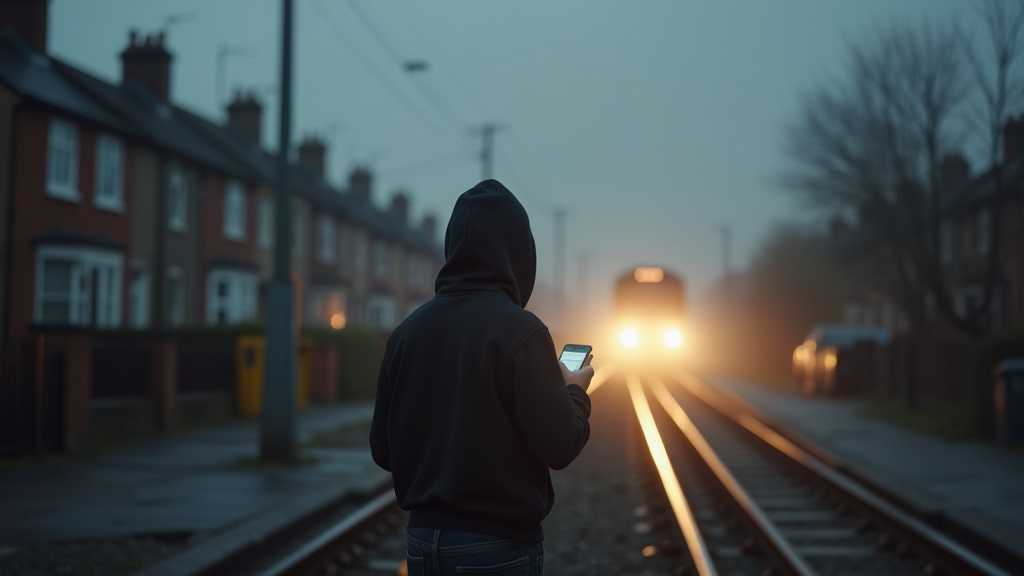
The devastating accident unfolded shortly after 8 AM as Jaiden Shehata, a Year 7 student at Riddlesdown Collegiate, approached the Bourneview footpath crossing. CCTV footage from the Southern train, travelling at approximately 50 mph, captured the young boy walking with his hood up and looking down at what appeared to be his mobile phone screen. Despite the train driver’s urgent horn blast and emergency brake application upon spotting Jaiden begin to cross, the boy looked up too late to avert the tragic collision. He sustained fatal injuries, and the train eventually stopped about 200 metres past the crossing. This South London train accident serves as a grave warning regarding the dangers of distracted walking near train tracks.
Investigation Findings: Mobile Phone Distraction in the South London Train Collision
The RAIB’s detailed investigation intensely scrutinised the moments leading up to the tragedy. Analysis of Jaiden’s mobile phone revealed that a video clip was actively playing at the time of the incident. Investigators determined that the young boy’s preoccupation with his device significantly impaired his perception of the approaching train’s danger. The report also noted that his hood being up likely further limited his peripheral vision and overall awareness. This element of mobile phone distraction was a key finding in the South London train accident report, underscoring a critical factor in the South London Train Collision.
The Bourneview footpath crossing is classified as a “passive” crossing, meaning it lacks active warning systems like flashing lights or audible alarms. Users are expected to adhere to the ‘stop, look, and listen’ principle and make their own judgment regarding safe passage. The RAIB identified the absence of active warnings as a probable contributing factor in Jaiden’s death, suggesting that the crossing could have been better demarcated as a hazardous zone. This highlights issues with passive level crossings and the potential for child railway fatalities.
A Crossing with a History of Risk: The Bourneview Crossing Risk
This particular crossing, situated between Whyteleafe and Kenley stations, had previously been identified as presenting significant risks. A Network Rail risk assessment conducted in May 2023 ranked the Bourneview crossing as the 13th highest-risk footpath crossing in its Sussex region. Between November 2018 and February 2023, six near misses were recorded at this location, underscoring the ongoing danger. While the RAIB had not mandated additional protection beyond existing measures at that time, this tragic event has intensified scrutiny on the safety of such crossings, especially given the Bourneview crossing risk.
Recommendations for Enhanced Railway Safety and Preventing a Future South London Train Collision
In the wake of this devastating South London train accident, the RAIB has put forth several crucial recommendations designed to prevent similar occurrences. A significant recommendation urges national curriculum authorities to collaborate with railway infrastructure managers to implement targeted, locally relevant school safety education programs across the UK. These programs should address railway safety concerns head-on.
Two additional recommendations are directed at Network Rail, in conjunction with the Rail Safety and Standards Board (RSSB). These include measures to make hazardous areas at level crossings more conspicuous, especially for individuals prone to distraction, and to re-evaluate the risk profiles of younger users to ascertain if tailored risk mitigation strategies are required at crossings frequently used by children. These recommendations aim to prevent another South London Train Collision and improve overall level crossing safety.
Network Rail has already commenced safety enhancement work at the Bourneview crossing, including the installation of Miniature Stop Lights, which provide visual and auditory warnings. Network Rail and RSSB have extended their profound condolences to Jaiden’s family and reaffirmed their commitment to implementing the RAIB’s recommendations to improve overall safety and prevent future South London train accidents.
Broader Implications and Prevention Efforts Following the South London Train Collision
Jaiden’s tragic death serves as a potent and somber reminder of the pervasive dangers posed by distraction in contemporary life, particularly when intersecting with the inherent risks present in railway environments. This news from South London feeds into a broader societal discussion about pedestrian safety and the urgent necessity for effective education on these critical issues. Initiatives such as Network Rail’s educational resources for schools, and programmes like “Rail Safe Friendly” and “Switched On,” are designed to equip young people with essential hazard-spotting skills and a comprehensive understanding of railway dangers, aiming to prevent any future South London Train Collision.
As this news story vividly illustrates, the confluence of passive level crossings, vulnerable young users, and widespread distractions like mobile phones creates an acute and potent risk. The RAIB’s investigation and subsequent recommendations highlight an urgent need for enhanced public awareness campaigns, improved crossing designs, and robust, integrated school safety education to avert further fatalities. The entire rail industry is focused on collaborative efforts to implement these vital train safety recommendations and prevent any recurrence of a tragic South London train accident.