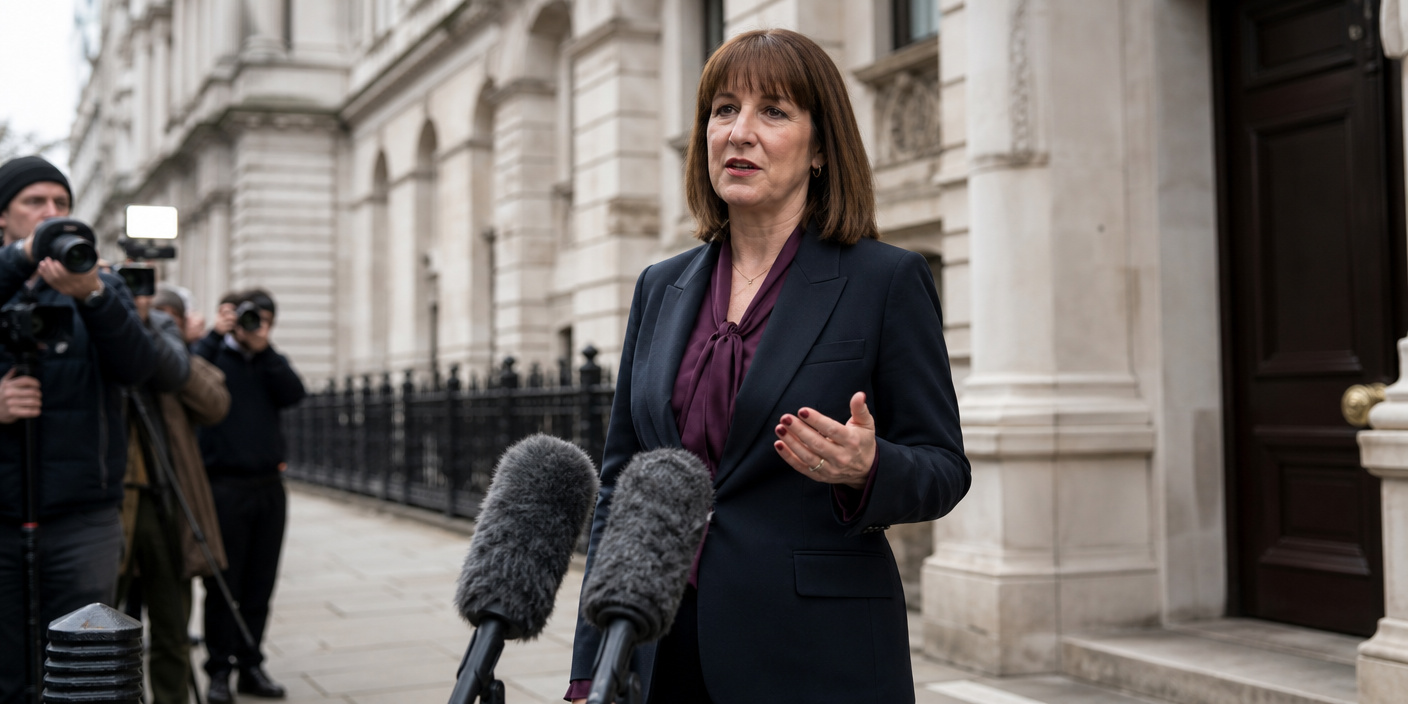
London, UK – November 14, 2025 – The United Kingdom’s financial markets experienced significant volatility today as Chancellor Rachel Reeves announced a decisive shift away from plans to increase income tax rates in the upcoming Budget. This significant shift in UK Fiscal Policy, confirmed amidst growing speculation, has led to a weakening of the pound sterling and a rise in UK government borrowing costs, signaling investor unease over the nation’s fiscal strategy.
Shifting UK Fiscal Policy Landscape
Chancellor Reeves has reportedly abandoned plans to raise income tax rates, a move that would have broken Labour’s manifesto pledge. This significant policy pivot, just two weeks before the November 26 Budget, comes as improved fiscal forecasts have narrowed the projected budget deficit from an estimated £30-£35 billion to around £20 billion. Instead of a direct income tax hike, the government is expected to lean heavily on other measures to secure necessary revenue, shaping the future of UK Fiscal Policy. This news is currently trending across financial news outlets, highlighting the significant implications for the UK economic outlook.
Key Revenue-Raising Measures Revealed for UK Fiscal Policy
Central to the revised fiscal plan is the decision to extend the freeze on income tax thresholds for an additional two years. This measure, often referred to as ‘fiscal drag,’ is projected to generate an estimated £7.5 billion annually. By not uprating thresholds in line with inflation or wage growth, more individuals are expected to be ‘dragged’ into paying income tax or higher rates, without an explicit increase in tax percentages. Economists note that this approach has been a significant contributor to the rising overall tax burden in the United Kingdom, a key aspect of UK Fiscal Policy.
Further revenue is anticipated from measures such as the abolition of salary sacrifice schemes for pension contributions, a move that could raise billions and impact retirement savings and employer costs. Additionally, a new electric vehicle tax is slated to be introduced, expected to bring in approximately £2 billion. The government is also reportedly considering other options, including a pay-per-mile charge for EVs and increased taxes on gambling, all contributing to the intricate framework of UK Fiscal Policy.
Market Turmoil Amidst Uncertainty in UK Fiscal Policy
The market reaction to this UK Fiscal Policy adjustment has been swift and pronounced. The pound sterling depreciated against the US dollar, falling to approximately $1.3130, reflecting increased investor apprehension about the United Kingdom’s financial outlook. Simultaneously, the cost of UK government borrowing, as reflected in gilt yields, surged. The yield on 10-year government bonds climbed to around 4.57%, marking one of the sharpest daily increases seen since early July. Thirty-year gilt yields also saw a significant jump, indicating higher government borrowing costs, a critical component of the current UK Fiscal Policy.
The benchmark FTSE 100 index closed down approximately 1.6%, impacted by a confluence of domestic fiscal concerns and broader international market jitters, including worries over AI tech valuations and potential Federal Reserve interest rate decisions. Banking stocks were notably among the hardest hit, often seen as bellwethers for the UK economy and its evolving UK Fiscal Policy.
Business Investment and Future Outlook under New UK Fiscal Policy
The uncertainty surrounding UK Fiscal Policy has already been identified as a significant impediment to business planning and UK business investment in the United Kingdom. Consultancy firm AlixPartners has warned that taxation can act as a trade barrier when it lacks predictability, causing paralysis in strategic planning. Many businesses have indicated they are holding off on investment decisions until greater clarity emerges from the upcoming Budget. The shift away from a direct income tax hike, while potentially preserving manifesto integrity, introduces a complex array of revenue-raising measures that will need careful assessment by the business community, as part of the broader UK Fiscal Policy.
Conclusion on UK Fiscal Policy
Chancellor Reeves’s strategy to navigate the UK’s fiscal challenges appears to centre on a series of less direct, but substantial, revenue-generating measures. While the abandonment of an income tax rate increase may appease some political concerns, the resulting market reactions underscore the ongoing investor scrutiny of the government’s fiscal credibility. The coming weeks will be critical as the full details of the November 26 Budget are unveiled, with businesses and markets keen to understand the precise impact of these fiscal choices on the United Kingdom’s economic future and the effectiveness of its UK Fiscal Policy.