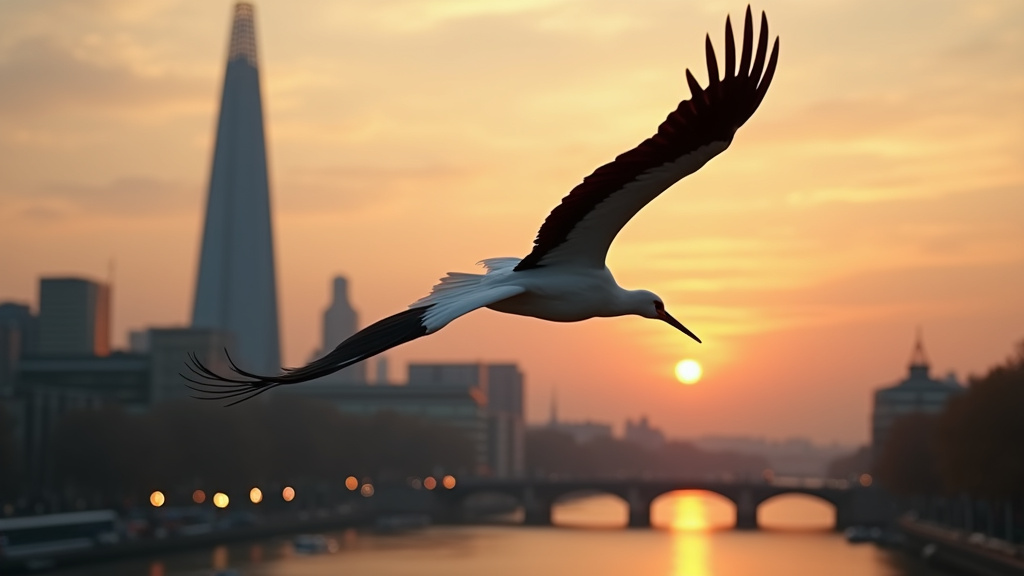
White Storks London: A Historic Return Planned for 2026
The long-awaited return of White Storks London is set to become a reality in 2026. This signifies a momentous occasion for the capital, as these magnificent birds vanished as breeding species from Britain in 1416. A pioneering rewilding project is orchestrating their comeback, marking a new dawn for urban wildlife conservation. This exciting news for nature enthusiasts underscores a commitment to restoring ecological balance within the city.
The Long Absence of White Storks from British Skies
White storks were once a familiar sight across Britain, but their presence dwindled over 600 years ago. The primary drivers for their decline were extensive hunting and the significant loss of their essential habitats. The last confirmed breeding pair was observed in Edinburgh in 1416. Revered throughout Europe, white storks are often seen as omens of good fortune. Their prolonged absence created a discernible void in Britain’s rich natural heritage.
Ambitious White Storks London Rewilding Project in East London
A new, ambitious initiative is spearheading the return of the white storks. This significant effort centres on the Barking and Dagenham area of East London. The London Wildlife Trust is at the forefront of this endeavor, collaborating closely with the Barking and Dagenham council. Substantial financial backing has been secured from the Mayor of London, bolstering this crucial urban wildlife conservation project. The planned return of White Storks London is generating considerable excitement.
Bringing the Iconic White Storks Home to London
The stork reintroduction program will commence with captive-bred birds. Initially, they will reside in a spacious aviary located within Eastbrookend Country Park. This purpose-built facility is nestled within a flourishing natural landscape, allowing the birds to acclimate to their new environment. The aviary’s roof will gradually be opened, enabling the storks to experience flight and explore their surroundings freely. The aim is for their offspring to mature with a strong sense of place, encouraging site loyalty and facilitating integration into the wild. This strategic approach is key to successful stork reintroduction.
Past Successes Pave the Way for White Storks London’s Return
This ambitious undertaking builds upon previous rewilding successes. The Knepp Estate in West Sussex serves as an exemplary model, where white storks have successfully bred since 2020—the first wild breeding in Britain for over six centuries. Knepp’s rewilding achievements demonstrate the feasibility of stork reintroduction programs. Numerous wild storks now fledge at Knepp, with some migrating south for winter before returning in spring to nest and raise their young. These successes provide a strong foundation for the White Storks London initiative.
A Greener, Wilder London Takes Shape with Wetland Habitat Restoration
The current initiative extends beyond the reintroduction of birds. A core objective is the restoration of vital wetland habitats, crucial for supporting diverse wildlife populations. Plans are also in motion to reintroduce beavers in 2027, recognizing their role as natural ecosystem engineers. Beavers significantly enhance biodiversity by creating new wetlands. These combined efforts contribute to a more resilient environment and align with principles of rewilding Britain.
Mayor’s Funding Fuels Conservation and Community Engagement for White Storks London
The Mayor’s Green Roots Fund is providing indispensable financial support for this vital project. The London Wildlife Trust is responsible for the strategic allocation of these funds. A significant focus will be placed on extensive community engagement. A dedicated stork officer will liaise with local schools and community groups, fostering local pride and directly connecting people with nature. Recognizing access to nature as a key social justice issue, this approach ensures that local communities benefit from the presence of White Storks London and the enhanced environment.
White Storks London: A Symbol of Hope and Nature Recovery
This reintroduction represents a significant conservation effort and highlights a positive trajectory for nature recovery in urban settings. White storks have the potential to become powerful city symbols of hope, inspiring greater appreciation for wildlife. London is actively embracing its wilder potential, making this news crucial for the future of conservation projects. The anticipated return of White Storks London is a testament to collaborative conservation and a commitment to a greener future, promising to grace the city’s skies once again.