
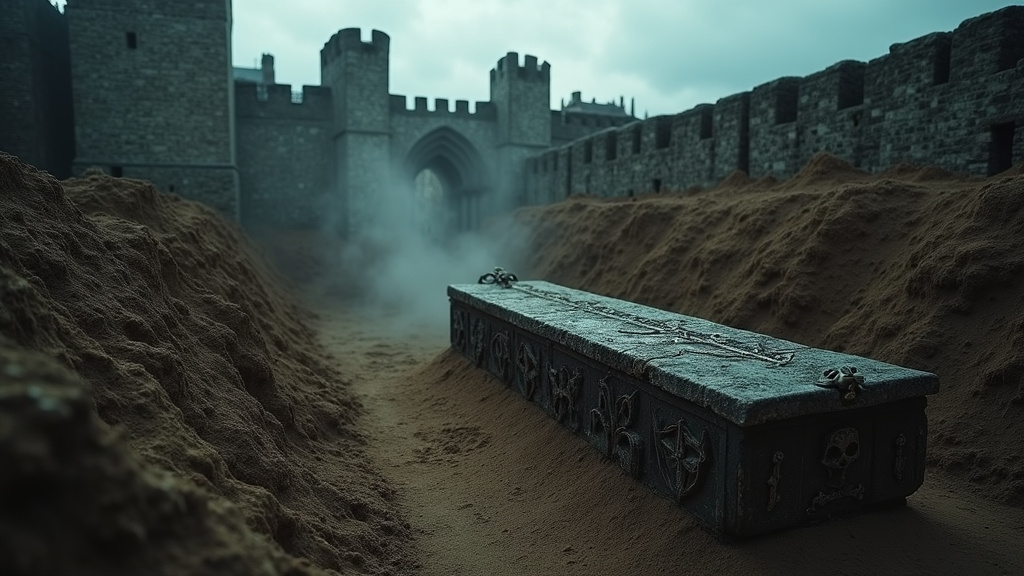
A major archaeological dig has unearthed startling discoveries at the Tower of London. This is the first major excavation in a generation, revealing dramatic insights into the city’s medieval past and the history of the Tower of London. The finds offer a new look at life and death within the historic fortress, providing crucial information for understanding London history. This popular London news is rewriting history.
Uncovering Medieval Secrets at the Tower of London
The excavation took place near the Chapel Royal of St Peter ad Vincula, part of preparations for a new elevator at the Tower of London. The project uncovered over 20 skeletal remains spanning centuries of history, providing a unique window into the Tower of London’s community. Scientists are now analyzing these archaeological finds, hoping to learn about diet, health, and origins. This work promises to revolutionize our understanding of the Tower of London and sheds light on the people who lived and died here.
Echoes of the Black Death in the Tower of London
A significant discovery is a 14th-century group burial, believed by experts to be linked to the Black Death. The plague struck London in 1348, devastating the city’s population. This mass grave, a potential Black Death burial, suggests a hurried burial and might contain some of the earliest plague victims. Their burial within the chapel grounds at the Tower of London is unusual and could indicate higher status or early chaos. Medieval burial practices changed during the plague, with authorities often using special plague pits. These burials within the chapel grounds offer new context to medieval London.
Burials of High Status at the Tower of London
Older skeletons also emerged from the earth at the Tower of London. Three individuals from the late 12th or early 13th centuries were found interred in coffins, a practice unusual for that period and strongly suggesting high-status burials. Such burials at the Tower of London indicate respect and wealth. Researchers noted other rare archaeological finds, including pots filled with charcoal. Such grave goods are uncommon in England and might point to continental European influences. A fragment of burial shroud fabric was also recovered from the Tower of London, an extremely rare survival.
Tracing Centuries of Architecture at the Tower of London
The excavation also revealed architectural history at the Tower of London. Foundations of earlier chapels were found, with evidence pointing to structures from the 12th century, possibly from Henry I’s reign. A layer of stone may date to Henry III’s works in 1240. Foundations of Edward I’s chapel were also discovered. The current chapel stands on these ancient foundations, suggesting the chapel has occupied the same site for over 800 years. The site shows layers of construction and rebuilding, telling a story of continuous use within the Tower of London.
A New Chapter for London’s History and the Tower of London
These discoveries are crucial for understanding medieval London. They offer a tangible link to its past, especially concerning the Tower of London. The Tower of London is a globally popular landmark, known for its royal history and famous prisoners. However, these excavations reveal its role as a living community, highlighting the lives of ordinary residents. The archaeological finds are the result of collaboration: Historic Royal Palaces, Historic England, and Cardiff University worked together on this historical excavation. Scientific analysis will continue for months. This extensive dig is the most significant at the Tower of London in decades.
Future Insights from the Tower of London Dig
Experts call these findings just the “tip of the iceberg” from this Tower of London dig. Further study will unlock more details about the health and diet of these individuals, and their origins and daily lives will become clearer. This news from London adds a vital layer to its rich narrative. The Tower of London continues to share its hidden stories. The ongoing research promises even more revelations from the Tower of London, ensuring the past remains vivid for future generations.