
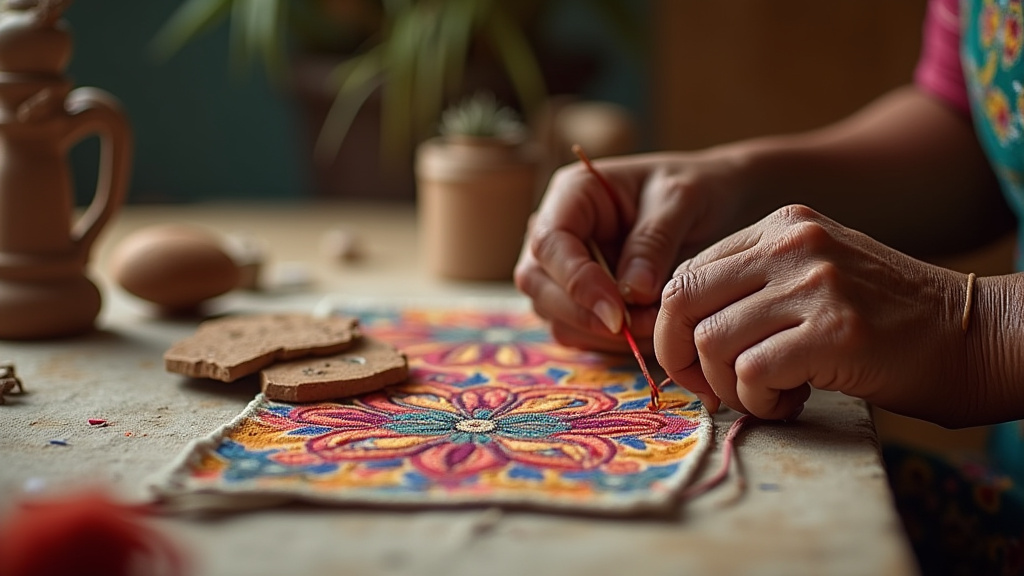
UCL Culture Lab at the Marshgate campus in Stratford has officially opened its doors for a new series of free, hands-on ‘Saturday Studios’ workshops, marking a significant milestone in the institution’s commitment to engaging the East London community. By dismantling the traditional barriers between academic research and public participation, the initiative invites families, students, and curious locals to explore themes of heritage, belonging, and craft. The program runs throughout 2026, offering a rotating schedule of activities that connect UCL’s extensive collections and research with the lived experiences and creative potential of its neighbors.
Key Highlights:
- Inclusive Access: All workshops are free to the public, with many operating on a drop-in basis to lower barriers to entry for local families and commuters.
- Hands-On Heritage: Sessions range from ancient archaeological object handling to modern craft practices like block printing, zine-making, and textile embroidery.
- Community Co-production: Programming is deeply intertwined with the ‘Patterns’ exhibition, showcasing collaborations with local artists and researchers.
- Strategic Location: Situated in the Marshgate building at UCL East, the Culture Lab acts as a bridge between the university’s rigorous research agenda and the vibrant, diverse social fabric of Stratford.
The Philosophy of Community-Led Creativity
The launch of the Saturday Studios initiative represents a pivotal shift in how major academic institutions interact with their host cities. Traditionally, universities often functioned as ‘ivory towers,’ sequestered from the daily pulse of the surrounding neighborhood. However, the UCL Culture Lab is actively reversing this dynamic through a philosophy of co-production and radical accessibility. By situating itself within the Marshgate building—a cornerstone of the East Bank development—the Lab is not merely providing a service; it is creating a shared space where knowledge is treated as a collaborative asset rather than a commodity to be consumed.
Breaking Down Academic Barriers
One of the most profound aspects of this initiative is the deliberate choice to frame learning through ‘making.’ In an era often dominated by digital consumption, the tactile nature of the workshops—whether it is handling Tudor-era artifacts or stitching Bengali Nakshi Kantha—serves a specific purpose: it grounds historical narrative in physical reality. When a participant holds a piece of pottery excavated from a Whitechapel tavern, the history of East London becomes tangible. It transforms from a textbook anecdote into an intimate encounter with the past. This sensory engagement is crucial for fostering inclusivity; it welcomes individuals regardless of their educational background, allowing them to connect with complex subjects like archeology or sociology through instinct and creativity.
The Role of ‘Patterns’ in Modern Curation
At the heart of the current programming is the ‘Patterns’ exhibition, which acts as the thematic spine for the workshop series. Patterns are omnipresent in human life—from the repetitive motifs in nature to the structural designs in music and language. By exploring these recurring themes, the Culture Lab invites participants to reflect on how patterns shape their own identities and how they relate to the communities they inhabit.
This is not a static exhibition. It is dynamic and reactive. For instance, workshops like ‘Stitch Your Story’ encourage participants to engage in textile art, using traditional methods to express personal histories. This approach acknowledges that culture is not just something to be observed in a glass display case; it is something that is continuously authored by the people living, working, and creating in the city. The involvement of local artists, such as the collaborative efforts behind the ‘Patterns and Belonging’ display, ensures that the content remains relevant to the local demographic. It honors the rich, multicultural tapestry of East London, ensuring that the stories being told are authentic to those who call the area home.
The Urban Regeneration Context: Stratford’s Evolution
To fully appreciate the significance of the Culture Lab’s expansion, one must look at the broader context of the Stratford regeneration. Since the 2012 Olympics, the area has undergone a radical transformation, evolving from a post-industrial landscape into a thriving cultural and educational quarter. UCL East is a central player in this, but the success of such massive urban projects relies on more than just architecture and infrastructure; it relies on social cohesion.
When large institutions move into developing neighborhoods, there is often a tension regarding their long-term impact on local demographics. By committing to free, open-door weekend programming, the Culture Lab is actively addressing these concerns. It is signaling a commitment to longevity and integration. Instead of being an imposing external entity, the Lab aims to be a ‘third space’—a location distinct from the home and the workplace where community bonds can be strengthened. This is vital for the long-term health of East London, as it encourages mixing between students, researchers, and local residents who might otherwise never interact.
Future Predictions and Sustainability
The model of the ‘Saturday Studios’ offers a blueprint for how other cultural institutions might approach public engagement. As we look to the future, it is highly likely that we will see a surge in similar ‘knowledge-sharing’ hubs. The success of this model will be measured not just by foot traffic, but by the qualitative data regarding community sentiment—the degree to which residents feel a sense of ownership over these spaces.
Furthermore, the integration of conservation-focused workshops, where participants learn about the science of preserving history, adds an educational layer that goes beyond mere ‘fun.’ It fosters a culture of stewardship. When the community understands the effort required to preserve a piece of cloth or a clay fragment, they are more likely to value the historical preservation of their own neighborhoods. This subtle education in heritage management could, in the long run, lead to more active community participation in local urban planning and historical preservation movements.
FAQ: People Also Ask
Are the Saturday workshops suitable for children?
Yes, the workshops are designed to be family-friendly and accessible. While specific sessions may have age recommendations or require hands-on dexterity for intricate craft work, the overall program is built to include families, students, and curious individuals of all ages.
Do I need to book in advance?
Most workshops are drop-in, meaning you can arrive during the designated hours. However, some special sessions require booking. It is highly recommended to check the official UCL Culture Lab Eventbrite page before visiting to confirm if a specific session is drop-in or ticketed.
Where exactly is the Culture Lab located?
The Culture Lab is located on the ground floor of the Marshgate building at UCL East, 7 Sidings Street, Stratford, London, E20 2AE. It is easily accessible via public transport links in the Olympic Park area.
Can I suggest a workshop theme?
The Culture Lab actively encourages collaboration. They are interested in co-producing exhibitions and events. Those interested in collaborating or suggesting ideas are encouraged to contact the team via their official website to discuss potential partnerships.