A 17th-century archival discovery by King’s College London has solved a centuries-old mystery, finally pinpointing the exact location of William Shakespeare’s only London home in Blackfriars. For generations, the playwright’s urban life was shrouded in ambiguity, marked only by vague plaques claiming he lived “near” a site in the bustling district. Today, that uncertainty has been dismantled by the research of Professor Lucy Munro, who utilized rare, previously unexamined records to map the Bard’s lost dwelling, transforming our understanding of his final years in the capital.
Key Highlights:
- Historic Breakthrough: Professor Lucy Munro of King’s College London discovered a 1668 property plan in The London Archives, revealing the precise layout and location of Shakespeare’s 1613 Blackfriars purchase.
- Mapping the Mystery: The findings confirm the house was an L-shaped structure integrated into the former Blackfriars gatehouse, moving the site from “near” to “on” the exact spot currently marked by a blue plaque on St Andrew’s Hill.
- Artistic Implications: Scholars suggest the proximity of this home to the Blackfriars Theatre indicates Shakespeare spent significantly more time in London late in his life than previously assumed, potentially writing his final plays, such as “Henry VIII,” within these walls.
- Archival Luck: The breakthrough was enabled by the serendipitous discovery of three specific documents—two from The London Archives and one from The National Archives—detailing the sale of the property by Shakespeare’s granddaughter in 1665.
The Blueprint of the Bard’s Final Years
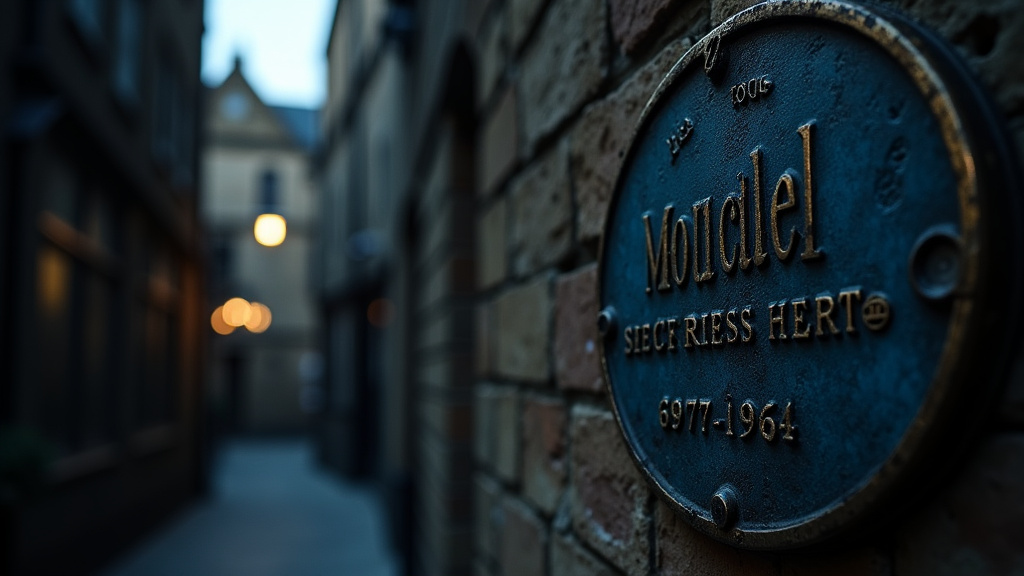
For centuries, the London life of William Shakespeare has felt almost spectral. While his childhood home in Stratford-upon-Avon is an iconic, well-preserved landmark, his urban presence remained fragmented. Academics long knew that in 1613, at the height of his career, the playwright purchased a property in Blackfriars. However, the exact whereabouts of this “lodging” remained a source of intense scholarly debate. The blue plaque currently fixed to a 19th-century building at 5 St Andrew’s Hill carries the caveat “near this site,” a phrase that has effectively functioned as a placeholder for historical uncertainty.
Unmasking the Blackfriars Gatehouse
The narrative shifted this week when Professor Lucy Munro, a scholar of early modern literature, announced the discovery of a detailed 17th-century plan of the Blackfriars precinct. The document, drawn up in 1668 in the aftermath of the Great Fire of London, provides an intricate map of the area’s geography. By overlaying this historical survey with modern topographical data, Munro and her team confirmed that the house Shakespeare bought was a substantial, L-shaped dwelling carved from the remains of a medieval Dominican friary.
This discovery does more than just update a plaque; it redraws the map of Shakespeare’s daily life. The house was not merely a convenient pied-à-terre but a significant property that included the gatehouse itself. The specificity of the records allows historians to visualize the space for the first time, seeing it as part of a complex that had transitioned from a sacred religious site to a secular hub for artists, nobles, and the burgeoning theater scene.
Why This Matters for Shakespearean Scholarship
The implications of this find extend far beyond real estate. Understanding where Shakespeare lived provides a new lens through which to view his artistic output. Scholars have debated how much time the playwright spent in London during his final years, often assuming he had retired fully to Stratford.
However, the scale and location of the Blackfriars property suggest a different reality. Situated only a five-minute walk from the Blackfriars Theatre, the home positions Shakespeare at the epicenter of his professional circle. It is highly probable that he lived there for extended periods, working closely with collaborators like John Fletcher. This physical proximity to the theater suggests that his late-career works—plays that show a distinct evolution in style—were crafted in the very heart of the city he helped define through his work.
Life in the Shadow of the Friary
Living in Blackfriars in the early 17th century was a unique experience. Once a site of silence and monastic devotion, the area had been transformed into an enclave of high-ranking courtiers and creative professionals. By owning property there, Shakespeare was asserting his status as a man of means and stature.
Historical records from the sale of the house by Shakespeare’s granddaughter, Elizabeth Hall Nash Barnard, in 1665 provide the final pieces of the puzzle. Just one year later, the Great Fire of London swept through the district, decimating much of the area. The fact that the plan survived—and was identified by Professor Munro—is a feat of historical preservation that brings us closer to the man behind the plays than we have been for 350 years. As we look at the site today, near the quiet streets of Ireland Yard and St Andrew’s Hill, we are no longer looking at a vague approximation of his home, but the definitive coordinates of the Bard’s London sanctuary.
FAQ: People Also Ask
Q: Was the house just for rental income?
A: While some historians debated whether Shakespeare lived there or rented it out, the new evidence and the nature of the property suggest he likely used it as a residence, especially given its location near the Blackfriars Theatre, which he co-owned.
Q: How does this change the ‘near this site’ plaque?
A: It renders the ‘near’ description obsolete. The historical plans definitively place the footprint of the house on the spot where the blue plaque is currently mounted at 5 St Andrew’s Hill.
Q: Why was this location lost for so long?
A: The Great Fire of London in 1666 destroyed much of the city’s medieval architecture, and over the following centuries, the area was heavily redeveloped. Without the discovery of this specific 1668 map, the original footprint was nearly impossible to verify accurately.
Q: Does this discovery affect tourism in London?
A: While the site is already marked by a blue plaque, this discovery adds significant historical weight to the location, likely drawing more scholars and fans to the Blackfriars area to walk the literal ground where Shakespeare resided.