
LONDON – The British government is poised to outlaw the controversial campaign group Palestine Action, proposing to classify it under antiterrorism legislation following a series of disruptive actions, including damage to military aircraft. This significant step, which requires parliamentary approval to take effect, would impose severe penalties on individuals associated with the group, criminalizing both membership and active promotion.
Under the proposed proscription, individuals found guilty could face lengthy prison sentences, potentially up to 14 years. This legal designation would place Palestine Action on a list alongside internationally recognized terrorist entities such as Hamas, Hezbollah, al-Qaeda, and ISIL (ISIS), marking a dramatic escalation in the government’s response to the group’s activities.
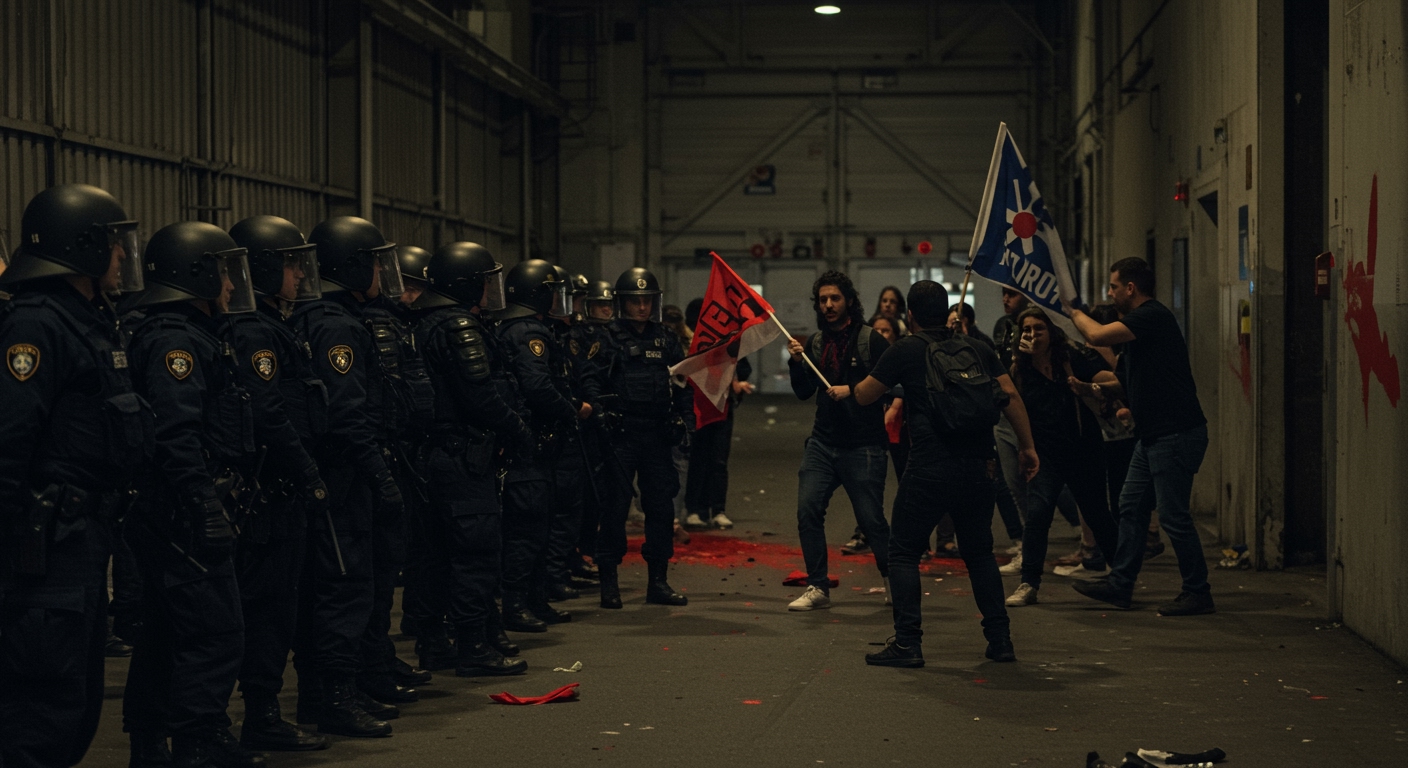
The announcement comes amidst heightened tensions. On Monday, June 23, 2025, protests held in London’s Trafalgar Square in solidarity with Palestine Action led to clashes between demonstrators and police. The confrontation reportedly ensued after officers attempted to make an arrest during the gathering, underscoring the volatile nature of the situation.
Government Cites Damage to Military Assets
The government’s decision is directly linked to recent incidents attributed to Palestine Action activists. Last week, activists reportedly breached the Royal Air Force (RAF) Brize Norton military base in central England. During this alleged breach, they are accused of damaging two Voyager aircraft. The group claimed responsibility for the action, stating it was a protest against the UK government’s continued support for Israel’s actions in Gaza.
Palestine Action activists asserted they sprayed red paint – a symbolic gesture representing Palestinian bloodshed – into the engines of the aircraft. They also claimed to have used crowbars during the incident and left a Palestine flag at the scene. The alleged damage to the military planes prompted swift condemnation from senior political figures.
UK Prime Minister Keir Starmer publicly denounced the incident, describing the damage as “disgraceful.” The government has since framed the proposed ban as a necessary measure to deter such disruptive and damaging activities targeting vital national infrastructure.
Proscription Process and Legal Implications
Proscription under the UK’s Terrorism Act is a powerful legal tool used by the government to ban organizations deemed to be involved in terrorism. It criminalizes a range of activities related to the banned group, including fundraising, displaying support, and attending meetings. For the ban on Palestine Action to be legally binding, the Home Secretary’s proposal must be approved by both the House of Commons and the House of Lords.
Should parliamentary approval be granted, membership or active support for Palestine Action would become a criminal offence carrying substantial penalties, aligning the group’s legal standing with that of internationally recognized terrorist organizations.
Criticism and Broader Context of UK Arms Sales
The proposed ban has not been without its critics. Human rights advocates and civil liberties groups have voiced concerns about the potential implications for freedom of expression and the right to protest. Critics argue that using antiterrorism legislation against a campaign group sets a dangerous precedent.
The non-governmental organization Campaign Against Arms Trade (CAAT) has been prominent in highlighting the broader context of the UK’s relationship with Israel, particularly concerning military equipment. CAAT has noted an increase in the number of military equipment licenses granted by the UK to Israel. This increase has occurred despite the government announcing a temporary suspension of new arms export licenses in September 2024 and its refusal to halt shipments of components for F-35 fighter jets used by Israel.
Opponents of the ban argue that while property damage is unlawful, classifying a protest group under antiterrorism laws is disproportionate and distracts from scrutiny of the UK’s own policies regarding arms exports to countries involved in conflicts.
Future Outlook
The push to proscribe Palestine Action signals a hardening stance by the UK government towards direct action protest groups that target defense and arms industries. The parliamentary debate and subsequent vote on the proposed ban are expected to be closely watched, as they will determine the legal fate of Palestine Action and potentially influence the landscape for future protest movements in the United Kingdom.