
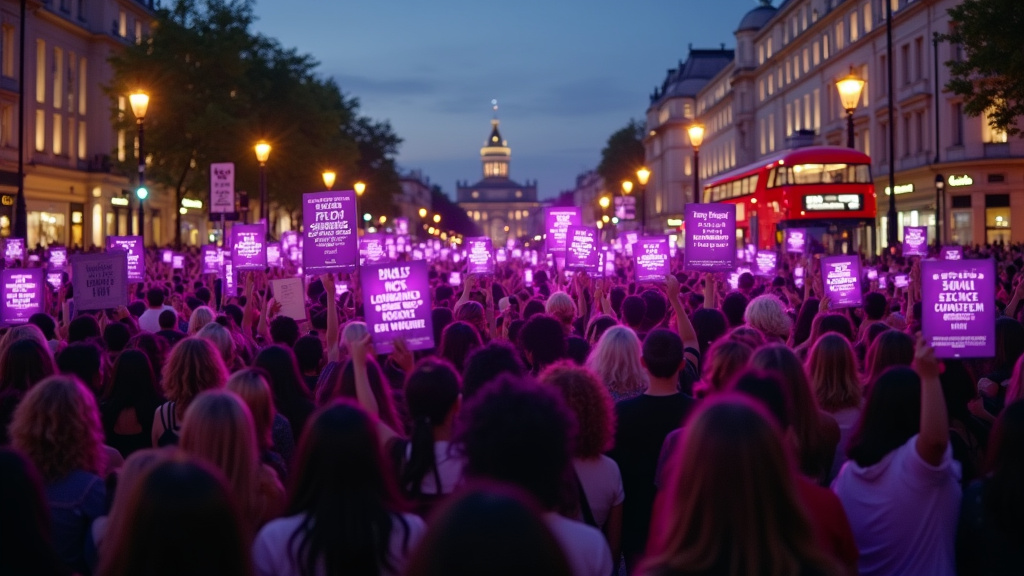
Thousands of Londoners took to the streets recently, uniting under the banner of the ‘Take Back the Night’ movement to demand an end to sexual violence and champion a culture that profoundly respects consent. The popular demonstration saw a significant turnout, underscoring a city-wide desire for safer public spaces and a fundamental shift in societal attitudes towards sexual assault and harassment.
A Movement’s Resurgence in London
The ‘Take Back the Night’ initiative, a global movement with roots stretching back decades, has seen a renewed surge of activity in London. This latest march amplified calls for tangible change, bringing together diverse communities to voice their collective experiences and aspirations for a future free from sexual violence. Organizers emphasized that the event was more than a protest; it was a powerful statement of solidarity and a call to action for individuals, communities, and authorities alike.
Core Demands: Safety and Consent
Participants marched through key areas of the capital, carrying banners and chanting slogans that highlighted the pervasive nature of sexual violence. The core messages were clear: the urgent need for increased safety measures on London’s streets, comprehensive education on consent from an early age, and robust support systems for survivors. The momentum behind this news reflects growing public frustration with persistent rates of sexual offenses and a demand for greater accountability.
Background and Context
The march arrives at a time when discussions around women’s safety and consent have gained significant traction, both nationally and internationally. Recent statistics and high-profile incidents have shone a stark light on the challenges faced by many, particularly women, in feeling secure in public spaces and in their personal lives. Advocates argue that while awareness has grown, concrete actions to prevent sexual violence and foster a culture of enthusiastic consent have lagged behind. This demonstration aimed to bridge that gap, pushing for policy changes and cultural introspection.
Community Voices and Calls for Action
Speakers at the event, representing various women’s rights organizations and community groups, articulated the deep-seated issues fueling the march. They spoke of the fear that walking home alone at night can instill, the hesitance many feel in reporting incidents, and the societal narratives that can inadvertently blame victims. The collective voice called for improved street lighting, more visible and responsive policing, bystander intervention training, and a re-evaluation of how consent is understood and taught in educational institutions and beyond. The news from the march indicated a strong desire to move beyond mere awareness to systemic change.
Implications and The Road Ahead
The impact of such widespread public engagement is significant. It signals to lawmakers and institutions that the public is demanding action on issues of sexual violence and consent. The ‘Take Back the Night’ march serves as a powerful reminder that community action is a vital component in driving social change. As London continues to grapple with these critical issues, the energy and message from this popular demonstration are expected to fuel ongoing advocacy and a broader societal conversation aimed at creating a safer, more respectful environment for everyone.