
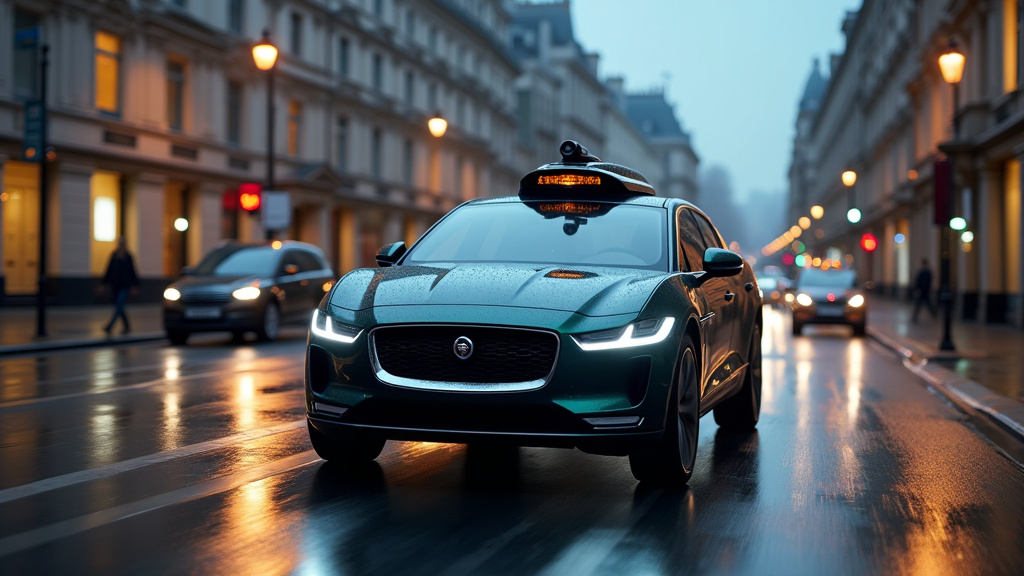
Robotaxi pioneer Waymo, a subsidiary of Alphabet Inc., has officially announced its intention to launch its fully driverless ride-hailing service in London by 2026, marking a significant international expansion and its first foray into Europe. This move positions the UK capital as a key testing ground for cutting-edge autonomous vehicle technology, with testing set to commence on London’s streets in the coming weeks.
Waymo’s European Debut: A Strategic Move for London
Waymo’s decision to bring its services to London signifies a major development for the city’s transport landscape. The company has chosen London as its initial European market, following successful operations in several major US cities including Phoenix, San Francisco, Los Angeles, Atlanta, and Austin. Vehicles have reportedly already been shipped overseas, and initial testing with human safety drivers behind the wheel is set to begin across a substantial 100-square-mile area of the city.
This news is a significant development and a trending topic in the autonomous vehicle industry, positioning London as a global hub for AV innovation. The company aims to secure necessary government approvals and engage with local and national leaders to pave the way for its commercial ride-hailing service, which will operate via its dedicated app.
Navigating Regulatory Pathways and Road Challenges
The introduction of Waymo’s driverless taxis in London will be subject to the UK’s evolving regulatory framework for autonomous vehicles. The Automated Vehicles Act 2024 is central to this, setting standards that require self-driving cars to demonstrate a safety level “at least as high as careful and competent human drivers” and undergo rigorous safety checks. Waymo will also need to adhere to specific rules and licensing set by Transport for London (TfL), which manages the city’s complex transport network.
London presents a particularly challenging, yet valuable, environment for testing and operating autonomous vehicles. Its intricate road layouts, dense traffic, unpredictable pedestrian and cyclist behaviour, and varied weather conditions offer a robust proving ground. Waymo has stated that its extensive experience from navigating complex scenarios in US cities, from San Francisco’s fog to Atlanta’s heavy rain, will be invaluable in adapting its technology for London’s unique environment.
Waymo’s Proven Technology and Safety Record
Waymo’s London fleet will initially consist of all-electric Jaguar I-PACE vehicles, equipped with its proprietary ‘Driver’ system. This system has been trained on over 100 million miles of fully autonomous driving in the US. The company highlights its safety record, asserting that its vehicles are involved in significantly fewer injury-causing collisions and pedestrian incidents compared to human drivers. Waymo’s data suggests its technology has been involved in five times fewer injury-causing collisions and twelve times fewer pedestrian incidents than human drivers, aligning with London’s ambitious Vision Zero strategy aiming to eliminate road deaths and serious injuries.
A Boost for UK’s AI Ambitions and Local Operations
The UK government has welcomed Waymo’s expansion, viewing it as a vote of confidence in the nation’s innovation agenda and a boost to its ambition to become an “AI superpower.” Transport Secretary Heidi Alexander stated that the move would “boost jobs, investment and opportunities.” Waymo has existing ties to the UK, having established its first European engineering hub in Oxford in 2019 following the acquisition of the startup Latent Logic. For the broader UK autonomous vehicle sector, Waymo’s arrival is expected to be both competitive and catalytic, potentially spurring further development and investment.
Waymo is partnering with Moove, a mobility-focused fleet management company, to oversee the operational logistics, maintenance, and charging of its London fleet. This partnership model is similar to its arrangements in some US cities. While Waymo partners with Uber and Lyft in certain US markets to offer rides, its London strategy is to provide its service directly through its own app, positioning it to compete in one of the world’s largest ride-hailing markets.
The Road Ahead for Driverless Services in London
The introduction of Waymo’s services is part of a broader push by the UK government to accelerate autonomous vehicle development. Limited public trials for self-driving taxis and shuttles without human safety drivers are anticipated from spring 2026, ahead of the full implementation of the Automated Vehicles Act, expected by 2027. This news forms a compelling part of the ongoing story of urban mobility transformation.
While Waymo is targeting a 2026 launch for fully autonomous rides, the path forward will involve close collaboration with UK regulators, TfL, and the Department for Transport. Challenges such as public perception, evolving legal frameworks, and the sheer complexity of London’s urban environment remain, but Waymo’s expansion signals a significant step towards integrating driverless technology into the fabric of city life. The successful implementation of this top-tier technology in London could set a precedent for future autonomous deployments across Europe and beyond.