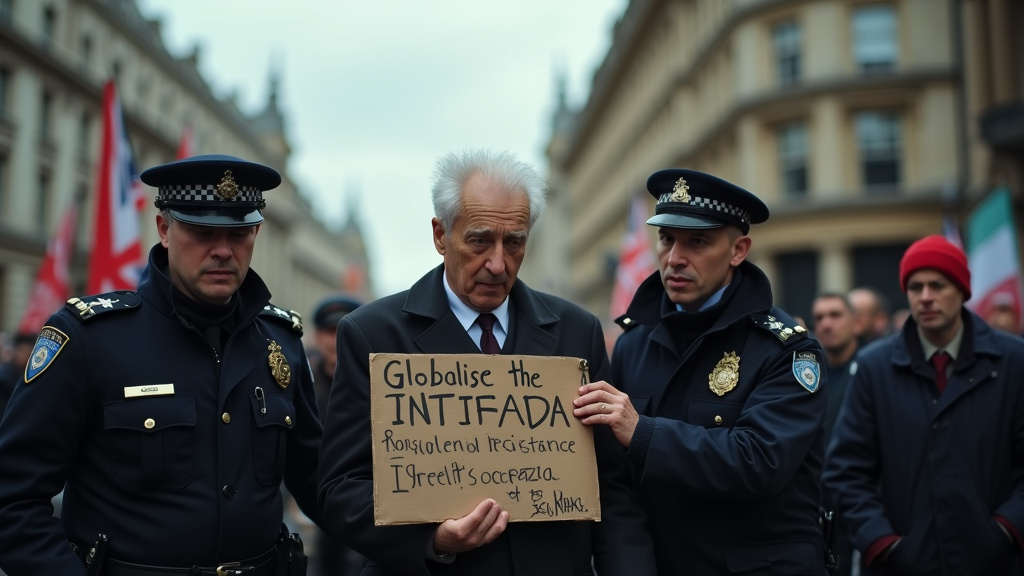
London, UK – Prominent human rights activist Peter Tatchell faced arrest on Saturday, January 31, 2026. This incident occurred during a large pro-Palestine march in central London. The Metropolitan Police detained Tatchell. His detention stemmed from a placard he was carrying. The arrest has ignited a significant debate about free speech and protest rights. This is unfolding news in London.
Activist Detained Amidst London March
Tatchell was carrying a sign with specific wording. It read: “Globalise the intifada: Non-violent resistance. End Israel’s occupation of Gaza & West Bank”. Police officers arrested him on suspicion of a public order offense. Officers on duty at the protest took him into custody.
Police Citing New Context for Arrests
The Metropolitan Police confirmed the arrest. They released a statement via X (formerly Twitter). Officers policing the Palestine Coalition protest detained the 74-year-old activist. The police cited a changed context for their actions. This policy shift reportedly came after the Bondi Beach terror attack. Consequently, chanting “globalise the intifada” could now lead to arrest. This marks a new enforcement approach.
Tatchell Denounces Arrest as ‘Attack on Free Speech’
Tatchell’s foundation promptly issued a statement. They strongly condemned the arrest. The foundation labeled it an “attack on free speech.” Tatchell himself argued the word “intifada” is not illegal. He believes the police action constitutes overreach. The activist stressed the importance of peaceful protest. He described the incident as part of a worrying trend. This trend increasingly restricts and criminalizes peaceful demonstrations.
Understanding the Slogan ‘Intifada’
The Arabic term “intifada” translates to uprising or resistance. It historically refers to Palestinian uprisings against Israeli occupation. Tatchell clarified his placard’s meaning. He stated the word does not inherently imply violence. Furthermore, he asserted it is not antisemitic. He explained his intent was to resist the Israeli regime and its alleged war crimes. His call for “non-violent resistance” advocated for tactics like boycotts and sanctions. Tatchell likened this to the global campaign against apartheid South Africa. He argued “Globalise the intifada” aims to build a worldwide movement against occupation.
Broader Context of the March and Arrests
Thousands of people attended the Palestine Coalition protest. Protesters gathered in Russell Square. They marched towards Whitehall. The demonstration called for an end to arms sales to Israel. Counter-protests also occurred. The Metropolitan Police reported a total of 14 arrests. Two other individuals were detained. They faced suspicion of supporting the banned Palestine Action group. Another woman was arrested later. She wore a “Globalise the intifada” t-shirt. Tatchell was taken to Sutton police station.
Implications for Protest and Free Speech
Critics argue Tatchell’s arrest sets a dangerous precedent. They fear it could stifle legitimate dissent. The interpretation of slogans like “globalise the intifada” remains highly contested. Some view it as incitement to violence. Others, like Tatchell, see it as a call for resistance against occupation. The police’s stated change in context highlights a growing tension. This tension exists between public order concerns and freedom of expression. This trending news from London underscores these complex issues.