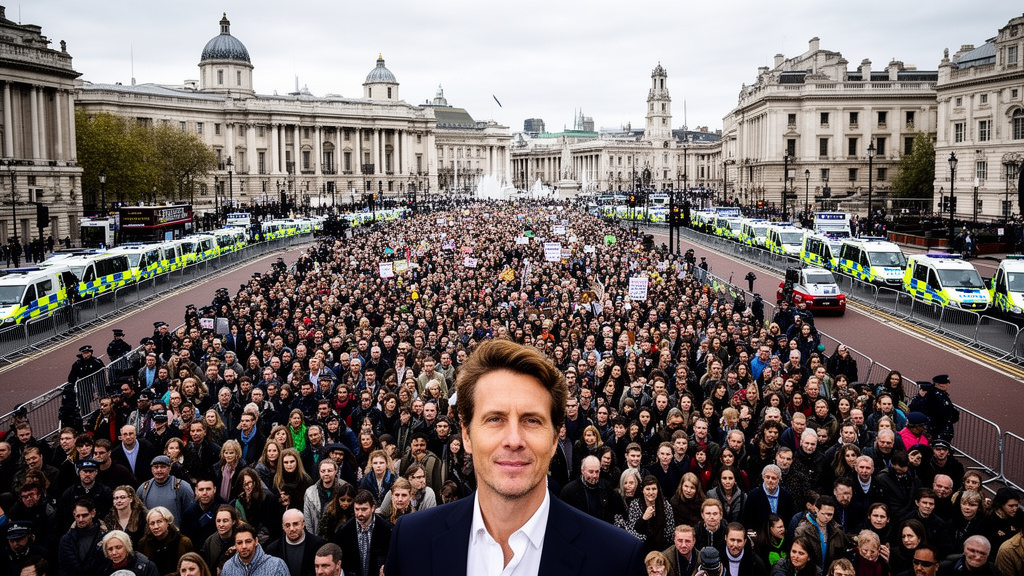

London authorities have banned the annual Al-Quds Day march, citing concerns over public order and potential incitement. The decision has drawn sharp criticism from pro-Palestine groups, who decry it as suppression of free speech and solidarity.
Key Highlights:
- The Al-Quds Day march in London has been officially banned by authorities.
- Concerns over public order and potential incitement were cited as reasons for the ban.
- Pro-Palestine groups condemn the ban as a violation of free speech.
- The ban reflects broader global trends of increased scrutiny on pro-Palestine activism.
Crackdown on Al-Quds Day March
The Metropolitan Police, in conjunction with the Home Office, announced the prohibition of the Al-Quds Day march, a long-standing annual event that typically sees thousands gather in London to express solidarity with the Palestinian cause and condemn what they describe as Israeli occupation. The decision, made under controversial public order legislation, has ignited a firestorm of protest from various advocacy groups and civil society organizations. These groups argue that the ban is a disproportionate infringement on the fundamental right to freedom of assembly and expression, particularly concerning a movement that highlights significant human rights issues. The official justification for the ban hinges on the potential for the march to incite hatred or lead to public disorder, with authorities pointing to past incidents and rhetoric associated with some participants. However, organizers maintain that the march is a peaceful demonstration intended to raise awareness and that such bans serve to silence legitimate political dissent.
International Context and Domestic Impact
This ban in London is not an isolated incident but mirrors a growing trend globally. Several European cities and countries have seen increased restrictions or outright bans on pro-Palestine demonstrations in recent years. These measures often emerge amidst heightened geopolitical tensions and complex domestic political landscapes. The pro-Palestine movement, which advocates for Palestinian rights and an end to the occupation, has faced increasing pressure, with governments often balancing concerns for security and public order against commitments to civil liberties. Critics of the ban argue that prohibiting peaceful protests does not address the root causes of conflict and instead alienates communities and stifles open dialogue.
Legal and Ethical Debates
The legal basis for the ban, typically invoking public order laws, is being fiercely debated. Civil liberties organizations are scrutinizing the evidence used to justify the prohibition, questioning whether the threshold for restricting fundamental rights has been met. The ethical implications are also significant: does banning a march that supports a group facing perceived oppression constitute an act of solidarity with that group’s oppressors? Conversely, proponents of the ban argue that the state has a duty to prevent any event that could be exploited to promote extremism or incite violence, regardless of the participants’ stated intentions. The debate underscores the perennial tension between security and liberty, particularly in the context of politically charged demonstrations.
Analyzing the Suppression of Activism
The repression of the Palestine movement, as highlighted by the Al-Quds Day march ban, raises broader questions about the space for activism concerning contentious international issues. Activists argue that such measures are often influenced by diplomatic pressures and shifting political alliances, rather than purely objective assessments of public order. The narrative surrounding these bans often frames the movement as inherently problematic, potentially ignoring the diverse viewpoints within the pro-Palestine solidarity network. The long-term consequences could include a chilling effect on legitimate dissent and a further marginalization of voices advocating for Palestinian rights on the international stage.
FAQ: People Also Ask
What is Al-Quds Day?
Al-Quds Day (Jerusalem Day) is an annual international day of protest against the occupation of Jerusalem and an expression of solidarity with the Palestinian people. It is typically observed on the last Friday of Ramadan.
Why are pro-Palestine marches sometimes banned?
Marches may be banned by authorities if they are deemed to pose a risk to public order, incite violence or hatred, or if specific legislation is invoked to prohibit them based on anticipated disruption or security threats.
What are the key arguments against banning the march?
Arguments against the ban typically center on the protection of freedom of speech and assembly, the right to protest peacefully, and the claim that such bans suppress legitimate advocacy for human rights and international law.
What are the arguments for banning the march?
Proponents of the ban usually cite concerns about public safety, the prevention of potential incitement to violence or hatred, and the need to maintain public order, especially if there are credible threats of disruption or extremist involvement.
How does this ban affect free speech in the UK?
Critics argue that such bans can create a chilling effect on free speech and assembly, particularly for groups advocating for controversial political causes. Supporters contend that the bans are necessary measures to ensure public safety and prevent the exploitation of public spaces for harmful purposes.