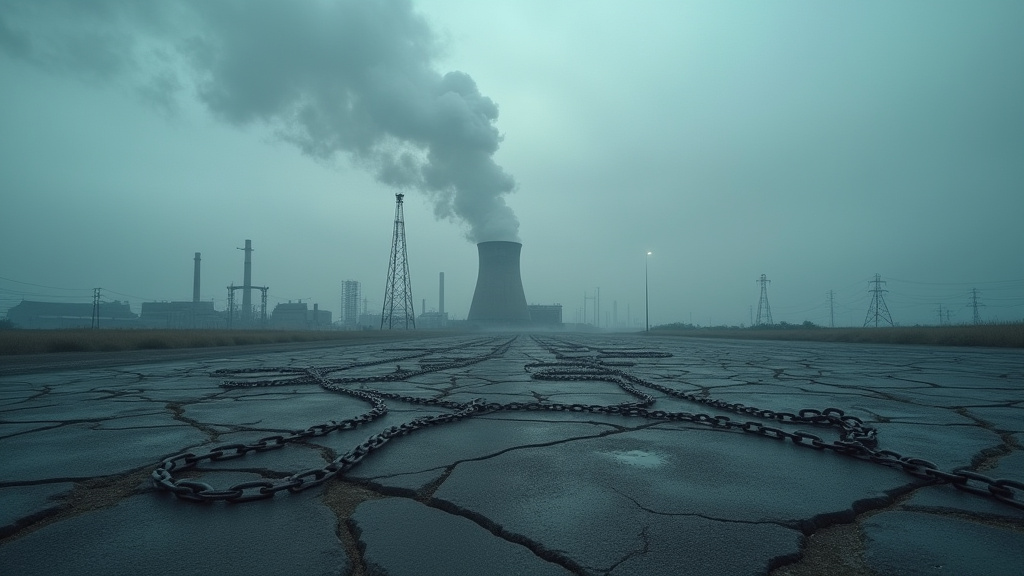
The UK economy experienced a significant slowdown, showing no growth at the start of the year. This stagnation is largely attributed to persistent geopolitical tensions and the ongoing pressure of rising energy prices, impacting consumer spending and business investment.
Key Highlights:
- No economic growth recorded at the beginning of the year.
- Geopolitical instability is a major contributing factor.
- Rising energy costs continue to suppress economic activity.
- Concerns mount over the resilience of the UK’s economic outlook.
Economic Stagnation Amidst Global Headwinds
The United Kingdom’s economy hit a standstill in the first three months of the year, failing to register any growth. This period of stagnation, as reported by the Office for National Statistics (ONS), paints a concerning picture for the nation’s economic trajectory. The ONS highlighted that the services sector, a critical component of the UK’s GDP, saw only marginal expansion, barely offsetting contractions in other areas. This lack of momentum is occurring against a backdrop of significant global uncertainty, including ongoing geopolitical conflicts and the sustained impact of elevated energy prices.
The Impact of Geopolitical Tensions
Global geopolitical instability, including conflicts in Eastern Europe and other regions, continues to cast a long shadow over economic forecasts. These tensions disrupt global supply chains, leading to increased costs for imported goods and raw materials. Businesses are forced to navigate this volatile environment, often delaying investment decisions and scaling back expansion plans due to the unpredictable nature of international trade and resource availability. The ripple effect is a dampening of economic activity, as companies become more risk-averse and consumers face potential shortages or higher prices for essential goods.
Energy Prices: A Persistent Drag
The sustained high cost of energy remains a significant impediment to economic recovery. While wholesale energy prices have seen some fluctuations, they remain considerably higher than pre-crisis levels. This directly impacts households, reducing disposable income and leading to decreased consumer spending on non-essential items. For businesses, particularly those in energy-intensive sectors such as manufacturing and heavy industry, these elevated costs squeeze profit margins, potentially leading to reduced output, job cuts, or even closures. The government’s support measures, while providing some relief, have not fully mitigated the long-term effects of this energy price shock.
Resilience and Future Outlook
The ONS data indicates that the UK economy’s ability to grow is being severely tested by these external pressures. The lack of growth in early 2024 suggests that the economy is struggling to find a strong footing. Economists are closely watching indicators for signs of a potential rebound, but the confluence of geopolitical risks and energy cost pressures presents a formidable challenge. The Bank of England will be carefully assessing these trends as it formulates its monetary policy, balancing the need to control inflation with the imperative to support economic growth.
FAQ: People Also Ask
What is the current state of the UK economy?
As of the first quarter of 2024, the UK economy has stalled, recording zero growth. This stagnation is primarily driven by geopolitical tensions and high energy prices.
How do geopolitical tensions affect the UK economy?
Geopolitical tensions disrupt global supply chains, increase the cost of raw materials and imported goods, and create uncertainty, leading businesses to delay investments and consumers to reduce spending.
What is the impact of rising energy prices on businesses?
High energy prices increase operating costs for businesses, squeezing profit margins. This can lead to reduced production, potential job losses, and slower business expansion.
What is the ONS?
The Office for National Statistics (ONS) is the UK’s largest independent producer of official statistics and the sole custodian of these essential national data.
What are the key sectors contributing to the UK economy?
The UK economy is largely driven by its services sector, which includes finance, retail, and technology. However, manufacturing and other industrial sectors also play a vital role.