
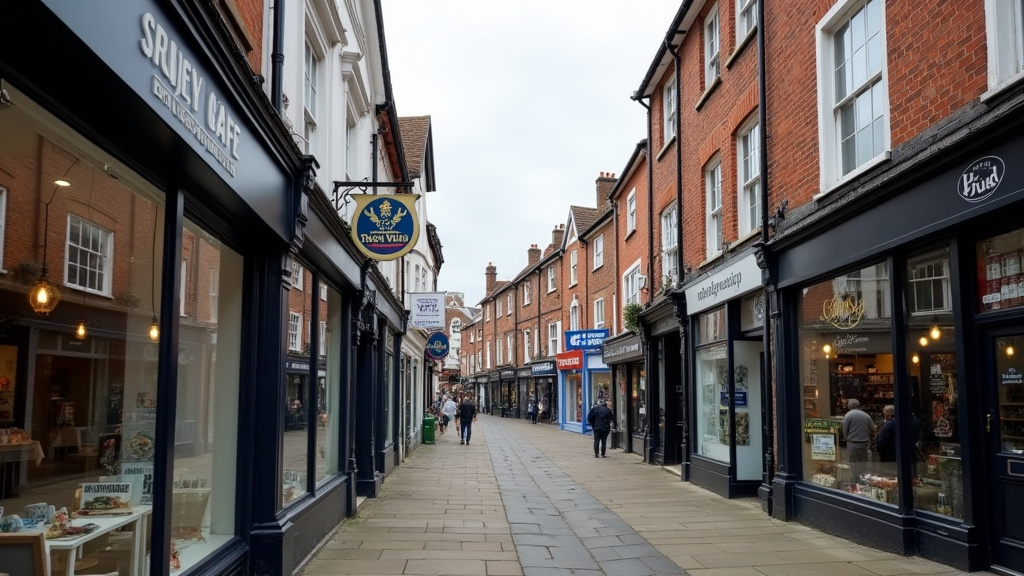
The UK government’s recent legislative focus on clamping down on the prevalence of vape shops and betting establishments has reignited a fierce debate over the future of the British high street. The Local Government Association (LGA), representing the interests of councils across England and Wales, has officially responded to the announcement, emphasizing that while the crackdown is a welcome step toward protecting public health and community standards, local authorities require significantly broader planning powers to be truly effective. The core tension lies in the shift between the government’s national policy directives and the granular, on-the-ground decision-making required by local planning committees to foster healthy, vibrant, and sustainable commercial environments.
Key Highlights
- Empowering Local Authorities: The LGA is calling for a fundamental shift in planning law, moving away from ‘permitted development’ that allows change of use without oversight.
- Public Health Priorities: There is an urgent cross-sector push to limit the clustering of vape shops, particularly near schools, citing concerns over youth health and addiction.
- Economic vs. Social Balance: Councils are arguing that high streets must be more than just clusters of gambling and vaping; they must offer diverse economic activity that supports long-term regeneration.
- The Planning Loophole: Current regulations often frustrate local planners, who find it difficult to reject applications due to rigid national definitions of ‘appropriate’ high street businesses.
Reclaiming the High Street: The Fight for Regulatory Control
For decades, the British high street has served as the barometer for the national economy. However, in recent years, this barometer has skewed heavily toward a narrow range of service-based businesses, specifically betting shops and vape retailers. The government’s move to tighten restrictions on these sectors is a direct response to growing public dissatisfaction with the degradation of town centers. Yet, the LGA’s response highlights a persistent friction: the conflict between national deregulation efforts, intended to stimulate business, and the local desire to curate spaces that prioritize community well-being over raw commercial throughput.
The LGA’s Stance: Beyond National Policy
The Local Government Association (LGA) has consistently advocated for a more nuanced approach. Their position is clear: local councillors, who are directly accountable to their constituents, are best positioned to determine the character and needs of their specific neighborhoods. When national policies are too sweeping, they often fail to account for the unique vulnerabilities of town centers. For example, a high street in a dense urban residential area has vastly different needs than a central commercial district. By demanding that councils be given more agency, the LGA is essentially calling for the ‘democratization’ of urban planning. They argue that councils should be able to prevent the over-saturation of certain sectors—such as betting shops—by utilizing more flexible ‘Use Class’ systems that allow for local intervention rather than blanket national rules.
Understanding the Regulatory Shift
The current debate touches on the complex relationship between ‘permitted development rights’ and planning oversight. Historically, the UK government has utilized broad rights to encourage quick business openings and reduce ‘red tape.’ However, this has inadvertently allowed for a proliferation of businesses that many local communities now find undesirable. The crackdown on vape and betting shops is an admission that this hands-off approach may have reached its limit. Public health bodies, working alongside Planning Authorities, have begun to present evidence suggesting that the concentration of these businesses leads to ‘social friction.’ For instance, betting shops are often criticized for contributing to gambling-related harm, while the explosion of vape shops has been linked to concerns regarding youth uptake of nicotine products.
Economic Realities and High Street Regeneration
Critics of tighter regulations often point to the economic reality of the high street: if shops are empty, a business is better than a boarded-up window. However, the LGA counters that this ‘zero-sum’ approach is flawed. Research suggests that high streets with a diverse offering—including independent cafes, community hubs, and small-scale services—tend to have better long-term survival rates than those dominated by single-industry clusters. The goal of the proposed crackdown is not to shutter businesses permanently but to incentivize landlords and entrepreneurs to pursue ‘higher-value’ community uses. This includes incentivizing small-scale independent retail and services that serve the local population, thereby increasing footfall and dwell time, rather than relying on the quick-transaction models common to betting and vaping shops.
The Future of Local Planning
The path forward remains complex. As the government moves to implement these new restrictions, the success of the policy will depend heavily on the legislative details. If the crackdown is implemented through vague guidance, local planning committees will struggle to defend their decisions in the face of costly appeals from corporate operators. If, however, the government provides clear, robust, and legally defensible powers—as the LGA has requested—then councils will finally have the tools they need to shape their high streets for the next generation. The future of the high street is not just about what businesses are allowed to open; it is about who has the power to decide the character of our shared public spaces.
FAQ: People Also Ask
1. Why is the LGA calling for more control over planning?
The LGA argues that national ‘permitted development’ rules often strip local councils of the power to reject business applications that the community does not want, such as excessive betting or vape shop clusters. They believe local councils understand their community’s needs better than national regulators.
2. How do betting and vape shops affect high street regeneration?
While these businesses provide occupancy, their critics argue that high concentrations of betting and vape shops can deter families, reduce the diversity of other businesses, and create public health or social issues that discourage wider community participation in town centers.
3. Is this crackdown expected to close existing shops?
Most government proposals focus on limiting new openings in sensitive areas (like near schools) and tightening licensing. While it may slow the growth of these sectors, it does not necessarily imply the immediate mass closure of existing, legally operating businesses.
4. What is the ‘Use Class’ system in this context?
‘Use Class’ is a planning categorization system that defines what a property can be used for (e.g., retail, food and drink, residential). Changes within these classes often do not require planning permission. The LGA wants more flexibility to re-regulate these classes to prevent business over-saturation.