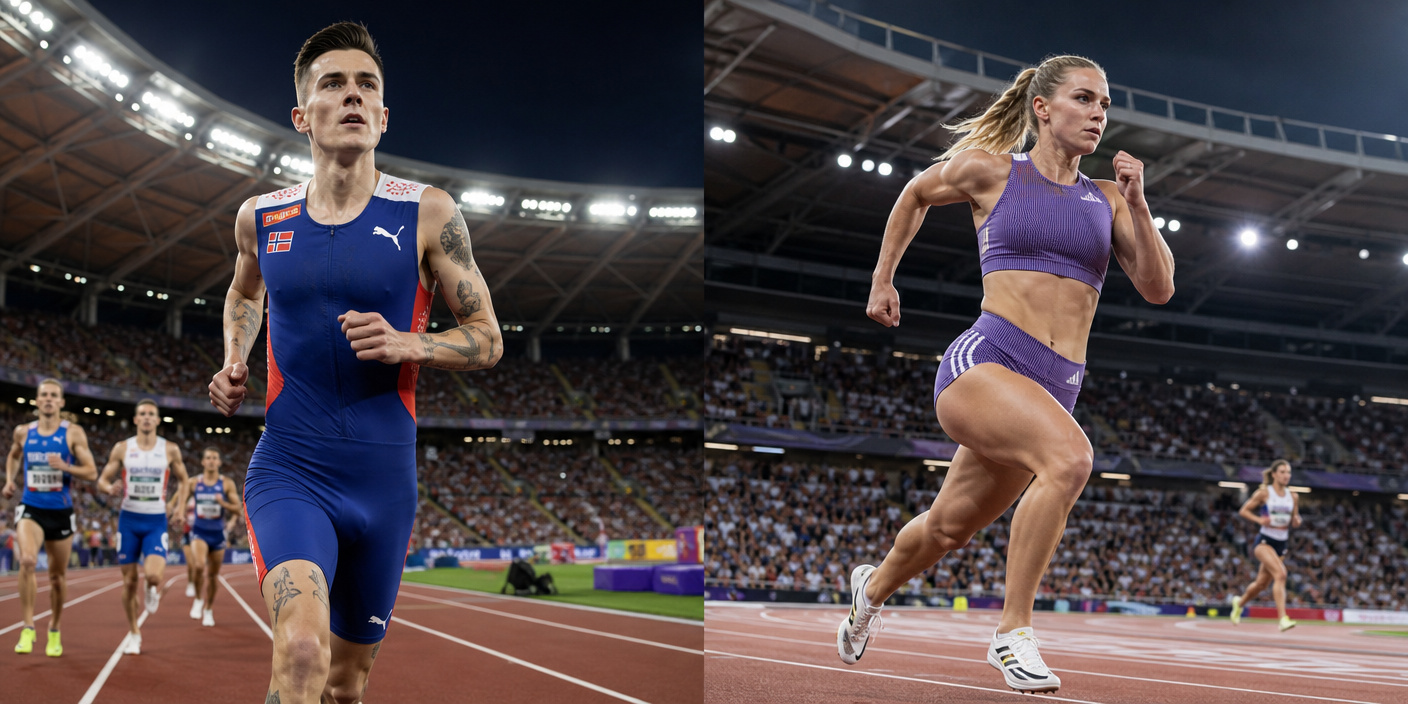
Norwegian distance runner Jakob Ingebrigtsen has once again cemented his status as the undisputed king of the 5,000 meters, storming to his fourth consecutive gold medal at the European Athletics Championships in Birmingham. This victory serves as a profound statement of resilience, marking a triumphant return to elite competition following a recent injury that threatened to derail his season. In a parallel display of sprinting excellence, Britain’s own Amy Hunt seized the gold in the women’s 100m, delivering a career-defining performance that brought the Birmingham crowd to its feet.
Key Highlights
- Unstoppable Momentum: Jakob Ingebrigtsen secured his fourth straight 5,000m European title, showcasing superior tactical awareness and closing speed.
- Sprint Breakthrough: Amy Hunt claimed the women’s 100m gold, proving her capability as a rising star on the European stage.
- Return from Adversity: Ingebrigtsen’s victory highlights a successful and rapid rehabilitation from recent injury setbacks.
- Event Significance: The results at the Birmingham championships underscore the shifting tides in European athletics, with established legends maintaining dominance and new talent emerging.
The Birmingham Masterclass: A Weekend of Athletics History
The European Athletics Championships in Birmingham provided the perfect backdrop for one of the most anticipated showdowns in recent middle-distance history. With the stadium humming with anticipation, the men’s 5,000m final stood as the centerpiece of the event. For Jakob Ingebrigtsen, this was not merely a race; it was a test of his physical integrity and tactical acumen. Having faced a challenging period of recovery from injury, many analysts questioned whether the Norwegian phenomenon could maintain the relentless pace required to hold off a hungry field of contenders.
The Ingebrigtsen Strategy: Tactical Brilliance and Resilience
Ingebrigtsen’s approach to the 5,000m has always been defined by a unique blend of controlled aggression and near-perfect rhythm management. In Birmingham, this was on full display. During the early laps, the field remained tight, with Ingebrigtsen hovering comfortably within the lead pack. He allowed his opponents to expend energy battling for the inner lane, conserving his reserves for the crucial final stages. When the bell rang for the final lap, the shift in his intensity was palpable. He surged to the front, creating a gap that proved insurmountable for the chasing pack. His four-year streak of gold medals is a testament to not just his raw speed, but his mental fortification in the face of physical setbacks. This victory signals to the world that his preparation protocols—focusing on injury prevention and high-intensity interval training—are yielding championship-level results.
Amy Hunt’s Rise: The Women’s 100m Narrative
While Ingebrigtsen’s victory was a reaffirmation of greatness, the women’s 100m final offered a different, equally electric narrative. Amy Hunt, representing Britain, entered the race with a clear objective: to challenge the established hierarchy of European sprinting. The race itself was a blur of explosive acceleration. Hunt’s start was clean, efficient, and powerful, allowing her to transition into her drive phase with optimal mechanics. By the 60-meter mark, she had separated herself from the pack, holding her form through the final drive to the finish line. Her gold medal is more than just a victory; it is a signal of the next generation of British sprinting talent asserting its dominance on the continental stage.
The Importance of the Venue: Birmingham’s Athletic Legacy
The choice of Birmingham as the host city for this edition of the European Athletics Championships cannot be overlooked. Known for its world-class facilities and capacity to generate an electrifying atmosphere, the stadium design allows for optimal acoustics and sightlines, which undoubtedly played a role in the athletes’ performances. The surface, track conditions, and the specific micro-climate of the stadium contributed to a weekend that pushed the boundaries of current records. For both Ingebrigtsen and Hunt, the environment was the catalyst for their success.
Analyzing the Future of European Athletics
Beyond the medals and the podium finishes, this championship event sheds light on three critical secondary angles that are shaping the future of the sport:
1. The Evolution of Injury Management: The narrative of Ingebrigtsen’s comeback highlights a broader shift in how elite athletics teams approach injury recovery. Modern sports science is moving away from prolonged rest periods in favor of active, targeted rehabilitation that allows athletes to maintain aerobic capacity while healing. This success story will likely become a case study for coaches across the globe.
2. The Shift in Sprinting Power: Amy Hunt’s emergence as a gold medalist is indicative of a shifting landscape in European sprinting. Historically, certain regions have dominated, but the investment in grassroots development and specialized sprinting programs in the UK is clearly bearing fruit. We are witnessing a broadening of the talent pool, which makes major championships increasingly competitive.
3. Psychological Durability in Elite Sport: The pressure of repeating as a champion, as Ingebrigtsen has, requires a specific psychological profile. This event has sparked discussions regarding the mental health and fortitude of athletes who perform under the constant scrutiny of being the ‘person to beat.’ The ability to compartmentalize external expectations and focus solely on the ‘now’ is becoming the most vital skill an athlete can possess.
FAQ: People Also Ask
Q: How many consecutive 5,000m gold medals has Jakob Ingebrigtsen won?
A: Jakob Ingebrigtsen has successfully secured his fourth consecutive gold medal in the 5,000-meters event at the European Athletics Championships.
Q: Who won the women’s 100m gold at the Birmingham championships?
A: Britain’s Amy Hunt secured the gold medal in the women’s 100m, delivering an impressive performance to clinch the victory.
Q: Why was this win significant for Ingebrigtsen?
A: The victory was particularly significant because it marked a triumphant return to competition for Ingebrigtsen following a period of injury, proving he has fully recovered and remains the runner to beat.
Q: Where were the European Athletics Championships held?
A: The events mentioned took place at the European Athletics Championships hosted in Birmingham.