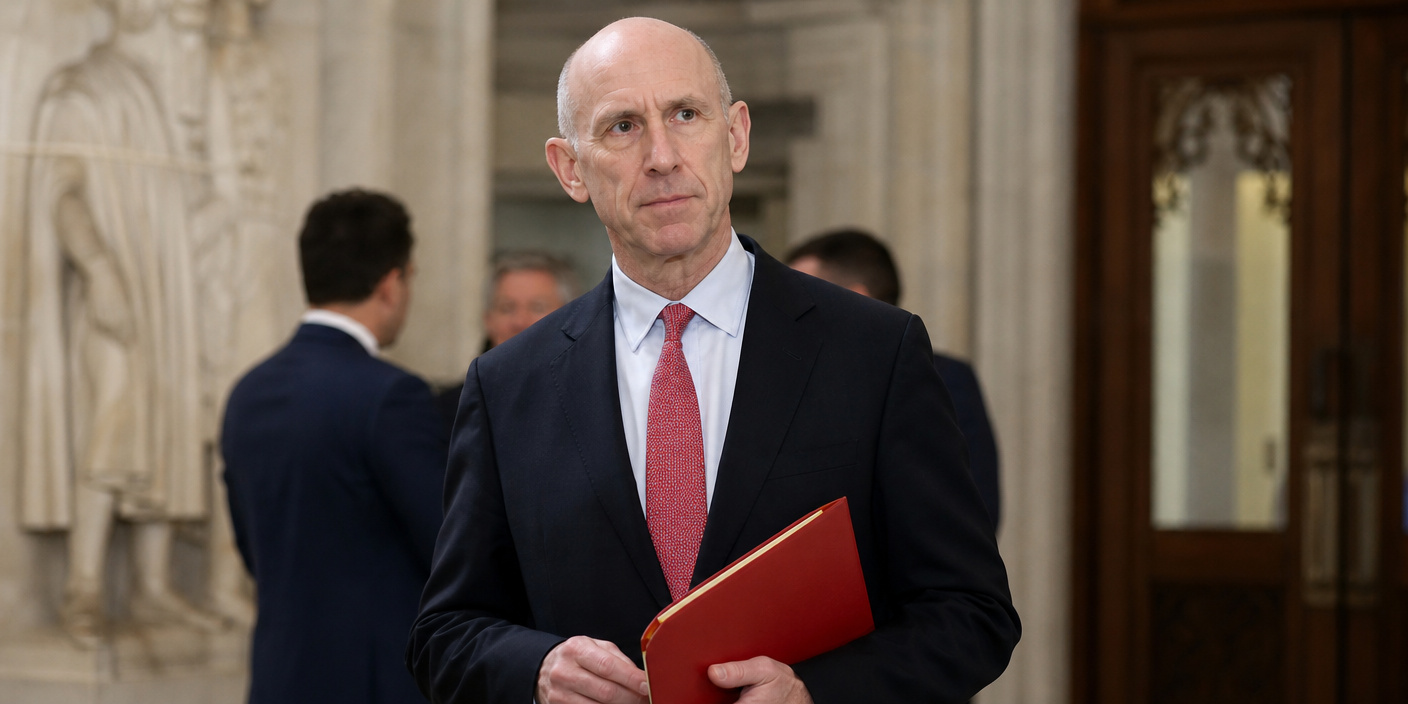
Chancellor John Healey faces a critical juncture as the Treasury finalizes the upcoming October budget, with the International Monetary Fund (IMF) openly pushing back against potential tax raids on the UK banking sector. The fiscal tug-of-war has created a period of heightened market sensitivity, as the government attempts to reconcile its ambitious campaign spending pledges with the harsh reality of constrained public finances. While the Treasury views the banking sector as a viable source for revenue generation, global financial watchdogs and domestic market analysts warn that such measures may stifle investment and curb the very economic growth the current administration aims to accelerate.
Key Highlights
- IMF Intervention: The International Monetary Fund has signaled that the UK government should prioritize structural spending cuts over targeted tax increases on the banking sector to stabilize public debt.
- Market Volatility: Major UK banking stocks, including NatWest and Lloyds, have experienced downward pressure as investors price in the risk of increased fiscal burdens.
- Growth Concerns: Financial analysts at XTB and other institutions warn that aggressive taxation on banks could reduce lending capacity, thereby acting as a drag on wider economic recovery.
- Fiscal Dilemma: Chancellor John Healey must balance the political necessity of fulfilling Labour’s spending promises with the economic imperative to maintain a competitive financial services environment.
The IMF vs. The Treasury: A Fiscal Standoff
The tension between the IMF’s recommendations and Chancellor John Healey’s fiscal strategy represents a classic struggle between orthodox economic management and the political imperatives of a new administration. Historically, the IMF’s role in UK economic affairs is to provide objective guidance based on macro-economic stability, often leaning toward fiscal consolidation and efficiency. Their recent suggestion that the UK should cut spending rather than hike corporate taxes on banks is a direct challenge to the Treasury’s search for ‘low-hanging fruit’ in revenue generation.
For the Treasury, the temptation to target banks is understandable. The sector remains profitable, and in a post-pandemic, high-interest-rate environment, net interest margins have provided significant earnings. However, the IMF’s stance is rooted in a long-term view: the financial sector is a cornerstone of the UK economy, particularly in the City of London. By implementing punitive tax rates, the government risks damaging the sector’s long-term competitiveness, encouraging capital flight, and reducing the availability of credit for small and medium-sized enterprises (SMEs) that are the lifeblood of the broader economy.
Market Volatility and Investor Sentiment
The immediate impact of these rumors has been palpable in the equity markets. Domestic banking giants like NatWest and Lloyds Banking Group have seen their share prices fluctuate, reflecting a broader investor unease. This market behavior is not merely speculative; it is a calculated assessment of future earnings potential. Institutional investors, including pension funds and global asset managers, are sensitive to ‘windfall’ style taxation, which is often viewed as arbitrary and discriminatory against specific sectors.
Analysts at XTB have been particularly vocal, noting that if the budget proceeds with a bank tax raid, the result could be a contraction in commercial lending. When banks face higher tax bills, their regulatory capital requirements often become more difficult to manage, leading them to tighten lending standards. This creates a secondary economic impact: businesses across the UK, which are already struggling with higher costs of borrowing due to interest rates, may find it harder to secure the capital needed for expansion, innovation, or hiring.
The Growth Dilemma: Spending Cuts vs. Tax Hikes
Chancellor Healey is caught in a ‘trilemma’ of fiscal policy: he must fund campaign pledges, maintain public trust, and ensure economic growth. The IMF’s advocacy for spending cuts suggests that they believe the current level of government expenditure is unsustainable without fiscal reform. However, in the UK political context, ‘spending cuts’ is a phrase fraught with political peril. Following years of austerity and the post-COVID fiscal environment, public services—from the NHS to local infrastructure—are under immense strain.
The alternative, favored by some within the Treasury, is to raise taxes. But as the IMF has highlighted, tax hikes on productive sectors can be counter-productive. This raises the question: where will the revenue come from? If not from banks, and if spending cuts are politically impossible, the government may be forced to look at capital gains, pensions, or inheritance tax reforms. Each of these options carries its own unique set of political and economic risks, making the October budget one of the most anticipated financial events in recent UK history.
The Anatomy of the October Budget
The October budget will serve as a barometer for the government’s overall economic philosophy. Will they embrace a supply-side agenda that encourages investment and rewards profitable sectors, or will they lean toward a redistributionist model that uses the financial sector as a recurring revenue stream to fill gaps in public spending? The IMF’s warning serves as a significant hurdle for the latter. Should the Chancellor disregard this advice, he faces not only the wrath of the City but potentially a downgraded outlook from international rating agencies, which watch the UK’s fiscal discipline with eagle eyes.
Moreover, the global environment is increasingly competitive. With financial hubs in Europe and Asia vying for position, the UK cannot afford to be seen as an ‘unfriendly’ jurisdiction for banking operations. The decisions made in the coming weeks will likely set the tone for the remainder of the current parliamentary term, influencing everything from mortgage rates to business investment levels across the country.
FAQ: People Also Ask
1. Why is the IMF involved in the UK budget process?
As part of regular ‘Article IV’ consultations, the IMF reviews the economic health of member countries. Their recommendations are intended to promote global financial stability, and they often offer advice on fiscal policy to prevent excessive debt accumulation.
2. How does taxing banks specifically affect the average person?
While a tax on banks might seem like it only affects large institutions, it can trickle down. When banks are taxed more heavily, they may raise fees on retail services, reduce interest rates on savings, or tighten lending criteria, making it harder for individuals and SMEs to secure loans for homes or businesses.
3. What are the specific risks mentioned by analysts like XTB?
Analysts at firms like XTB emphasize that punitive taxes could curb sector growth. This means banks might reduce their workforce, move operations to more tax-efficient jurisdictions, or lower their investment in the UK economy, which ultimately drags down national GDP growth.
4. Is a ‘bank tax’ the same as a ‘windfall tax’?
Often used interchangeably in political rhetoric, they differ in intent. A windfall tax is usually a one-off levy on ‘excess’ profits due to unexpected market conditions. A general increase in corporate tax for banks is a recurring structural cost that alters the long-term investment landscape for the sector.