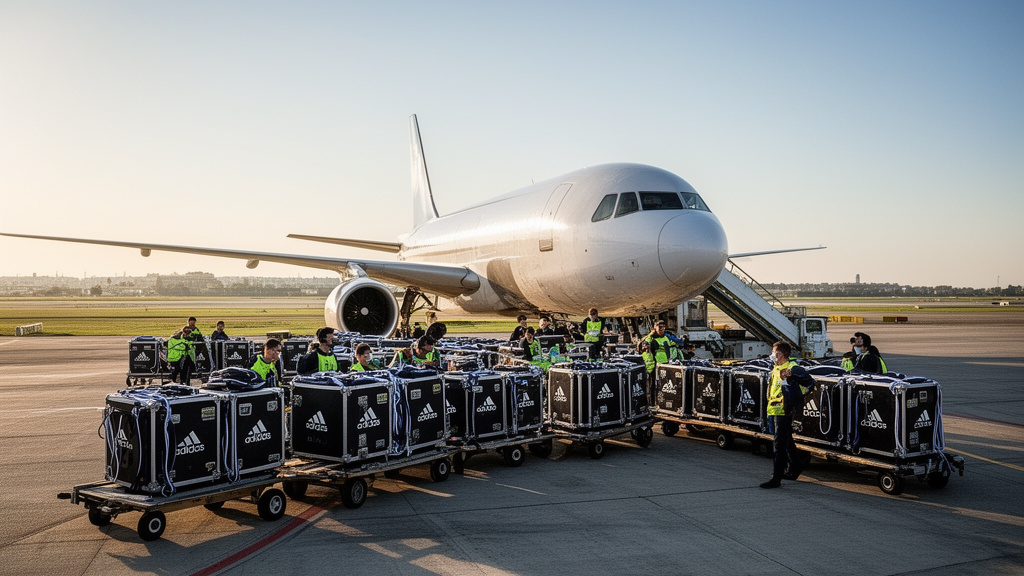
The Houston Texans’ travel itinerary to London for their high-stakes matchup against the Jacksonville Jaguars at Wembley Stadium encountered an unexpected hurdle when the team was forced to switch planes prior to departure. Despite the logistical pivot, which typically serves as a stress-inducing variable for professional athletes and operational staff alike, the organization maintained a calm, professional demeanor. This incident provides a unique window into the Houston Texans’ internal logistics and the broader, often invisible, efforts required to maintain competitive readiness during the NFL International Series.
Key Highlights
- Logistical Pivot: The Houston Texans were forced to switch aircraft due to a mechanical issue before their flight to London, yet the operation remained stable.
- Operational Readiness: Despite the unexpected change, the team’s coaching staff and medical personnel reported zero impact on player preparation, nutritional planning, or recovery protocols.
- Standardized Travel Procedures: The incident highlights the robust contingency planning required for NFL teams when operating in the demanding, high-stakes environment of international game travel.
Navigating the Logistics of NFL International Travel
When a professional sports organization moves an entire roster, coaching staff, medical team, and support equipment across the Atlantic, the margin for error is razor-thin. The Houston Texans’ experience serves as a case study in how modern NFL franchises handle the volatility of aviation. While the average traveler might view a last-minute plane swap as a major disruption, for an NFL organization, it is often mitigated by layers of redundancy and highly coordinated operational workflows.
The Anatomy of a Travel Disruption
In the world of high-performance athletics, travel is not merely about transportation; it is an extension of the training camp. When the Houston Texans encountered a mechanical issue prior to their departure for the London series against the Jacksonville Jaguars, the primary concern for the organization was not just the delay, but the preservation of the athletes’ physical state.
Professional teams typically charter aircraft through specialized aviation firms that understand the specific needs of NFL travel—including wide-body configurations for legroom, specialized nutrition stations, and cargo space for hundreds of pieces of equipment. A plane change in this context requires the rapid synchronization of ground crews, flight crews, and team operations managers. The Texans’ ability to navigate this situation without affecting player morale or preparation suggests a high level of institutional maturity. In professional sports, the ‘preparedness mindset’ extends beyond the playbook and onto the tarmac.
The Science of Transatlantic Recovery
One of the secondary angles to consider when discussing NFL travel is the physiological toll of transatlantic flight. Moving a team from the Central Time Zone to the United Kingdom creates a massive ‘circadian disruption.’ Organizations invest heavily in sleep specialists, hydrators, and nutritional experts to manage this transition.
Because the Texans’ travel interruption was handled with efficiency, the players’ circadian adjustment protocols—such as light therapy and strategic napping schedules—remained intact. This is critical. If a team fails to recover effectively from the travel phase, the first quarter of the game at Wembley Stadium can suffer. By absorbing the shock of a plane change without panic, the Texans ensured that the physiological ‘game plan’ remained untouched, proving that operational excellence is a foundational element of on-field success.
The Future of NFL International Expansion
This incident also highlights the broader landscape of the NFL International Series. As the league continues to expand its footprint, the logistical burden on franchises increases. Teams are no longer just visiting London; they are managing complex, multi-day operations in foreign environments.
What happened to the Texans is not an anomaly, but rather a reality of modern air travel that all teams must prepare for. The reliance on chartered, flexible aviation solutions is becoming standard. Looking forward, we can predict that teams will continue to invest in ‘travel-as-a-service’ platforms that provide real-time logistical support, ensuring that even when a mechanical issue arises, the impact on the athletes is negligible. This is a quiet, expensive, and necessary evolution of the sport.
FAQ: People Also Ask
1. How do NFL teams prepare for the jet lag associated with London games?
NFL teams utilize a combination of sleep hygiene, strategic hydration, and gradual adjustment of sleep schedules leading up to the trip. They often employ teams of experts to monitor biometric data to ensure players recover as quickly as possible upon landing.
2. Is a plane change common for NFL teams during international travel?
While not desired, logistical issues such as mechanical failures or weather disruptions occur in aviation. NFL teams mitigate this by using dedicated charter services that have higher levels of support and contingency planning than commercial airlines.
3. Did the travel change affect the Texans’ performance at Wembley?
No. The Houston Texans organization confirmed that the logistical pivot did not result in any changes to player preparation, morale, or the team’s ability to execute their game plan against the Jacksonville Jaguars.
4. Why is the NFL expanding its international schedule?
Expanding the International Series is a core component of the NFL’s global growth strategy. It builds international fan bases, increases revenue through foreign broadcasting rights, and promotes the sport in markets like the UK, Germany, and Brazil.