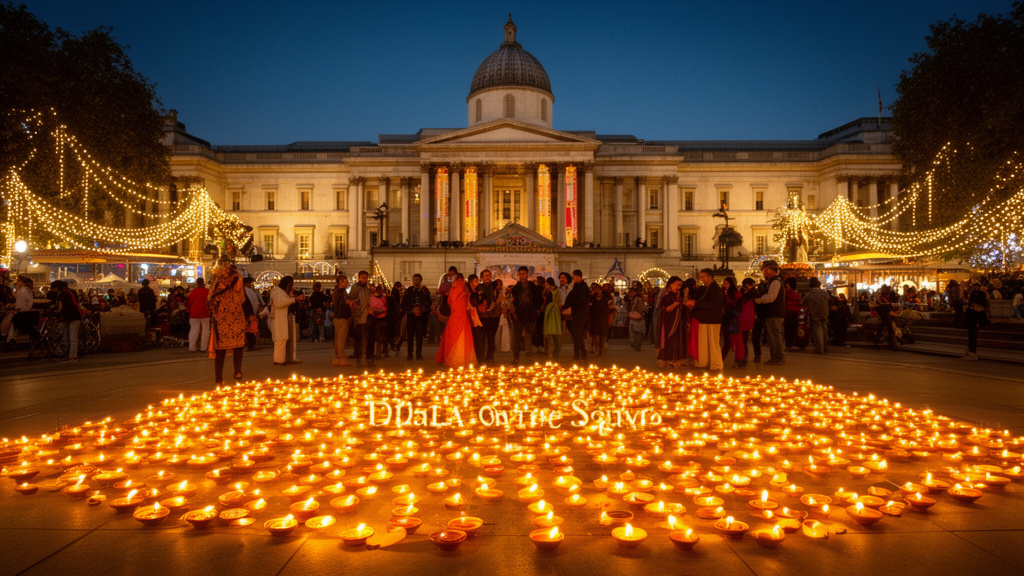
London’s iconic Trafalgar Square has been transformed into a brilliant tapestry of light and color today, October 25, as the city plays host to the annual ‘Diwali on the Square’ celebration. This hallmark event, a cornerstone of the capital’s cultural calendar, invites residents and visitors alike to immerse themselves in the Festival of Lights, showcasing the rich heritage of the South Asian diaspora through an array of performances, interactive sessions, and community-driven activities. As the sun sets, the square is expected to glow with the warmth of traditional lamp displays, marking a significant moment of unity and cultural exchange in one of the world’s most diverse cities.
Key Highlights
- Inclusive Celebration: A free, public event open to all, fostering community cohesion and cultural appreciation.
- Dynamic Programming: Features traditional and contemporary South Asian dance, music performances, and guided yoga sessions.
- Cultural Hub: A dedicated space for local artisans and community groups to share the significance of Diwali.
- Institutional Support: Championed by the Mayor of London’s office, reflecting the city’s commitment to multiculturalism.
The Heart of the Festival: Cultural Integration in London
The significance of hosting ‘Diwali on the Square’ cannot be overstated. By situating the festival in Trafalgar Square—a space synonymous with British public life and national memory—the event asserts the vital role of the South Asian community within the fabric of modern London. Diwali, which celebrates the triumph of light over darkness and knowledge over ignorance, finds a powerful symbolic home here.
For many in the South Asian diaspora, this event serves as a bridge between ancestral traditions and their lives in the United Kingdom. The festival does not merely display culture; it invites the public to participate in it. From the rhythmic complexity of Bollywood and classical Indian dance to the grounding practice of yoga, the event provides a sensory-rich experience that transcends linguistic and national boundaries. It is a testament to the idea that the heart of London is a place where different global traditions can coexist, celebrate, and flourish together.
Historical Evolution of the Event
What started as a smaller localized celebration has grown into a major fixture of London’s autumn schedule. The evolution of ‘Diwali on the Square’ mirrors the changing demographics and the increasing social confidence of the South Asian community in the UK. Over the years, the event has moved from peripheral venues to the very center of the city, symbolizing a shift in public acceptance and the mainstreaming of diversity. This transition has been supported by local government initiatives that recognize the importance of cultural events in driving social cohesion and local identity.
Economic and Social Impact
Beyond the cultural performances, the festival acts as a subtle but effective engine for local engagement. By attracting thousands of visitors to the city center, the event provides a notable boost to local foot traffic, supporting businesses in the West End and nearby boroughs. Furthermore, the collaborative nature of the event—involving local organizations, charities, and independent performers—highlights the entrepreneurial spirit within these communities. It demonstrates how public-facing cultural celebrations can be leveraged to sustain local networks and provide platforms for emerging talent, from musicians and dancers to wellness instructors who lead the popular yoga sessions on the square.
A Sensory Journey: Rituals and Rhythm
Today’s program is meticulously curated to offer both depth and accessibility. The stage acts as the focal point, where the tempo shifts from the slow, meditative movements of traditional classical arts to the high-energy, infectious rhythms of modern fusion dance.
One of the most anticipated aspects of the day is the communal participation. Unlike passive exhibitions, this festival is participatory. Visitors are encouraged to engage in interactive workshops where they can learn about the intricate patterns of Rangoli, the art of henna application, and the spiritual philosophy behind the lighting of the Diya (traditional lamps). These interactions serve as practical education, dismantling stereotypes and replacing them with a nuanced understanding of the festival’s origins. As evening approaches, the collective lighting of the lamps transforms the square, creating a visual metaphor for shared hope—a powerful image of a city that continues to embrace its global connections.
FAQ: People Also Ask
What is the significance of Diwali in a public space like Trafalgar Square?
Hosting Diwali in Trafalgar Square signifies the official recognition and celebration of South Asian culture as an integral part of London’s identity. It transforms a national monument into a space of inclusivity, allowing for a public, communal experience of one of the world’s most significant festivals.
Is the event accessible to the public?
Yes, ‘Diwali on the Square’ is a free event open to all members of the public. There is no ticket required, encouraging a diverse crowd of Londoners and tourists to participate in the festivities throughout the day.
How does this event impact the local London community?
Beyond the immediate cultural celebration, the event fosters community cohesion and supports local businesses and performers. It provides a platform for the South Asian diaspora to showcase their contributions to the city, fostering mutual respect and understanding between London’s various communities.
Will there be food and drink available?
Traditionally, the event features a range of street food stalls offering authentic South Asian delicacies, providing attendees with a gastronomic experience that complements the performances and activities.