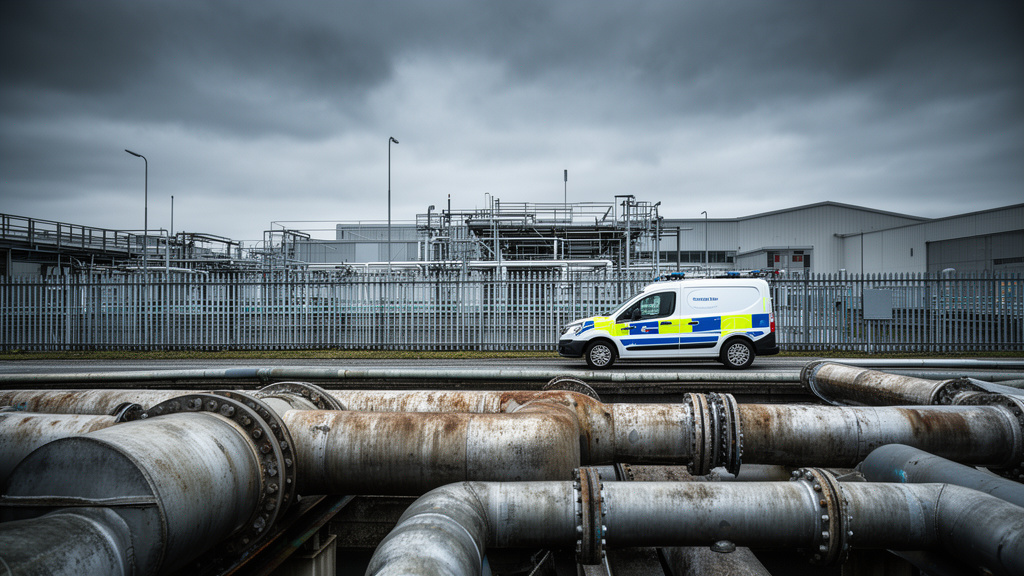
Thames Water, the United Kingdom’s largest water provider, is currently navigating a precarious financial precipice, having issued a stark warning to creditors that it requires an immediate liquidity injection of £2.4 billion. Without this infusion of capital, the utility provider faces the tangible risk of collapse, struggling to maintain essential operations as it navigates the turbulent waters of debt refinancing and stringent regulatory oversight. The situation has crystallized into a defining moment for the British utility sector, highlighting the extreme vulnerability of a company that serves approximately 16 million customers across London and the Thames Valley.
The Liquidity Crisis: A Utility Giant at the Edge
The core of the issue lies in a severe liquidity shortfall that threatens the company’s ability to continue as a going concern. Thames Water has explicitly communicated to its stakeholders that this £2.4 billion figure is not merely a request for growth capital, but an existential requirement to avoid insolvency within the current year or, at the absolute latest, early 2027. The company’s capital structure, long burdened by a massive debt pile—reportedly exceeding £14 billion—has been exacerbated by rising interest rates and a historic reluctance among shareholders to pour further equity into an enterprise currently viewed as a financial liability rather than an asset. This liquidity crunch is not an isolated event; it is the culmination of years of financial leveraging that has left the company with limited maneuvering room.
Regulatory Hurdles and the Ofwat Standoff
The tension is significantly heightened by the involvement of Ofwat, the economic regulator for the water sector in England and Wales. Ofwat has consistently tightened the screws on performance metrics, particularly regarding leakage rates, sewage spills, and overall infrastructure investment. Thames Water’s current predicament is compounded by a standoff with regulators over the price cap for the next regulatory period. The company argues that it needs higher revenues from customer bills to fund the massive investment required to fix aging infrastructure and stop environmental damage, while Ofwat maintains a firm stance on protecting consumers from excessive cost pass-throughs, especially given the company’s poor performance track record.
The Anatomy of the Debt Pile
To understand why a £2.4 billion request is necessary, one must examine the specific mechanics of the debt held by Kemble Water Finance, the holding company for Thames Water. The debt is structured in a way that requires regular refinancing. With investors becoming increasingly risk-averse regarding water utilities, the cost of servicing this debt has skyrocketed. The ‘smart search’ verification highlights that the company is effectively trapped in a cycle where it cannot raise new debt at affordable rates, and shareholders are unwilling to provide equity without guarantees that the regulatory environment will become more favorable. This leaves the company in a stalemate that threatens the continuous delivery of water and wastewater services.
Historical Context: The Shadow of Privatization (1989)
The current crisis at Thames Water is inextricably linked to the 1989 privatization of England’s water utilities. For decades, the model was predicated on high leverage, where debt was used to fund dividends for shareholders while infrastructure maintenance was arguably deprioritized in favor of financial efficiency. Today, the chickens have come home to roost. The model that once provided cheap, reliable capital for utility expansion has proven unable to cope with the reality of climate change, population growth in the Southeast, and the acute need for environmental remediation. Critics argue that the current crisis is a failure of the regulatory framework to incentivize long-term maintenance over short-term financial engineering.
Environmental Impact and Infrastructure Burden
Beyond the balance sheet, Thames Water is facing intense public and political scrutiny due to the frequency of sewage spills into waterways. This is a critical secondary angle: the financial crisis is preventing the necessary capital expenditure (CAPEX) to upgrade storm overflows and treatment plants. The £2.4 billion injection, if secured, is ostensibly earmarked for essential operational continuity, yet observers question whether it is sufficient to address the underlying infrastructure decay. The company is stuck in a loop: it needs money to fix the pipes, but it cannot borrow that money because the company’s creditworthiness is eroded by the state of those very pipes and the regulatory fines associated with their failures.
The Future of the UK Water Model
What happens next? The government has kept the possibility of ‘Special Administration’—essentially a form of renationalization or state-backed management—on the table. This is the ultimate ‘Plan B’ if the shareholders refuse to fund the £2.4bn. If Thames Water enters special administration, it would be a watershed moment for the UK economy, signaling the potential end of the privatized water experiment. The government would likely step in to stabilize the utility, potentially at the taxpayer’s expense, raising massive questions about who should ultimately pay for the failures of the last three decades: the shareholders, the customers via higher bills, or the public exchequer.
FAQ: People Also Ask
1. Why does Thames Water need £2.4 billion specifically?
This amount is calculated as the minimum liquidity required to satisfy creditors, pay down maturing debt, and cover operational expenses for the immediate future. Without it, the company could run out of cash, triggering a formal insolvency process.
2. Will customer water bills increase if this funding is found?
It is highly probable. Thames Water has been lobbying Ofwat for significant price increases to fund infrastructure upgrades. Regardless of the funding source, the capital cost of fixing the utility’s problems is expected to be passed on to the consumer in the medium-to-long term.
3. Is renationalization the only alternative?
No. While special administration (government takeover) is the fallback, the company and its creditors are working hard to avoid this by securing private funding. However, finding private investors willing to back a utility with such high regulatory risk and poor public sentiment is proving extremely difficult.
4. Is my water supply at risk today?
No. Regulatory frameworks in the UK are designed to ensure that even if a utility company goes into insolvency, the actual provision of water and sewage services must continue uninterrupted under special administrative oversight. You will not lose your water supply due to the financial state of the company.