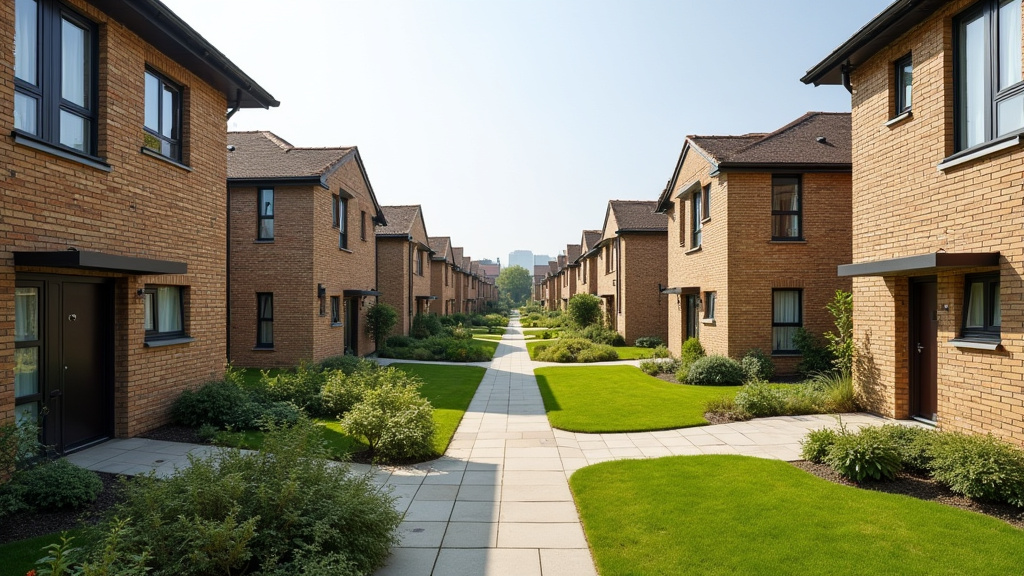
In a momentous victory for housing justice and architectural preservation, two of south London’s most iconic 1960s housing estates, Cressingham Gardens and Central Hill, have officially been saved from demolition. This decision marks the conclusion of a decade-long battle between local residents and municipal authorities, a conflict defined by deep-seated tensions over housing rights, community heritage, and the future of social living. The reversal of these demolition plans follows a significant political shift within the Lambeth council, which has transitioned to a Green party-led administration that prioritizes the retention and refurbishment of existing social housing stock over large-scale redevelopment projects.
Key Highlights
- Historic Preservation: Cressingham Gardens in Tulse Hill and Central Hill in Upper Norwood are protected from demolition, preserving their unique 1960s architectural legacy.
- Decade-Long Campaign: Residents successfully challenged over ten years of redevelopment threats, organizing sustained community action and legal inquiries.
- Policy Pivot: The decision was driven by the newly installed Green party-led administration in Lambeth, signaling a major policy shift toward prioritizing retrofitting over tearing down low-rise, high-density estates.
- Housing Stability: Thousands of residents can now remain in their homes, ending years of uncertainty and the threat of displacement for families and elderly neighbors.
The Anatomy of a Grassroots Victory
The survival of Cressingham Gardens and Central Hill represents more than just a win for the specific residents involved; it stands as a watershed moment for the future of British social housing. For over a decade, the residents of these estates existed in a state of suspended animation, fearing that their homes—valued for their sense of community and distinctive architectural character—would be razed to make way for high-density private developments. The campaign to save these estates was not merely a reaction to demolition notices but a proactive assertion of the value of established social ecosystems.
The Human Cost of Redevelopment Uncertainty
For residents, the threat of demolition was not merely a bureaucratic hurdle; it was a psychological burden. Many residents had invested decades of their lives into the upkeep and culture of their respective neighborhoods. At Cressingham Gardens, a low-rise estate perched near Brockwell Park, the architecture was specifically designed to provide high-quality communal spaces, a feature that developers often overlooked in favor of maximizing plot density. The residents argued—and effectively proved—that the loss of such spaces would not only erase history but destroy the social fabric that allows lower-income communities to thrive. Throughout the decade, tenants faced a cycle of consultation meetings, threat of compulsory purchase orders, and the emotional toll of living in buildings deemed ‘at risk’ by the council.
The Shift in Political Governance
The decisive factor in this outcome was the recent change in Lambeth’s political landscape. The transition to a Green party-led administration fundamentally altered the council’s perspective on housing and urban development. Recognizing the environmental impact of demolition—both in terms of construction waste and the carbon footprint associated with new builds—the new administration prioritized the concept of ‘fabric-first’ retrofitting. By opting to invest in deep-energy retrofits and structural repairs, the council has chosen a path of sustainability that respects the existing community and the embodied carbon already present in the concrete structures of the 1960s.
Rethinking the 1960s Housing Legacy
Beyond the politics of the council chamber, this decision invites a broader conversation about the architectural value of 1960s brutalist and modernist housing. Often unfairly maligned as ‘eyesores,’ these estates were actually groundbreaking social experiments. They were built with the intent of fostering connection, featuring communal gardens, pedestrian-only walkways, and human-scale density that is often missing from contemporary high-rise developments.
Architectural Integrity and Modern Needs
Cressingham Gardens and Central Hill are prime examples of the ‘Parker Morris’ design standards, which emphasized internal space and light. Preservationists have long argued that these estates are not failures of design but failures of maintenance. By saving these buildings, Lambeth council is signaling that the era of ‘demolish and rebuild’ is coming to a close in favor of ‘repair and renew.’ This approach is not only more fiscally responsible over the long term but also ensures that the character of south London remains intact.
Economic and Environmental Implications
Critics of the previous redevelopment schemes often pointed to the lack of genuinely affordable housing provided by such projects. Frequently, new luxury apartments replaced social housing, resulting in a net loss of affordable units. The decision to renovate rather than rebuild ensures that the current residents—many of whom are on low incomes—remain in the area. Furthermore, the environmental impact of demolition is catastrophic; by maintaining the concrete skeletons of these buildings and upgrading their thermal performance, the council is significantly lowering the carbon footprint compared to the massive emissions required to clear the sites and build new steel-and-glass towers.
The Road Ahead for Local Residents
While the celebration among residents is widespread, the work is far from over. The focus now shifts from opposition to collaboration. The council has pledged to work closely with residents to design the upcoming renovation projects, ensuring that the improvements meet the specific needs of the people living there. This collaborative model could serve as a blueprint for other local authorities across the UK facing similar dilemmas regarding aging council estates. As London continues to grapple with an acute housing crisis, the success of Cressingham Gardens and Central Hill provides a hopeful alternative: a future where the past is preserved, and the community is placed at the heart of the home.
FAQ: People Also Ask
1. Why were the estates targeted for demolition in the first place?
The estates were targeted primarily due to perceived structural obsolescence, high maintenance costs, and a council-wide push for higher density redevelopment. Proponents of the demolition argued that the sites could provide more housing if rebuilt with modern, higher-rise density.
2. How does the Green party’s approach differ from the previous administration?
The Green party-led administration emphasizes sustainability, focusing on retrofitting older buildings to modern energy standards. They view the demolition of sound structures as an unnecessary environmental and social cost, preferring to upgrade existing estates to maintain community stability.
3. What does this mean for current residents?
Residents will now have certainty regarding their tenancies. The council plans to initiate renovation programs that will modernize the homes (such as insulation and facility upgrades) without displacing the existing community, allowing residents to stay in their homes during and after the works.
4. Will this affect housing prices in the area?
By preserving these estates, the council is maintaining the existing stock of social housing. This provides stability to the local neighborhood, preventing the rapid gentrification that often accompanies luxury high-rise developments in south London, thereby keeping the neighborhood more accessible.