London erupted in a sea of green as the annual St. Patrick’s Day Parade returned in 2026, showcasing a dazzling display of Irish culture, heritage, and community spirit. Thousands lined the streets, witnessing a vibrant procession of floats, marching bands, and performers that celebrated Ireland’s rich traditions and its deep connection with the United Kingdom.
Key Highlights:
- A spectacular parade route through the heart of London, drawing massive crowds.
- Diverse cultural performances, including traditional Irish music and dance.
- Numerous community groups and organizations participating, highlighting Irish heritage.
- A festive atmosphere that united people of all backgrounds in celebration.
A Kaleidoscope of Irish Culture on Display
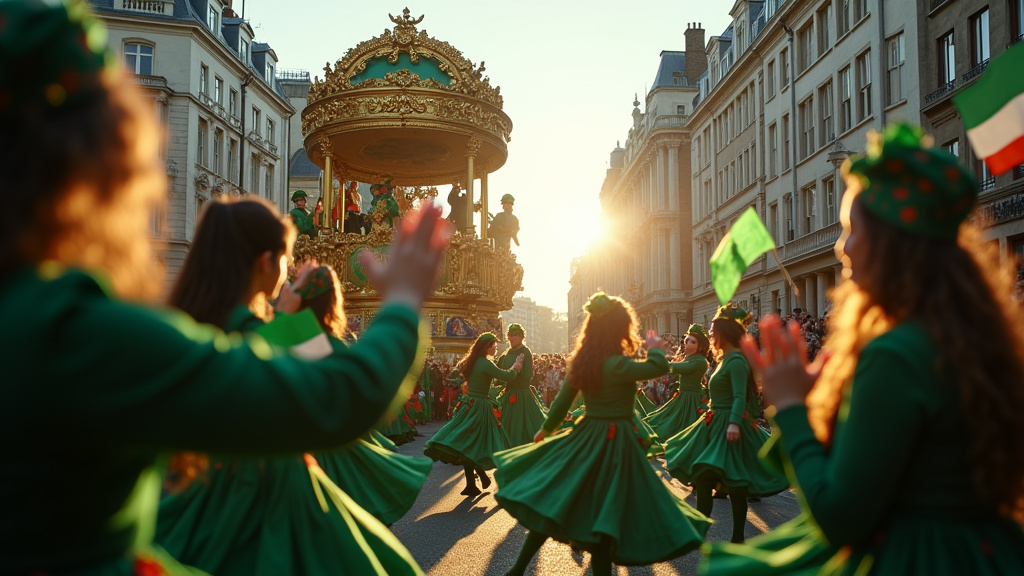
The 2026 St. Patrick’s Day Parade in London was more than just a procession; it was a living tapestry woven with the threads of Irish history and contemporary culture. From the moment the first float emerged, the energy was palpable. The air buzzed with the lively sounds of céilí music, punctuated by the rhythmic beat of bodhráns and the soaring melodies of fiddles. Dancers, clad in vibrant costumes, twirled and leaped with practiced grace, their movements telling stories of Ireland’s storied past and its dynamic present.
The Spectacle of the Parade
The parade route itself transformed into a vibrant artery of celebration. Elaborate floats, meticulously crafted by various Irish societies and community groups, depicted iconic scenes from Irish folklore, historical events, and modern Irish life. Marching bands, representing not only Irish heritage but also various other cultural groups from across London, added a powerful sonic dimension, their brass and drums echoing through the city streets. The sheer scale and creativity on display underscored the deep commitment to preserving and promoting Irish identity within the multicultural landscape of London.
Community and Connection
Beyond the visual and auditory splendor, the parade served as a powerful reminder of the enduring bond between Ireland and the United Kingdom, and the significant contributions of the Irish diaspora to British society. Families, friends, and strangers gathered shoulder-to-shoulder, sharing in the joyous occasion. Children waved miniature Irish flags, their faces alight with excitement, while older generations shared stories and reminisced. The event fostered a palpable sense of unity and belonging, transcending age and background.
A Nod to Tradition and Modernity
While rooted in tradition, the 2026 parade also embraced contemporary Irish culture. Musical acts featured a blend of traditional folk tunes and modern Irish music, reflecting the evolution of the nation’s artistic expression. This fusion of old and new ensured that the celebration resonated with a broad audience, from those deeply versed in Irish heritage to newcomers experiencing it for the first time.
FAQ: People Also Ask
What is the significance of St. Patrick’s Day in London?
St. Patrick’s Day in London is a significant cultural event that celebrates the heritage of the Irish diaspora in the UK. It’s an opportunity to showcase Irish culture, foster community spirit, and acknowledge the contributions of Irish people to British society.
Who participates in the London St. Patrick’s Day Parade?
The parade typically features a wide array of participants, including Irish community organizations, cultural societies, marching bands, dance troupes, and themed floats, all coming together to represent various facets of Irish culture and heritage.
Is the St. Patrick’s Day Parade only for people of Irish descent?
No, the St. Patrick’s Day Parade in London is a widely inclusive event that welcomes people of all backgrounds to celebrate Irish culture and enjoy the festivities.
What kind of performances can be expected at the parade?
Attendees can expect a vibrant mix of traditional Irish music, contemporary Irish bands, Irish dance performances, and various cultural displays integrated into the floats and street performances.
How has the St. Patrick’s Day celebration in London evolved over the years?
Over the years, the celebration has grown from smaller gatherings to a large-scale public event, reflecting the increasing diversity and integration of the Irish community in London. It has become a major fixture in the city’s cultural calendar, embracing both historical traditions and modern expressions of Irish identity.