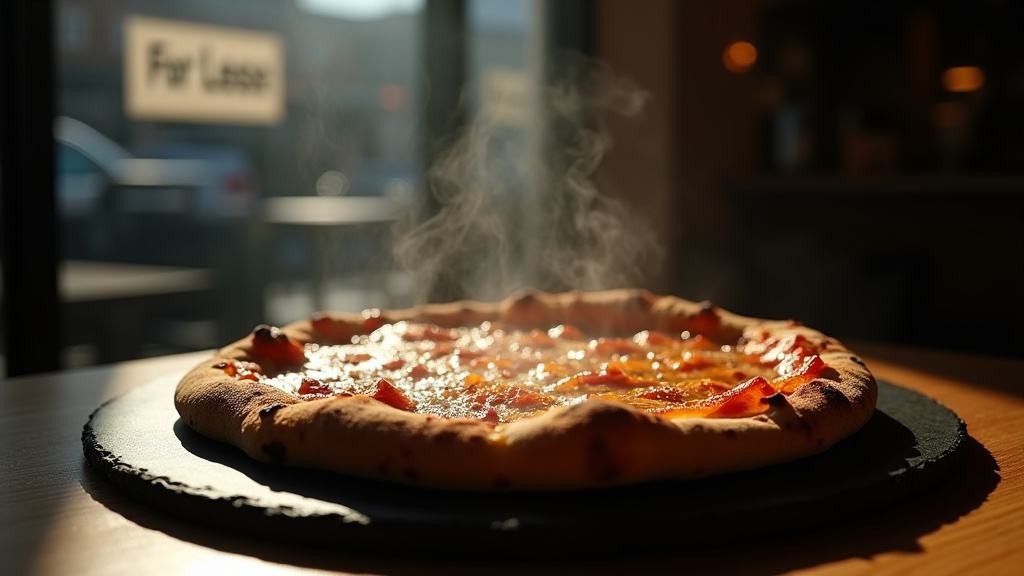
Franco Manca, the brand synonymous with the rise of the sourdough pizza craze in the UK, has announced a significant restructuring, casting a spotlight on the fragility of the high-street casual dining sector. The parent group, The Fulham Shore, has confirmed it will initiate a Company Voluntary Arrangement (CVA) to close approximately 16 of its 70+ restaurants, including the brand’s historic and symbolic original site in Brixton. This maneuver, intended to stave off the crushing weight of rising operational costs, marks a sobering moment for an industry that has spent the last decade chasing rapid expansion. While the closures are technically a response to fiscal headwinds—specifically “disproportionately high” taxes, business rates, and labor costs—the news has triggered a broader debate about whether the post-pandemic sourdough frenzy has finally reached a market ceiling, or if this is simply the inevitable correction of a saturated dining landscape.
Key Highlights
- Strategic Retreat: Franco Manca will close 16 UK locations, including its flagship Brixton restaurant, via a Company Voluntary Arrangement (CVA).
- Financial Pressures: The Fulham Shore cited unsustainable tax burdens, lack of business rates relief, and surging national living wage costs as the primary drivers for the closures.
- Industry Context: Market analysts argue the sourdough trend itself remains robust, but the “fast-casual” restaurant model is facing an existential crisis due to supermarket competition and inflationary pressures.
- The Future of the Chain: CEO Marcel Khan has emphasized that the restructuring is essential for long-term viability, as the brand looks to pivot toward a more sustainable operational footprint.
The High-Stakes Pivot: Survival in a Saturated Market
When Franco Manca first launched in Brixton Market in 2008, it offered something the UK high street had never truly seen: a masterclass in simplicity. Slow-fermented, chewy sourdough bases topped with quality, minimalist ingredients disrupted a market dominated by monolithic chains like Pizza Hut and Domino’s. For years, the brand rode a wave of cultural relevance, effectively turning the sourdough pizza into the quintessential meal of the 2010s and early 2020s. However, the current news of closures serves as a stark reminder that even the most beloved culinary trends are not immune to the cold arithmetic of modern economics.
The Anatomy of the CVA
A Company Voluntary Arrangement (CVA) is rarely a decision made lightly. It is a lifeline, a legal process that allows a business to restructure its debt and shed loss-making assets while keeping the wider, profitable entity intact. For Franco Manca, the decision to trim nearly a quarter of its estate is a recognition that the “growth at all costs” strategy—which saw the chain identify over 125 potential future locations as recently as 2021—has collided with a harsh reality. The restaurant sector in 2026 is grappling with a perfect storm: the cumulative effect of rising National Insurance contributions, spiraling wage bills, and a business rates system that many in the hospitality industry argue is fundamentally ill-suited to the current economic environment. By cutting sites that are no longer sustainable, The Fulham Shore is attempting to preserve the integrity of the brand, but the loss of the Brixton site—where it all began—carries a heavy symbolic weight.
Is the Sourdough Craze Actually Deflating?
It is tempting to look at the headlines and declare that the sourdough pizza era is finished. To do so, however, would be a mistake. Market data from 2026 suggests that the appetite for the product remains high. The issue is not a lack of demand for the food, but a shift in where consumers are getting it. The supermarket sector has aggressively innovated, bringing high-quality, sourdough-based pizzas into the home at a fraction of the restaurant price. This democratization of the product has taken the “specialness” out of the high-street sourdough experience.
Industry experts note that pizza continues to outperform inflation in the broader food service sector. The problem for chains like Franco Manca is that they are caught in the middle: they are too expensive to compete with the convenience of retail-ready, supermarket sourdough, yet they struggle to offer the “experiential” luxury that might justify the premium price point compared to independent, boutique pizzerias that offer a more localized, curated experience. The “craze” has not died; it has matured. It is no longer a novelty, but a standard—and as a standard, it is subject to the same volume-and-margin pressures as any other commodity.
The Shift Toward Lean Operations
The broader lesson from the Franco Manca restructuring is that the age of unchecked expansion is likely behind us. In the 2010s, success was measured in site count. Today, in 2026, success is measured by unit-level profitability. We are likely to see a return to the “independent spirit” of hospitality. The chains that survive this era will be those that can replicate the charm and quality of the original 2008 Brixton market stall while maintaining the operational discipline of a multinational.
This shift also impacts the supply chain and menu innovation. As costs rise, we are seeing a move away from the hyper-specialized menu to one that balances core, high-margin staples with localized, agile innovations. The challenge for companies like The Fulham Shore will be to navigate these turbulent waters without losing the very identity that made them famous in the first place. Whether the brand can successfully pivot remains to be seen, but the closure of these 16 sites is a clear signal that the high street of the future will be smaller, leaner, and significantly more expensive to operate.
FAQ: People Also Ask
Q: Why is Franco Manca closing its original Brixton branch?
A: As part of the company’s broader CVA restructuring, the decision to close specific sites—including the historic Brixton location—is based on the site’s individual commercial viability in the current high-cost environment, specifically accounting for local business rates and operational overheads.
Q: Does this mean the sourdough pizza trend is over?
A: No. Market analysis indicates that consumer demand for sourdough pizza remains high and continues to grow. The issue for chains is not a lack of interest in the product, but rather market saturation and the inability of high-street restaurant models to absorb rising tax and wage costs.
Q: What is a Company Voluntary Arrangement (CVA)?
A: A CVA is a legally binding insolvency procedure that allows a company to reach an agreement with its creditors to pay off all or part of its debts over an agreed period, often enabling the business to exit unprofitable lease agreements to avoid total liquidation.
Q: Are other restaurant chains facing similar issues?
A: Yes, the wider hospitality sector in the UK is currently facing significant pressure due to increased National Insurance, National Living Wage mandates, and a lack of specific business rates relief, leading to a broader trend of high-street restaurant consolidation.