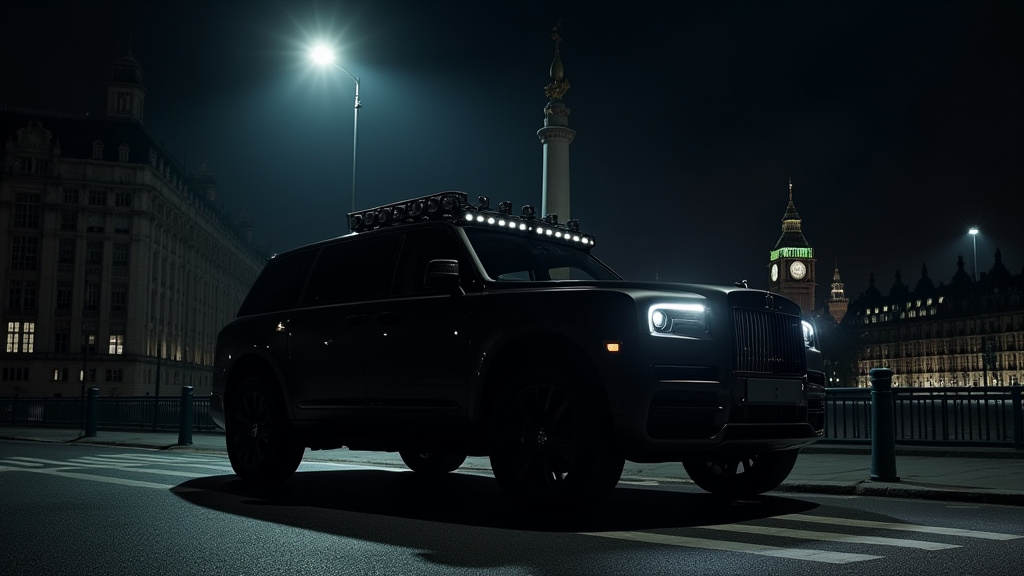
Sadiq Khan may be preparing to ditch his armoured state car as part of a broader initiative to reduce the number of SUVs and other high-emission vehicles operating within London’s Ultra Low Emission Zone (ULEZ) and the wider city.
Key Highlights:
- Mayor of London Sadiq Khan is considering relinquishing his armoured state vehicle.
- This move is part of a potential clampdown on SUVs and high-emission vehicles in London.
- The proposal aims to align with the city’s environmental goals and reduce traffic pollution.
- Discussions are reportedly underway regarding the future of the mayoral fleet.
Rethinking the Mayoral Fleet Amidst ULEZ Expansion
The Mayor of London, Sadiq Khan, is reportedly contemplating a significant shift in his personal transportation, potentially foregoing his armoured state car. This consideration comes as part of a wider strategy aimed at curbing the proliferation of Sport Utility Vehicles (SUVs) and other fuel-intensive vehicles within the capital. Sources suggest that discussions are ongoing about the future composition of the mayoral fleet, with a focus on aligning the city’s transport policies with its ambitious environmental targets. The potential move signals a commitment to lead by example in the ongoing efforts to combat air pollution and reduce the city’s carbon footprint. The ULEZ, which has been progressively expanded, already imposes charges on more polluting vehicles entering its zone, and this new initiative could see further restrictions or disincentives for SUV ownership and usage.
Environmental Imperatives and Public Perception
The proposed change is deeply rooted in London’s ongoing battle against air pollution, a persistent issue that impacts public health and contributes to climate change. SUVs, often favoured for their size, comfort, and perceived safety, are generally less fuel-efficient and produce higher emissions compared to smaller, more conventional cars. By considering the removal of an armoured, likely heavy and less eco-friendly, vehicle from his own transport, Khan could be aiming to bolster public support for stricter environmental regulations. This symbolic gesture could resonate with Londoners who are already facing the financial implications of the ULEZ expansion and other clean air initiatives. The optics of the Mayor divesting from a high-spec, potentially gas-guzzling vehicle while asking residents to comply with emission standards are a significant consideration in public policy communication.
The Future of Mayoral Transport
While the specifics of the armoured car’s potential replacement or the overall changes to the mayoral fleet remain undisclosed, the underlying principle appears to be one of reduced environmental impact. It is possible that Khan’s office will opt for a more sustainable alternative, such as an electric vehicle (EV) or a smaller, more efficient hybrid model. The logistical and security requirements of the mayoral role necessitate a certain standard of vehicle, but the industry is rapidly evolving to offer greener options that do not compromise on safety or functionality. The debate also touches upon the broader discussion about the suitability of large SUVs for urban environments, where their size can contribute to traffic congestion and parking difficulties. The Mayor’s decision, if finalized, could send a powerful message to car manufacturers and consumers alike about the future direction of urban mobility.
Historical Context of Mayoral Vehicles
Historically, the transport used by London’s Mayors has often reflected the era and the prevailing attitudes towards transport and environmental concerns. Early mayors might have used horse-drawn carriages, while subsequent leaders adopted early automobiles. As vehicle technology advanced, so did the options for mayoral transport, with security and comfort becoming increasingly important factors. The introduction of armoured vehicles for senior public figures became more prevalent in response to security concerns. However, in recent years, there has been a growing emphasis on sustainability across all sectors, including government. This has led to a re-evaluation of fleet policies by many public bodies, with a push towards electric and low-emission vehicles. Khan’s potential move aligns with this global trend, seeking to balance the demands of public office with the urgent need for environmental stewardship.
FAQ: People Also Ask
What is the Ultra Low Emission Zone (ULEZ)?
The Ultra Low Emission Zone (ULEZ) in London is a scheme designed to reduce air pollution by charging drivers of more polluting vehicles to enter central London. It operates 24/7, except on Christmas Day, and requires vehicles to meet certain emission standards or pay a daily charge.
Why are SUVs being targeted in London?
SUVs are often targeted in environmental policies due to their typically higher fuel consumption and emissions compared to smaller vehicles. Their larger size can also contribute to traffic congestion and parking issues in dense urban areas like London.
What are the environmental benefits of reducing SUV usage?
Reducing SUV usage can lead to lower levels of harmful pollutants like nitrogen oxides (NOx) and particulate matter (PM2.5), which are detrimental to human health and the environment. It also contributes to a reduction in greenhouse gas emissions, helping to combat climate change.
What are electric vehicles (EVs)?
Electric vehicles (EVs) are cars that are powered wholly or partly by electricity. They produce zero tailpipe emissions, making them a key component of strategies to improve air quality in cities and reduce reliance on fossil fuels. Many cities, including London, offer incentives to encourage EV adoption.