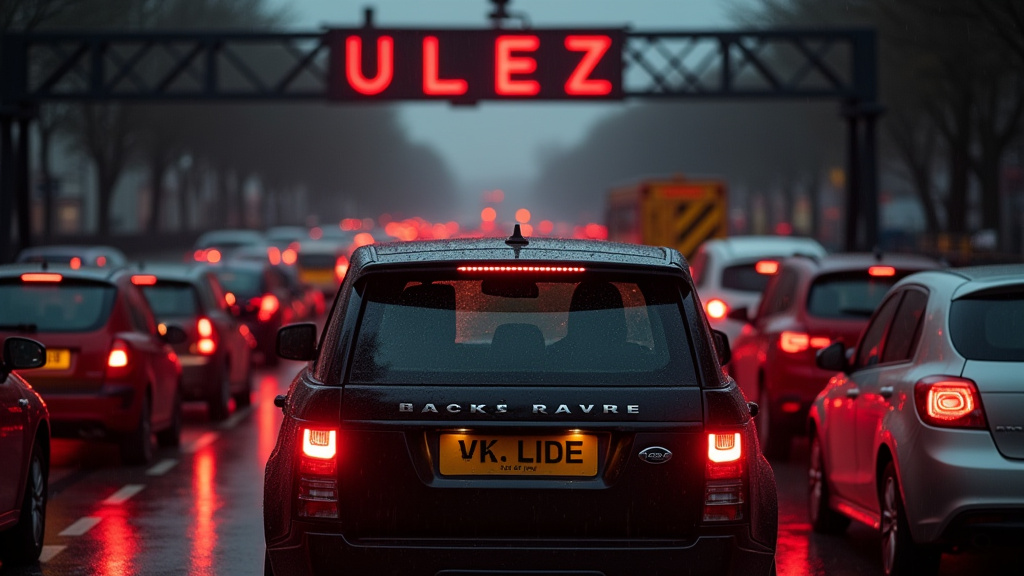
London drivers of sport utility vehicles (SUVs) are voicing concerns about potential new charges as the city’s Ultra Low Emission Zone (ULEZ) continues to expand and evolve. The debate centers on whether the current system adequately addresses emissions from larger vehicles, with calls for stricter measures that could translate into daily fees for many.
Key Highlights:
- SUV drivers in London face uncertainty over potential new charges.
- The expansion of the ULEZ is a primary driver of these concerns.
- Calls are mounting for stricter emissions regulations targeting larger vehicles.
- Daily fees for non-compliant SUVs are a possibility.
The ULEZ and Evolving Emission Standards
London’s commitment to improving air quality has led to the implementation and subsequent expansion of the Ultra Low Emission Zone (ULEZ). Initially targeting older, more polluting vehicles, the ULEZ has become a significant factor in the city’s traffic and environmental policy. However, as the zone’s reach has grown, so has the scrutiny of its effectiveness, particularly concerning the emissions profile of modern vehicles, including the increasingly popular SUV segment.
The SUV Phenomenon and Environmental Impact
SUVs have seen a dramatic surge in popularity globally, including in urban centers like London. Their larger size and often higher weight can contribute to increased particulate matter and nitrogen oxide (NOx) emissions compared to smaller, more fuel-efficient cars. Environmental groups and urban planners argue that while the ULEZ has made progress, it may not be sufficiently stringent to curb the impact of these larger vehicles. The debate is complex, balancing the convenience and perceived safety of SUVs against the urgent need to reduce urban pollution and combat climate change.
Potential for New Charges and Daily Fees
With the ULEZ now covering a vast area of London, discussions are underway about potentially introducing new charges specifically aimed at SUVs. This could manifest as an additional daily fee for driving an SUV within the zone, even if the vehicle meets current ULEZ standards but is deemed too polluting based on its size and type. Such a measure, if implemented, would significantly impact thousands of Londoners who rely on SUVs for family transport, commuting, or their work. The potential financial burden is a major concern for drivers, many of whom have invested in newer vehicles in anticipation of existing ULEZ rules.
Stakeholder Perspectives and Policy Debates
The prospect of new charges has ignited a debate among various stakeholders. Environmental organizations are largely supportive, emphasizing the public health benefits of cleaner air. However, motoring groups and representatives of SUV owners are pushing back, arguing that such measures could be discriminatory and place an undue financial strain on residents, particularly those living in outer London boroughs where public transport options may be less comprehensive. They advocate for a more nuanced approach that considers overall emissions rather than vehicle type alone, perhaps through a tiered system based on actual emissions data rather than vehicle classification.
FAQ: People Also Ask
Will I have to pay a new charge for driving my SUV in London?
While no specific new charges for SUVs have been officially announced for immediate implementation, the discussion around tightening emissions standards and potentially introducing new fees for larger, more polluting vehicles, including many SUVs, is ongoing. Transport for London (TfL) and the Mayor’s office are continually reviewing the ULEZ’s effectiveness.
What is the current ULEZ charge?
The current ULEZ charge for non-compliant vehicles entering the zone is £12.50 per day. This applies to vehicles that do not meet the required emission standards (Euro 4 for petrol cars and vans, and Euro 6 for diesel cars and vans). The zone operates 24/7, except for Christmas Day.
Are SUVs inherently more polluting than other cars?
Generally, larger and heavier vehicles like SUVs tend to have higher fuel consumption and can produce more emissions (including CO2, NOx, and particulate matter) per mile than smaller, lighter cars. However, the specific emissions depend heavily on the engine type, age, and technology of the vehicle. Many modern SUVs are available with efficient hybrid or electric powertrains that can significantly reduce their environmental impact.
What are the arguments for and against charging SUVs more?
Arguments for include improving air quality, reducing traffic congestion, and encouraging the adoption of smaller, cleaner vehicles. Arguments against suggest it could unfairly penalize drivers, impact lower-income households, and overlook the environmental benefits of newer, more efficient SUVs, including electric and hybrid models.
What is Transport for London (TfL) doing about vehicle emissions?
TfL is responsible for managing and expanding the ULEZ, promoting public transport, cycling, and walking. They also work on initiatives to encourage the uptake of zero-emission vehicles and aim to reduce the overall number of miles driven by private vehicles in London.