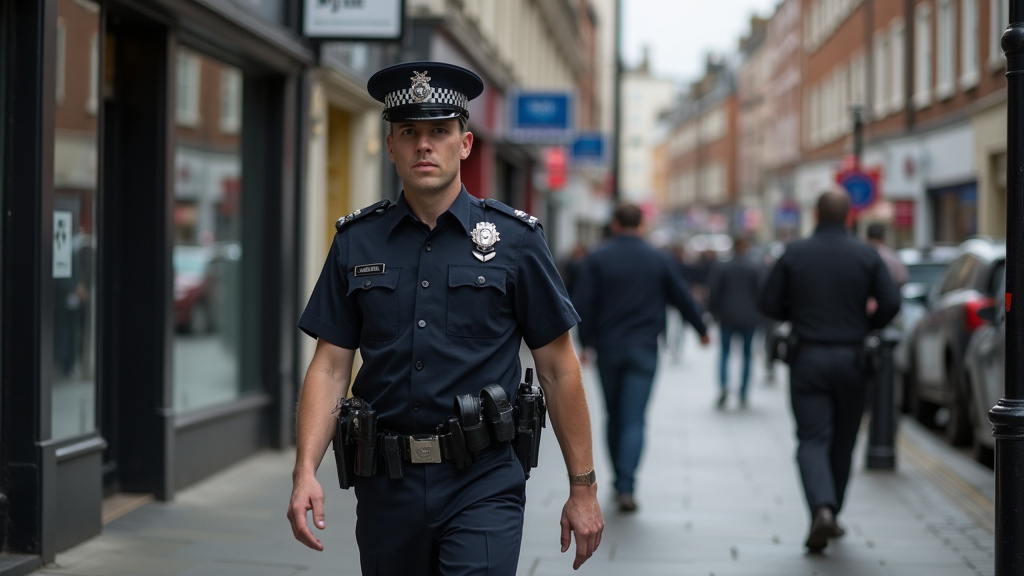
London is currently grappling with a stark sociological contradiction. While the latest official figures indicate a significant 14% drop in neighbourhood crime across the capital over the past year, public sentiment remains resolutely unconvinced, with many residents reporting a persistent, if not deepening, sense of insecurity. This tension between empirical data and lived experience has sparked a complex debate regarding the effectiveness of modern policing, the definition of ‘safety,’ and the visible impact of crimes that often go unrecorded or under-prioritized in broader statistical models.
Key Highlights
- Statistical Decline: Official reports confirm a 14% reduction in neighbourhood crime categories, marking a notable shift in Metropolitan Police performance metrics.
- The Perception Gap: Despite these figures, public polling suggests that anxiety regarding crime remains high, driven primarily by visible anti-social behaviour and rampant shoplifting.
- Retail Crisis: The surge in shoplifting is cited as a major factor in the perception gap, as these incidents directly affect the high street environment.
- Policing Dynamics: The Metropolitan Police Service is facing pressure to align community policing strategies with both crime reduction targets and public reassurance campaigns.
The Statistical Disconnect and Urban Reality
The 14% drop in neighbourhood crime, as corroborated by the Metropolitan Police and the Mayor’s Office for Policing and Crime (MOPAC), represents a significant milestone in urban management. On paper, the deployment of more robust surveillance, improved response times, and targeted interventions in high-crime boroughs has yielded quantifiable success. Crime, as defined by specific legal statutes—burglary, vehicle theft, and violent offences within neighbourhood settings—is statistically trending downward. Yet, the disconnect between these numbers and the average Londoner’s daily experience cannot be ignored. This disparity is rooted in what criminologists call the ‘visibility of disorder.’
The Shoplifting Surge: An Erosion of Order
While burglary statistics may be down, the high street tells a different story. Shoplifting has seen a noticeable spike, transforming the way residents interact with their local shopping environments. When a local grocery store is consistently targeted, or when security guards are seen struggling with repeat offenders in broad daylight, it erodes the public sense of order. This ‘broken windows’ phenomenon suggests that while serious violent crime might be statistically lower, the feeling of vulnerability is amplified by the ubiquity of petty theft. These incidents are often categorized differently than neighbourhood crime in broader statistical reviews, leading to a situation where the official figures appear rosier than the reality on the ground.
Anti-Social Behaviour (ASB) and Public Anxiety
Anti-social behaviour remains the primary driver of public anxiety in London neighbourhoods. Whether it is aggressive panhandling, public intoxication, or vandalism, these behaviours contribute significantly to a climate of unease. Unlike major criminal acts, ASB is often under-reported. Residents may feel that calling the police for a group of rowdy individuals is futile, leading to a ‘dark figure’ of crime—incidents that occur but never enter the official dataset. Consequently, the 14% drop reported by authorities fails to capture the day-to-day irritation and fear felt by citizens who encounter these lower-level nuisances daily.
Technological Interventions and the Future of Policing
To combat both the real and perceived crime rates, the Metropolitan Police are increasingly turning to advanced technological solutions. Facial recognition technology, AI-driven predictive policing, and enhanced CCTV networks are being deployed to monitor hotspots. While these tools are credited with helping achieve the 14% reduction in specific crimes, they also raise concerns about privacy and the displacement of crime. The challenge for the future is not just to maintain these statistical declines but to communicate them effectively to the public. The Safer Neighbourhoods Teams are now being tasked with a dual mandate: fighting crime and, crucially, fighting the perception of crime through increased visible foot patrols and community engagement.
The Psychological Divide: Bridging the Gap
Perhaps the most pressing issue is the psychological distance between the law enforcement narrative and the civilian perspective. For a resident, a safe neighbourhood is not just one free from burglary; it is one that feels welcoming and orderly. When the ‘official’ narrative focuses heavily on percentages, it can sound dismissive to a victim of street-level harassment or retail theft. Bridging this gap requires more than just statistical updates; it requires a paradigm shift in how success is measured. Future initiatives likely need to integrate ‘soft’ metrics—such as community trust surveys and high street vibrancy scores—alongside traditional crime reduction statistics to ensure that the policy response matches the public’s genuine needs.
FAQ: People Also Ask
Q: Why does the 14% crime drop not match my experience in London?
A: The official statistics track specific categories of crime, such as burglary and robbery. However, they often do not fully account for ‘quality of life’ issues like anti-social behaviour or the surge in shoplifting, which are more visible to the public and disproportionately influence how safe residents feel.
Q: What is being done about shoplifting in London?
A: The Metropolitan Police have launched targeted operations in high-street ‘hotspots’ to support retail security, acknowledging that shoplifting is not only an economic issue but a significant contributor to public anxiety. Authorities are also encouraging better reporting practices for retail businesses.
Q: Are these crime statistics for London accurate?
A: Yes, these figures are based on the latest data from the Metropolitan Police Service and ONS. They reflect reported incidents. The discrepancy lies in the fact that many minor incidents, particularly anti-social behaviour, are either not reported or fall into different statistical categories than ‘neighbourhood crime.’
Q: Is ‘neighbourhood crime’ the same as ‘violent crime’?
A: No, ‘neighbourhood crime’ typically refers to offences that occur in residential or local commercial areas, including burglary, personal robbery, and vehicle theft. Violent crime is a separate, broader category that includes offences which may or may not occur in a neighbourhood context.