The iconic melodies of the 2026 BBC Proms have officially filled the air at London’s Royal Albert Hall, marking the commencement of an eight-week celebration that defines the global classical music calendar. Running from July 17 through September 12, this year’s festival continues its storied tradition of making world-class symphonic music accessible to a diverse, international audience. From the hushed anticipation of chamber music recitals to the thunderous applause of grand orchestral finales, the Proms remain a cornerstone of British cultural life.
Key Highlights
- Duration & Dates: The festival spans eight consecutive weeks, officially running from July 17 through September 12, 2026.
- Venue: The legendary Royal Albert Hall in London serves as the primary hub, maintaining its status as the heartbeat of the season.
- Accessibility: The “Promming” tradition continues, offering affordable standing tickets that ensure classical music remains open to the public rather than restricted to elite circles.
- Global Reach: Extensive broadcasting via BBC Radio 3 and television coverage ensures that the performances are accessible to millions of listeners worldwide, beyond the physical confines of Kensington.
A Symphony of Tradition and Innovation in 2026
For over 130 years, the BBC Proms have stood as the largest classical music festival in the world. The 2026 season represents a critical juncture for the organization, balancing the weight of historical legacy with the necessity of modern relevance. As audiences file into the circular, Victorian-era architecture of the Royal Albert Hall, they are participating in a ritual that has survived two world wars and radical shifts in technology and cultural consumption.
The Acoustic Cathedral of Kensington
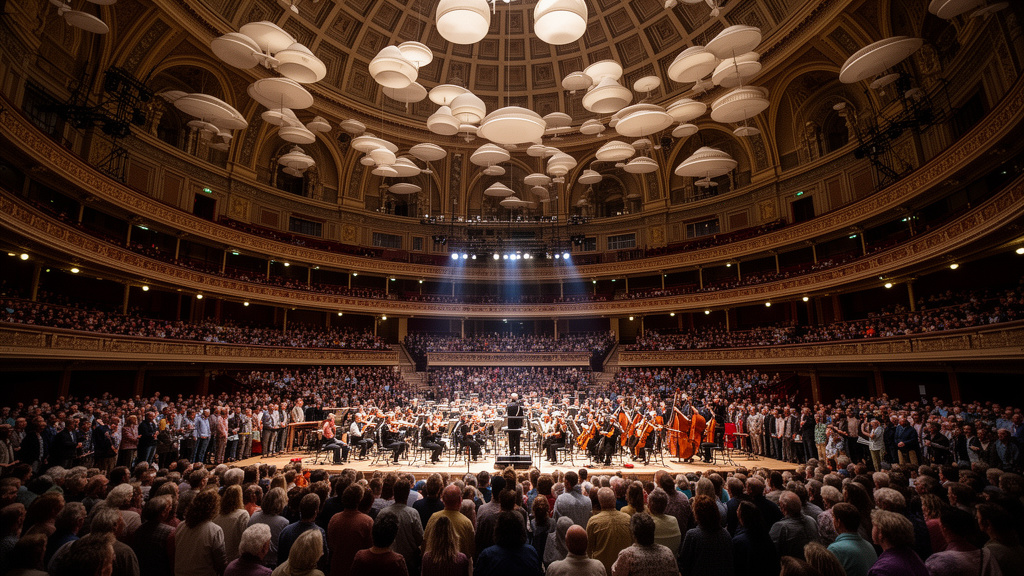
The Royal Albert Hall, with its distinctive domed roof and iconic “mushroom” acoustic diffusers, remains the essential protagonist of the BBC Proms. The 2026 season utilizes the full spatial complexity of the venue, with directors scheduling acoustic-specific performances that leverage the hall’s unique reverb. Orchestras from around the globe prioritize their appearance on this stage, not merely for the prestige, but for the acoustic challenge it presents. Unlike modern, sterilized concert halls, the Albert Hall requires a level of sonic projection that tests the mettle of even the world’s most seasoned conductors.
Democratizing Classical Music: The ‘Promming’ Ethos
The fundamental premise of the Proms—a term derived from “promenading”—is accessibility. In an era where ticket prices for high-culture events have skyrocketed, the availability of standing tickets for every performance remains the festival’s most vital feature. This “Promming” experience creates a dynamic, youthful atmosphere that sets it apart from the often-stuffy environment of traditional opera houses. It is common to see students and international tourists alike standing in the arena, creating an electric energy that professional musicians often cite as the “Proms factor.”
Beyond the Stage: The Economic and Cultural Ripple Effect
The economic footprint of the BBC Proms on London is substantial. During these eight weeks, the Kensington area experiences a surge in hospitality demand, with local restaurants, hotels, and transport services catering to the influx of international attendees. However, the true value of the festival is its broadcast footprint. The integration with BBC Radio 3 and digital platforms turns the Royal Albert Hall into a global studio. By broadcasting these performances, the BBC serves as a cultural gatekeeper and disseminator, keeping classical music vital in the digital age. This synergy between physical attendance and digital consumption is a blueprint for other arts organizations struggling to maintain relevance in a post-pandemic landscape.
Looking Ahead: The Future of the Proms
As the 2026 season progresses, industry analysts are watching closely to see how programming choices influence audience demographics. There is a concerted effort to weave contemporary compositions alongside the standard repertoire of Beethoven, Mahler, and Tchaikovsky. This curation is not just an artistic choice but a strategic imperative. To ensure the survival of the Proms for the next century, the curators must bridge the gap between historical reverence and modern musical evolution. The 2026 program reflects this tension, featuring world premieres that challenge conventional structures, signaling that while the setting is traditional, the art remains alive and evolving.
FAQ: People Also Ask
1. What does it mean to ‘Prom’?
‘Promming’ refers to the tradition of standing during a concert. Prommers can purchase affordable tickets for the arena or gallery, allowing them to enjoy world-class performances for a fraction of the cost of seated tickets. It is a quintessential part of the festival’s history and its commitment to accessibility.
2. How can I watch the BBC Proms if I am not in London?
The BBC provides extensive coverage. The majority of concerts are broadcast live on BBC Radio 3, and select performances are televised via BBC TV channels and available globally through the BBC iPlayer and digital international partners.
3. Is there a specific dress code for the Royal Albert Hall?
No, there is no official dress code for the Proms. The audience is incredibly diverse, ranging from those in formal evening wear to casual summer clothing. The atmosphere is intended to be welcoming and inclusive for all.
4. What is the significance of the ‘Last Night of the Proms’?
The Last Night is a cultural phenomenon, traditionally held on the final day of the festival (September 12 in 2026). It is famous for its patriotic and spirited atmosphere, featuring traditional anthems and a communal sing-along, serving as a joyous conclusion to the eight-week season.