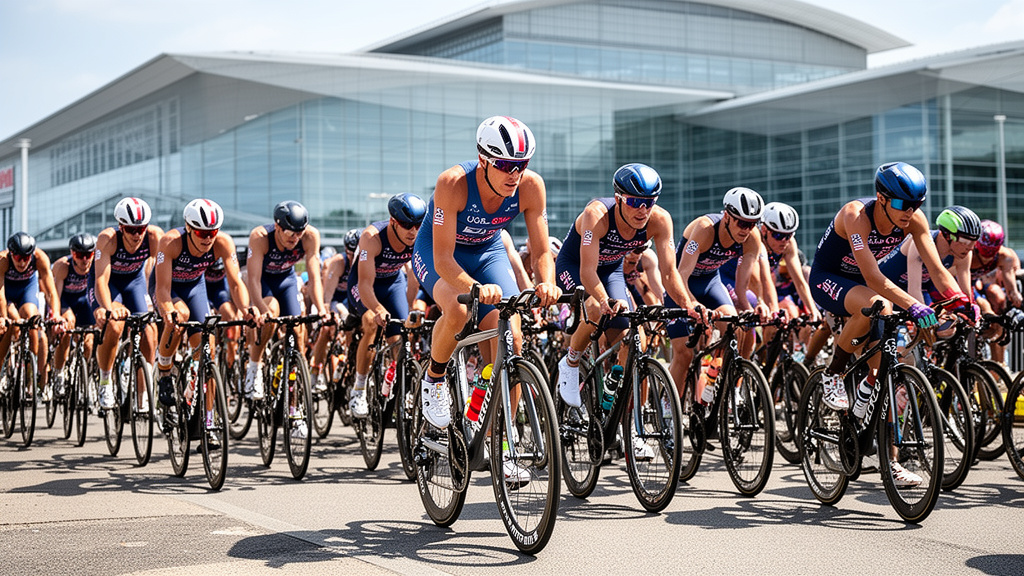
The atmosphere at the London ExCeL Centre reached a fever pitch on July 25, 2026, as elite USA Triathletes took to the course for the sixth stop of the World Triathlon Championship Series. In a high-stakes sprint-distance race, competitors faced a grueling 750-meter swim, a high-speed 20-kilometer bike circuit, and a final 5-kilometer run that demanded maximum anaerobic output. As the race progressed, the tactical depth of the American squad became evident, navigating the unique urban landscape with precision and strength.
Key Highlights
- Elite Sprint Format: The competition strictly followed the sprint-distance structure, emphasizing speed over endurance with a 750m swim, 20km bike, and 5km run.
- ExCeL Centre Venue: The event utilized the iconic ExCeL London, providing a fast, flat, and technically demanding course that favored tactical positioning.
- Series Significance: As the sixth stop of the 2026 World Triathlon Championship Series, this race played a critical role in the overall global rankings and athlete qualification points.
- USA Performance: American athletes displayed significant tactical cohesion, leveraging the draft-legal cycling format to maintain a competitive edge through the transition zones.
Technical Mastery and Urban Speed in London
The 2026 World Triathlon Championship Series stop in London served as a masterclass in modern short-course racing. Unlike long-distance Ironman events, which prioritize sustained aerobic capacity, the sprint distance requires a specialized physiological profile. USA Triathletes arrived with a clear focus on the “big three” disciplines, optimizing every second in the transition zones (T1 and T2). In the world of elite triathlon, the difference between a podium finish and the middle of the pack is often measured in milliseconds, making the efficiency of the transition between the 750-meter swim and the 20-kilometer bike course paramount.
The course at the ExCeL Centre is renowned for being “fast.” Flat sections allowed athletes to maintain high cadences, while the technical corners tested their bike-handling skills. For the USA athletes, the challenge was not just the physical exertion but the high-velocity decision-making required in a drafting-legal race. Because drafting is permitted in the cycling portion, athletes were forced to work in packs, conserving energy while simultaneously managing the surges and accelerations dictated by the lead cyclists.
The Physiology of the Sprint
To compete at the level seen on July 25, athletes train specifically for high-intensity power output. The 750-meter swim is an all-out effort from the start, requiring a robust aerobic engine to exit the water in a prime position. Once onto the bike, the work shifts to interval-based surges. The American team, under the guidance of top-tier performance coaches, demonstrated a sophisticated understanding of “functional threshold power” (FTP), ensuring they didn’t burn through their limited energy reserves before the final 5-kilometer run. This transition from the bike to the run is the “crux” of the race; the legs often feel heavy, and the cardiovascular system is operating at near-maximal capacity. The ability to push through this “brick” sensation separates the world’s elite from the rest of the field.
Strategic Implications for the Series Rankings
This sixth stop in London was not merely an isolated event but a pivotal moment in the 2026 World Triathlon Championship Series. With global rankings on the line, every point gathered in London contributes to an athlete’s standing for the season’s end. For the USA, maintaining a high rank in the series is vital for securing spots in future championship events and ensuring funding and resource allocation for the remainder of the season. The depth of the American roster is a testament to the structured pipeline within the USA Triathlon organization, which continues to identify and develop talent capable of thriving on international stages.
Analyzing the ExCeL Centre Course Dynamics
London’s ExCeL Centre has become a staple venue for high-intensity sports, and for triathlon, it provides a unique urban backdrop. Unlike traditional open-water venues that might be subject to unpredictable currents or waves, the controlled environment of the ExCeL waterways allows for predictable, high-speed swimming. This shifts the focus of the race significantly toward the cycling and running portions. Athletes could predict exactly where they needed to be in the pack, allowing for aggressive racing tactics rather than defensive maneuvers. Spectators were treated to a view that maximized the intensity, with the tight, winding bike course putting the athletes in close proximity to the crowd and to one another.
Secondary Angles: The Future of Urban Triathlon
1. Technological Advancements: The bikes utilized in the 2026 series have seen significant shifts in aerodynamics. The integration of advanced carbon-fiber composites and wind-tunnel-tested geometry has effectively lowered drag, resulting in faster average speeds than those seen in the early 2020s.
2. Sustainability and Infrastructure: The London event highlighted the potential for urban centers to repurpose existing infrastructure for major sporting events. Using the ExCeL facility showcases how cities can host high-profile races without requiring extensive new construction, aligning with global trends toward sustainable event management.
3. Physiological Evolution: Sport science in triathlon has shifted toward precision nutrition and recovery. Athletes are now monitoring glucose levels and hydration in real-time, even during the short sprint distance, which allows them to push harder for longer periods without the “bonking” or energy depletion that plagued past generations of athletes.
FAQ: People Also Ask
Q: How does the sprint distance differ from the Olympic distance?
A: The sprint distance is exactly half the Olympic distance in some regards but feels significantly more intense. It features a 750m swim, 20km bike, and 5km run, compared to the Olympic standard of a 1.5km swim, 40km bike, and 10km run. Because of the shorter duration, it is a race of pure speed and intensity.
Q: Why is drafting allowed in World Triathlon Series races?
A: Drafting is allowed in elite World Triathlon Series races to prioritize race tactics and pack dynamics. It forces athletes to work together, race aggressively, and manage the tactical movements of their competitors, which makes for a more exciting spectator sport.
Q: What is the significance of the 2026 London race for US athletes?
A: As the sixth stop in the series, the London race is critical for cumulative points. A high finish here significantly boosts an athlete’s overall season ranking, impacting their qualification status for end-of-year championships and global rankings.
Q: Why was the ExCeL Centre chosen for this event?
A: The ExCeL Centre offers a highly controlled environment for the swim, a flat and fast surface for the bike, and a spectator-friendly venue that allows fans to get close to the action, making it ideal for the high-octane pace of a sprint-distance triathlon.