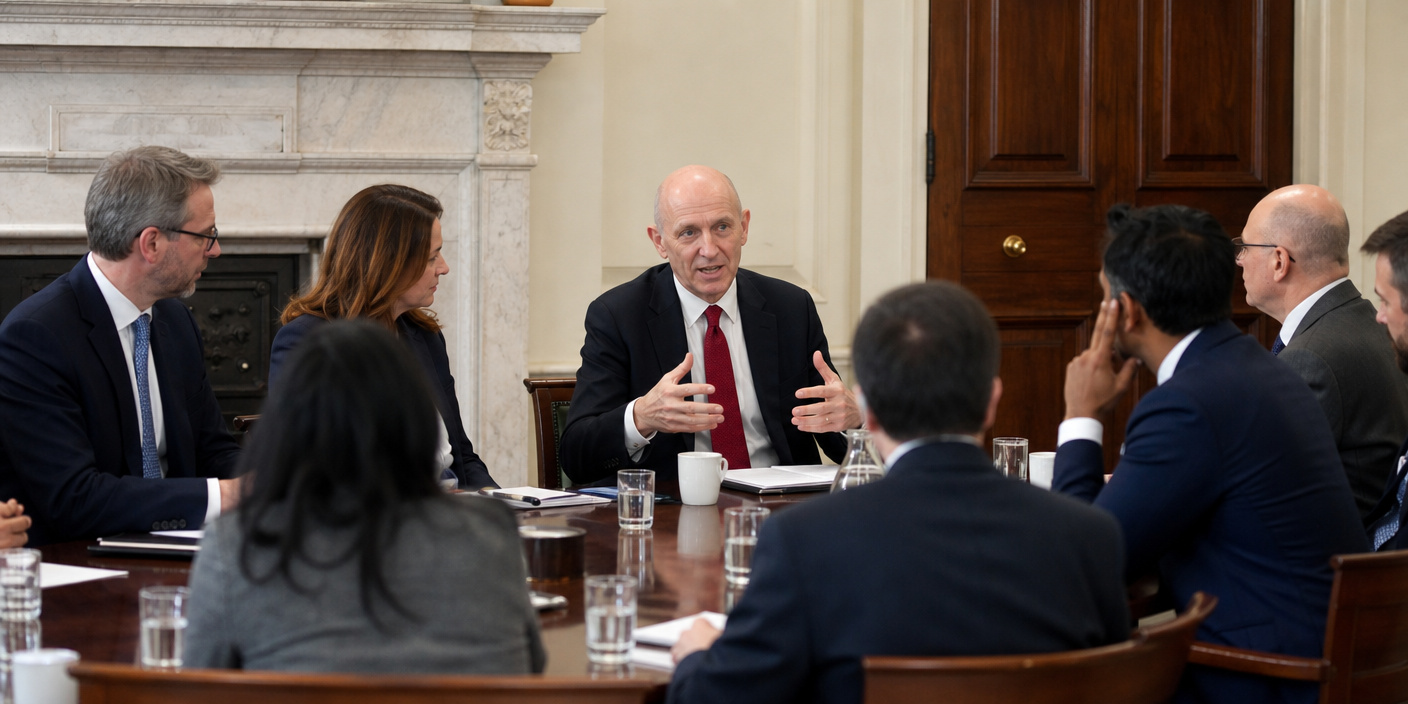
The UK’s economic landscape faces a turning point as Chancellor of the Exchequer John Healey officially signals a strategic pivot in fiscal policy, directly confronting the intensifying ‘cost of business’ crisis. Mirroring the urgent national dialogue surrounding the ‘cost of living,’ Healey has launched a series of high-stakes consultations with the leaders of the nation’s largest finance and technology firms. This move represents a candid admission that the current tax environment is creating significant friction for corporate growth, innovation, and long-term investment. By engaging directly with the engines of the UK economy, the Treasury aims to dismantle the barriers stifling productivity, seeking a delicate balance between essential tax revenue and the necessity of keeping British firms globally competitive.
Key Highlights
- Strategic Engagement: Chancellor John Healey has convened urgent summits with major finance giants and technology firms to diagnose the current business tax burden.
- The ‘Cost of Business’ Crisis: The Treasury is formally recognizing that businesses are facing an unprecedented inflationary and tax-related squeeze comparable to the household cost-of-living crisis.
- Policy Re-evaluation: The administration is exploring targeted fiscal adjustments to ensure that tax policies do not stifle innovation or discourage foreign direct investment.
- Sector Prioritization: High-growth tech sectors and foundational financial services are at the center of the dialogue, as the government seeks to foster long-term growth.
Navigating the Corporate Tax Squeeze
The UK economy is currently grappling with a dual-pressure environment. While household budgets have dominated the political discourse for years, Chancellor John Healey’s recent outreach suggests that the government is fully aware that corporate stability is the bedrock of consumer prosperity. As the Chancellor meets with the heads of the City’s leading financial institutions and the UK’s rapidly scaling tech sector, the core objective is to identify exactly where the ‘tax squeeze’ is most acutely felt.
The Shift in Economic Focus
For too long, corporate tax policy has been viewed through the lens of maximizing immediate yields. However, Healey’s current approach acknowledges that such a strategy may be hitting a point of diminishing returns. By framing the current struggle as a ‘cost of business’ crisis, the Treasury is shifting the narrative. It is no longer just about the absolute level of corporation tax, but the cumulative impact of administrative burdens, regulatory compliance costs, and the effective tax rate on capital expenditure.
Business leaders have long argued that the UK’s tax system has become overly complex. As the Chancellor engages with tech titans—who operate with higher agility and greater risk profiles than traditional manufacturing—the government is looking for ways to streamline tax incentives. This is not merely about tax cuts; it is about creating a predictable fiscal environment that allows companies to forecast their growth over the next five to ten years.
The Intersection of Finance and Tech
Why focus on finance and tech? These two sectors form the backbone of the modern UK economy. Finance remains the nation’s largest export, while the tech sector is the primary driver of high-value job creation and productivity gains. By conducting these summits, Healey is not just engaging in political theater; he is gathering real-time data from the ground.
Industry insiders note that the current tax climate is forcing firms to reconsider their domiciles. In an increasingly globalized market, companies are voting with their feet. If the tax squeeze becomes too tight, the risk of capital flight is a reality the Treasury cannot afford to ignore. The Chancellor’s meetings are an attempt to stem this tide, demonstrating a willingness to listen to the specific tax friction points that hinder growth, such as R&D tax credits and capital allowance structures.
Balancing the Books and Stimulating Growth
This presents a classic political dilemma: how to keep public finances solvent while creating an environment conducive to private sector risk-taking. Healey’s challenge is to find ‘efficiency savings’ within the tax code—closing loopholes that benefit passive capital while unlocking incentives for productive investment. This is a nuanced fiscal tightrope walk. The government knows that if they push too hard on business taxes, they risk choking off the very economic expansion required to pay for public services in the long term.
FAQ: People Also Ask
What does the ‘cost of business’ crisis actually mean for SMEs?
While the Chancellor is meeting with major giants, the ripple effects are expected to reach Small and Medium Enterprises (SMEs). The goal is to create a more favorable broader economic climate, which should theoretically lower the costs of credit, supplies, and regulatory overhead for smaller firms, though direct tax interventions may focus on larger entities first.
Is this a signal for a future corporation tax cut?
It is premature to promise specific cuts. However, the Chancellor’s pivot suggests that the government is moving away from a ‘tax-at-all-costs’ approach. Future budgets are likely to emphasize ‘tax-for-growth’ strategies, focusing on investment-linked reliefs rather than blanket headline rate reductions.
How does this affect the ‘cost of living’ crisis?
Addressing the cost of business is, by extension, addressing the cost of living. When businesses are less burdened by excessive taxation and administrative costs, they are better positioned to raise wages, lower consumer prices, and increase headcount, all of which directly support household financial stability.
Why is the Chancellor meeting with tech firms specifically?
The tech sector is highly mobile and essential for future economic productivity. By engaging with tech leaders, the Treasury hopes to secure the UK’s position as a global hub for AI, fintech, and green technology, ensuring that these high-growth sectors remain headquartered in the UK despite global competition.