In a decisive opening week that has reshaped the national economic agenda, Prime Minister Andy Burnham has moved rapidly to address the acute cost-of-living crisis gripping the capital. By prioritizing tangible relief for daily commuters and small businesses, the new administration has signaled a pivot toward populist economic policies designed to stimulate domestic consumption and reduce the financial burden on London’s working families. From the transport network to the local pub, the first seventy-two hours of the Burnham premiership suggest a government focused on immediate, visible impact rather than long-term theoretical reform.
Key Highlights
- Bus Fare Cap: A new, London-wide bus fare cap has been implemented, effective immediately, to lower daily commuting costs.
- Energy Relief: Taxes on domestic electricity have been reduced to mitigate inflationary pressures on households.
- Pub Levy Cuts: A targeted reduction in levies on the hospitality sector has been introduced to support local pubs and venues.
- Strategic Focus: The policy wave specifically targets the ‘cost-of-living’ triangle: transport, utilities, and community leisure.
The Burnham Doctrine: Prioritizing the Domestic Economy
The swift nature of Prime Minister Andy Burnham’s initial policy announcements reflects a government acutely aware of the ‘first-week mandate.’ By bypassing standard legislative delays and utilizing existing regulatory frameworks, the administration has successfully deployed a ‘relief-first’ strategy. For Londoners, who have faced stagnant wages coupled with skyrocketing overheads, these changes represent the first significant fiscal reprieve in years.
The Transport Strategy: A New Commuter Reality
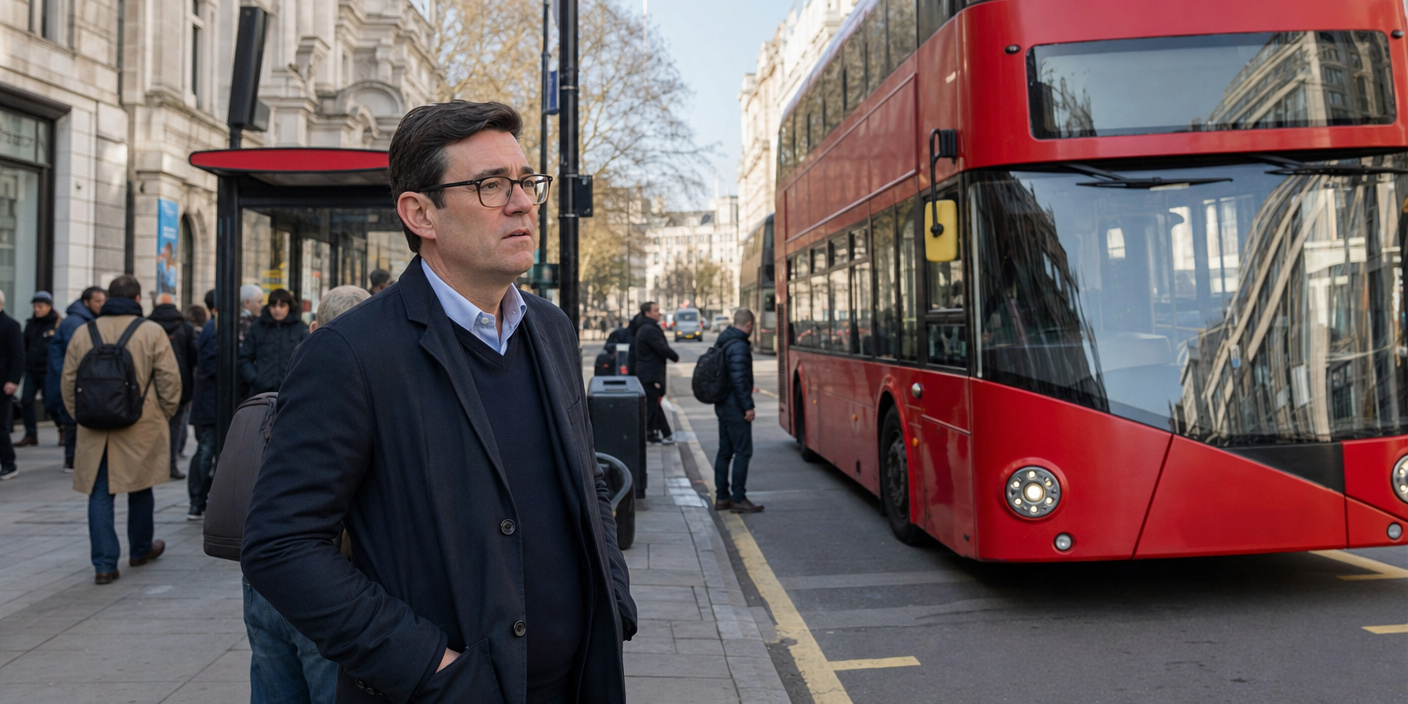
Central to the new administration’s platform is the transformation of public transit affordability. The introduction of the London-wide bus fare cap is not merely a subsidy; it is a structural change to how the capital functions. Economists at the Department for Transport (DfT) have noted that while the upfront cost to the Treasury is significant, the net benefit to the local economy—facilitated by increased mobility and higher disposable income for low-to-middle-income workers—is expected to yield a positive multiplier effect within the first quarter.
This policy draws heavily on Burnham’s previously established philosophy regarding integrated transport, often referred to as the ‘Bee Network’ approach. By capping fares, the government effectively lowers the ‘entry barrier’ for economic activity in the city. When workers can commute for less, spending on goods, services, and local businesses increases. This is a direct injection of liquidity into the local London market, effectively turning public transit into a subsidized catalyst for growth.
Alleviating the Energy Burden
Perhaps the most pressing issue for any administration is the cost of energy. Burnham’s decision to reduce taxes on domestic electricity addresses the regressive nature of utility bills, which have disproportionately affected lower-income households. By targeting the tax component of bills rather than subsidizing the market price directly, the administration has avoided creating new market distortions while providing immediate relief to the consumer.
This move requires coordination with Ofgem and major energy providers to ensure that the tax reduction is passed directly to the end-user. Critics have pointed out that energy companies must be strictly monitored to prevent this tax break from being absorbed into corporate margins. However, early signals from HM Treasury indicate that a robust enforcement mechanism is being drafted to ensure the savings reach the meter. This initiative is a clear departure from previous ‘wait-and-see’ approaches to energy volatility, signaling a proactive, interventionist state.
Breathing Life into British Hospitality
Finally, the reduction of levies on the pub sector is a cultural and economic masterstroke. Pubs in London are more than just venues for leisure; they are essential social hubs and significant employers of the local workforce. The hospitality sector has struggled under the weight of high business rates and alcohol duties for nearly a decade. By lowering these levies, Burnham’s government is attempting to stabilize a sector that has seen record closures.
This policy is expected to have a dual effect. First, it lowers the cost of operation for publicans, allowing them to reinvest in their properties or staff. Second, it serves as a soft price-cap on beverages, helping to keep the ‘pint price’ affordable for the average consumer. In a city where inflation has made simple social gatherings a luxury, this policy seeks to re-democratize leisure. It is a social policy disguised as fiscal policy, aimed at preserving the cultural fabric of London’s high streets.
The Road Ahead
The first week of the Burnham administration has set a high bar for implementation. While the opposition has questioned the long-term sustainability of these tax cuts and subsidies, the political calculation is clear: create immediate, visible economic relief. The administration is banking on the idea that by the time the long-term fiscal trade-offs become a subject of national debate, the tangible benefits of a lower cost of living will have already solidified their public support. Whether this ‘first-week surge’ can be sustained through the first hundred days remains the critical question for observers and markets alike.
FAQ: People Also Ask
1. How will the bus fare cap be funded in the long term?
The government has indicated that the funding is currently sourced from a reallocation of existing transport infrastructure budgets and a reprioritization of Department for Transport discretionary spending. Long-term sustainability will depend on ridership volume increases covering the delta.
2. Will the reduction in electricity taxes apply to businesses?
Currently, the policy is focused on domestic electricity to provide immediate relief to households. Business energy support remains a separate topic of ongoing discussion within the Treasury.
3. When can Londoners expect to see the pub levy changes reflected?
The Treasury has announced that the legislative changes are effective immediately, and guidance has been issued to local authorities and HMRC to process the reduced levies with retroactive adjustments for the current month.
4. Is this the end of the policy wave?
Senior sources within the Prime Minister’s office have hinted that these three initial moves are the ‘Phase 1’ of a wider cost-of-living package, with further announcements regarding housing and rental market reform expected in the coming weeks.